JOANNA
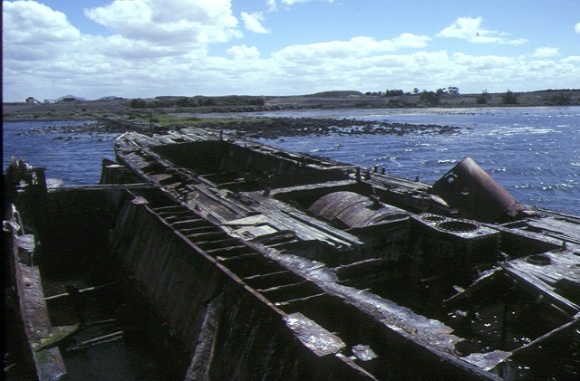
LocationWest Channel, Port Phillip Bay VHR NumberS367 Date lost09/07/1857 Year of construction1856 |
|
Statement of Significance
Joanna is archaeologically significant as a rare, well-preserved example of an Australian-built wooden sailing vessel. There are 46 Australian-built vessels wrecked in Victorian waters, only three have been located and identified and only the Joanna was built in Victoria. The vessel may demonstrate technical innovations in ships built for the lime trade after further archaeological studies. Joanna is historically significant for its part in the important lime trade during the development boom in Victoria during the nineteenth century. Joanna has been a subject in thematic archaeological studies of Australian shipbuilding, including techniques and quality of construction. Joanna also has interpretative significance, making up part of the Underwater Shipwreck Discovery Trail (Lomdahl 1992).
Significance assessed against criteria defined in Guidelines for the Management of Australia's Shipwrecks (1994)
CRITERION 1: HISTORIC
Despite its short life, Joanna is historically significant for its part in the poorly documented lime trade that was so important to the development of Victorian buildings in the nineteenth century.
CRITERION 2: TECHNICAL
Joanna may demonstrate technical significance in ships built for the lime trade. No known details of these ships exist but it is thought that they would require shallow drafts, large payload capacity and good sailing abilities (Victorian Archaeological Survey 1987: 3).
CRITERION 3: SOCIAL
Joanna has minor social significance for its part in the trading activities of Port Phillip Bay in the nineteenth century.
CRITERION 4: ARCHAEOLOGICAL
Joanna is archaeologically significant for its potential to add to the studies of Australian shipbuilding and Victorian shipbuilding practices in particular. Joanna has been the subject of studies examining the quality of Australian-built ships and has the potential to continue to add to this subject literature. Built in Rye, on the Mornington Peninsula, the vessel is the earliest known Victorian-built vessel wrecked in Victoria. In 1990, the archaeological potential of the site was considered high. Port Phillip provides an excellent preservation environment for shipwreck remains lying in the soft sediment. An attempted survey in 2006 was unable to locate the remains of the vessel, although a sand covered mound was located directly up-current from Joanna's historic marker (McKinnon and Raupp 2006: 66). The last inspection in 2012, also found the vessel was still covered by sand. To protect the site from looters, Joanna has a 100m exclusion zone protecting it and can only be dived with a permit from Heritage Victoria.
Heritage Victoria currently holds 56 artefacts from the Joanna wreck site. Items include artefacts that are representative of life onboard the vessel such as plates and anchovy paste jars. A school slate with 'Annie Morgan 1855' inscribed on it, is also part of the collection.
CRITERION 5: SCIENTIFIC
Joanna is not currently the subject of any scientific studies.
CRITERION 6: INTERPRETIVE
Joanna has current interpretive significance as part of the Underwater Shipwreck Discovery Trail (Lomdahl 1992: Joanna). The vessel may have future interpretive potential after further archaeological study.
CRITERION 7 : RARE
The Victorian lime-trade is a poorly documented but important part of Victoria's history, needed for the early building industry when the supply from Portland couldn't keep up with demand. There are five vessels wrecked in Port Phillip Bay that are known to have worked in the lime trade, but Joanna is currently thought to be the only one that was dedicated to the trade (Foster 1987: 32). Joanna is a rare example of a mid-nineteenth century Victorian-built wooden sailing vessel. There are 46-recorded wrecks of Australian-built vessels in Victorian waters, three have been located and positively identified of which Joanna is one (Coroneos 1991b: 10).
CRITERION 8: REPRESENTATIVE
Joanna is representative of a Victorian-built wooden sailing ship involved in the lime trade.
*There is a 200m diameter Protected Zone around Joanna centred on position Lat: -38.20796 Long: 144.730102 WGS84. No entry is permitted unless a Permit has been authorised by Heritage Victoria. *
| Physical Description | |
|---|---|
| Construction Material | Wood |
| Rig | Schooner |
| Hull Details | Square stern, one deck, carvel built Fore and aft schooner |
| Propulsion | Sail |
| Number of Masts | 2 |
| Length / Breadth / Depth | 46.0 Feet / 15.0 Feet / 7.0 Feet |
| History | |
| Built Date | 1856 |
| Built Port / Country | Mount Eliza / |
| Registration Number | 50 of 1856 |
| Registration Port / Country | Mebourne / Australia |
| Former Details of Registration | Former master William Tay (UID 149)) |
| Details |
Joanna was a 36-ton two-masted wooden schooner built at Rye, Victoria, in 1856. While it appears that many vessels trading in lime carried other cargoes at times, Joanna was frequently berthed at Lime Wharf on the Yarra, which suggests the ship was built specifically for the lime trade. This trade involved digging shells from shell beds and Aboriginal middens from around Port Phillip and Western Port and transporting it to the kilns in Geelong and Melbourne. After burning the lime was used as mortar in the building industry that was growing exponentially due to the effects of the discovery of gold and the subsequent rise in population in the colony of Victoria.
Joanna had a brief career lasting only one year before it sank in 1857 in a heavy gale (Heritage Victoria 2005:VHR S367). Registry closed January 1858.Terry Arnott located the wreck's remains in 1981. The wreck lies in shallow water between four and six metres and consists mostly of bags of lime with some smaller artefacts and elements of rigging. The hull appears quite well preserved where it rests underneath the lime bags. Joanna has been inspected or surveyed four times: in 1982, 1985, 1990 and 2006. The survey in 1990 was the most comprehensive. A report on the 1990 site survey exists, but has not been uploaded to the database or published (Coroneos 1991a).
Joanna's significance was assessed in 1990 as part of its nomination for protection under the Victorian Historic Shipwrecks Act (1981). Joanna is part of the Underwater Shipwreck Discovery Trail (Lomdahl 1992: Joanna) and has been incorporated into studies regarding the quality of early Australian-built ships (Coroneos 1991b).
|
| Voyage Details | |
| Date Lost | 09/07/1857 |
| Voyage | from Port Phillip Heads to Melbourne |
| Cargo |
Lime
|
| Owner | John Locke |
| Master of Vessel | Captain John Locke (UID 102) |
| Weather conditions |
Heavy gale
|
| Cause of Loss |
Parted anchors struck West bank and sank
|
| Further Details | |
| Number of Passengers | 0 |
| Comments on Passenger |
Annie Morgan 1855 etched into writing slate artefact recovered from site, evidence of daughter/ passenger of captain or crew on vessel?
|
| Number of Crew Members | 0 |