
| Back to search results » | Back to search page » |


|
WAREHOUSES
Location23-31 NIAGARA LANE MELBOURNE, MELBOURNE CITY
File Number602691LevelRegistered |
|





Statement of Significance
What is significant?
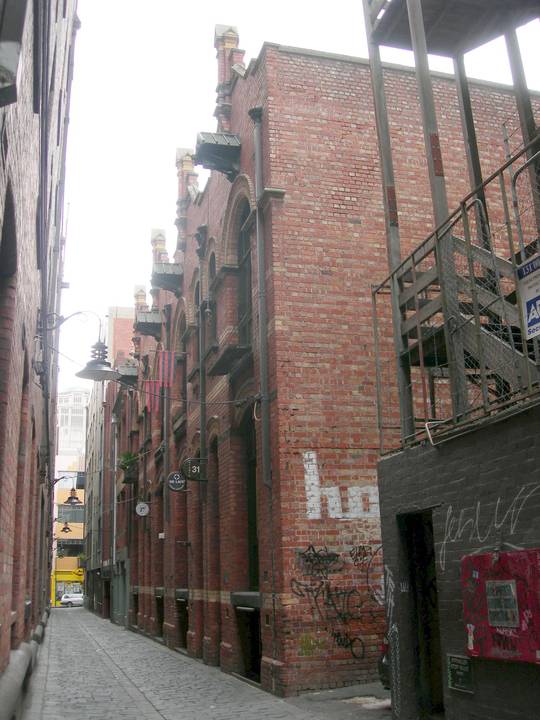
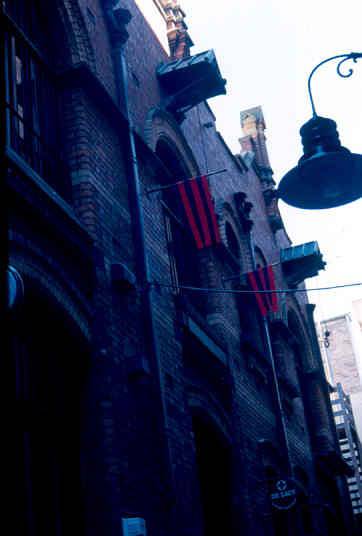
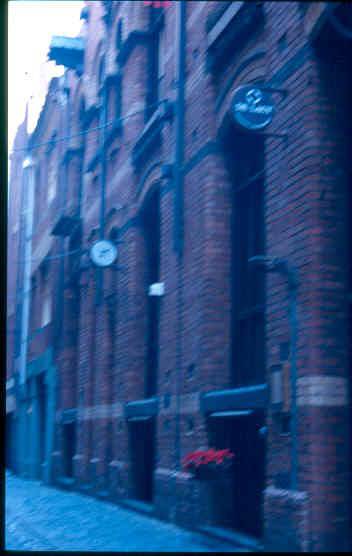
These four identical two storey warehouses were constructed in 1887 for Henry Marks by builder Daniel Sinclair, to the design of architect George De Lacy Evans. The warehouses are constructed with load-bearing brick walls, with Northcote and Preston white facing bricks laid in bands and arches, cream Oamaru stone dressings and Newport bluestone sills. The first floor openings to the main facade are segmental arches, the second storey round arched. In the Queen Anne Revival style, the parapeted gable ends are topped with finials. Internally the floors are of Tasmanian Ironbark. The ceilings are timber-boarded and the floor to ceiling heights are seven metres. The buildings still retain their American barrel hoists. The lowest floor is a semi-basement, which allowed the ground floor to be at wagon tray level.
How is it significant?
The warehouses at 23-31 Niagara Lane are of historical and architectural significance to the State of Victoria.
Why is it significant?
The warehouses at 23-31 Niagara Lane are historically significant as an example of a rare surviving warehouse building type once common in the city. The survival of original barrel hoists is highly unusual and clearly demonstrate the original function of the building.
The warehouses at 23-31 Niagara Lane are architecturally significant as an unusual composition drawing on elements of the Queen Anne Revival style and the more common Romanesque style which was traditionally favoured for warehouses. The detailed intricacy of the decorative facade, incorporating bi-chromatic brickwork, belies the original prosaic function of the building.
Group
Commercial
Category
Warehouse/storage area