
| Back to search results » | Back to search page » |


|
NUM PON SOON SOCIETY BUILDING
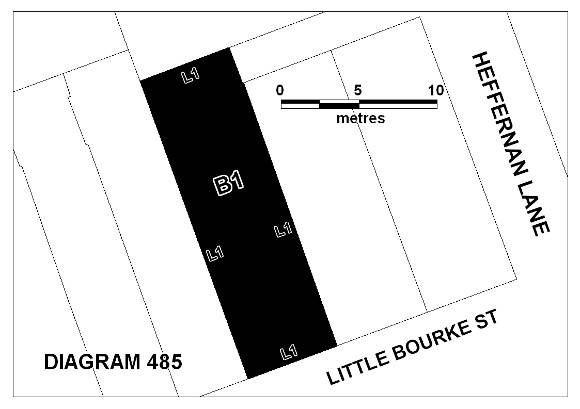
Location200-202 LITTLE BOURKE STREET MELBOURNE, MELBOURNE CITY
File Number602710LevelRegistered |
|




Statement of Significance
What is significant?
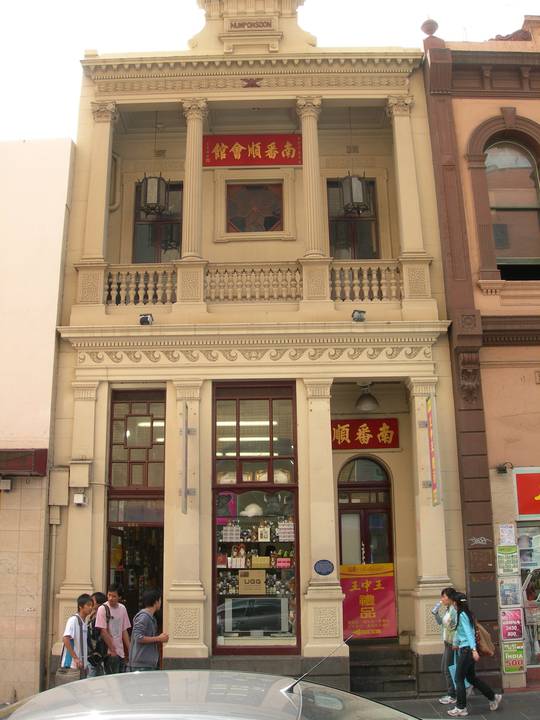
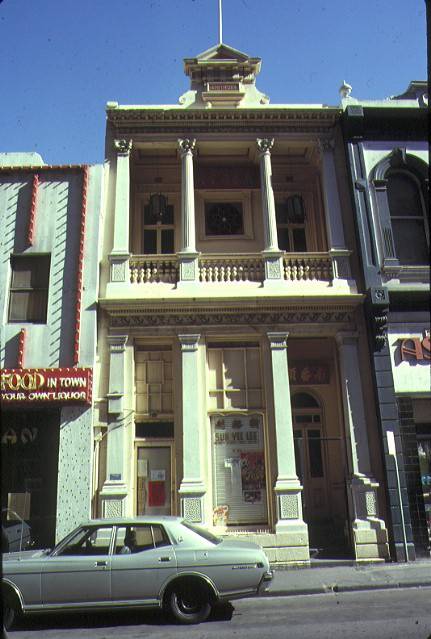
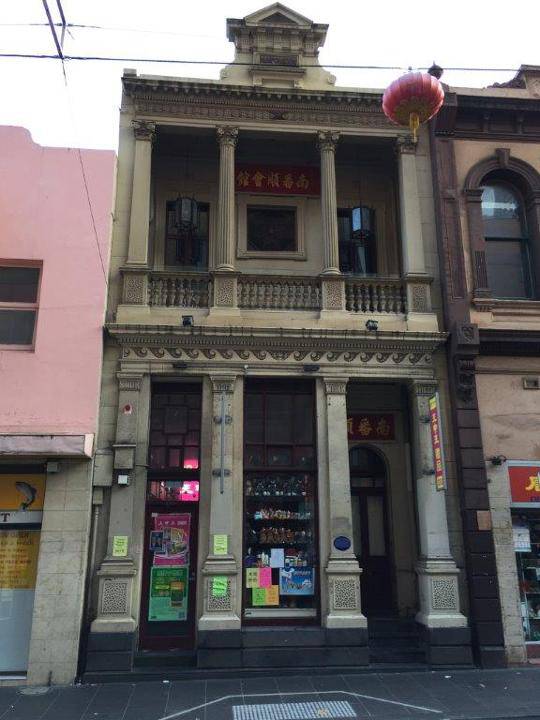
Num Pon Soon Society Building is a two storey stuccoed brick building
built in 1861 to the design of notable architects Knight and Kerr. It
was built as a clubhouse for the Sam Yup Society ("three
district" society) which later became known as the Num Pon Soon
Society. The society, one of the earliest district associations
established in Victoria, helped miners and others from the Num Hoi,
Pon Yu and Soon Duc districts in the Guangdong province of China. The
clubhouse was built through donations from members of the society with
assistance from Lowe Kong Meng, successful merchant and leading member
of the Chinese community. Lowe Kong Meng was not a native of the Num
Pon Soon districts, but he played a major role in a number of Chinese
organisations and, with his knowledge of English and his standing in
the wider Melbourne community, he organised the building of the
society's clubhouse as well as assisting in legal and financial
matters. Many Chinese came to Victoria during the gold rushes of the 1850s,
large numbers of whom were young men from the Canton Delta area of the
southern province of Guangdong. Economic hardship and political
upheaval forced many to emigrate and provide for family back in China.
Many hoped to return home. District, clan and trade associations
played an important role for expatriate Chinese, providing
accommodation, places of worship, meeting places and other facilities
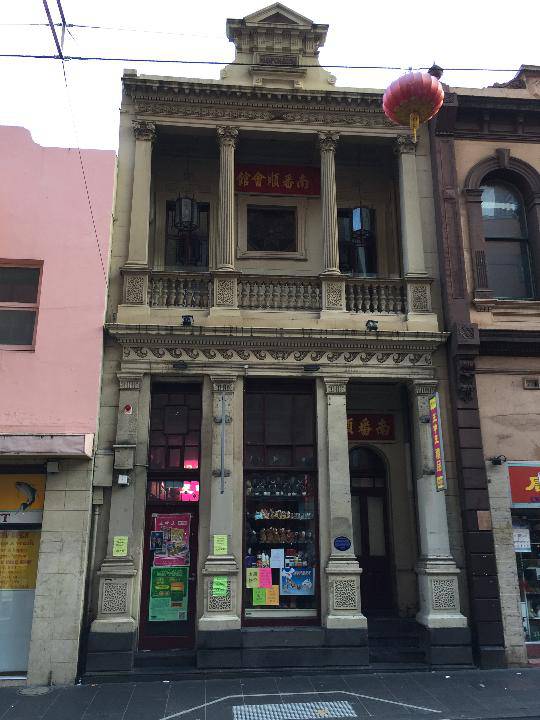
and support. The ground floor of the Num Pon Soon building sits on a basalt stone
plinth and was originally an open Doric colonnade but has been
subsequently enclosed. The architrave has evolute spiral mouldings.
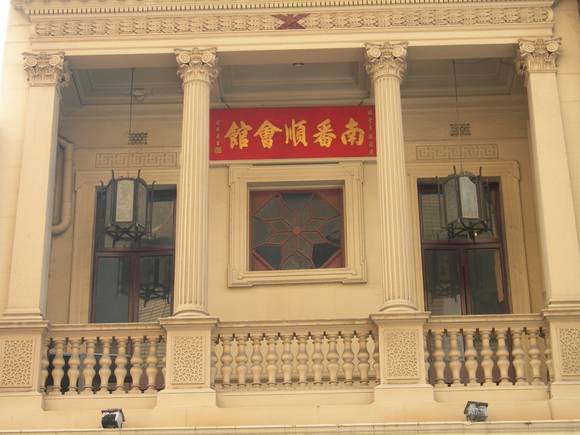
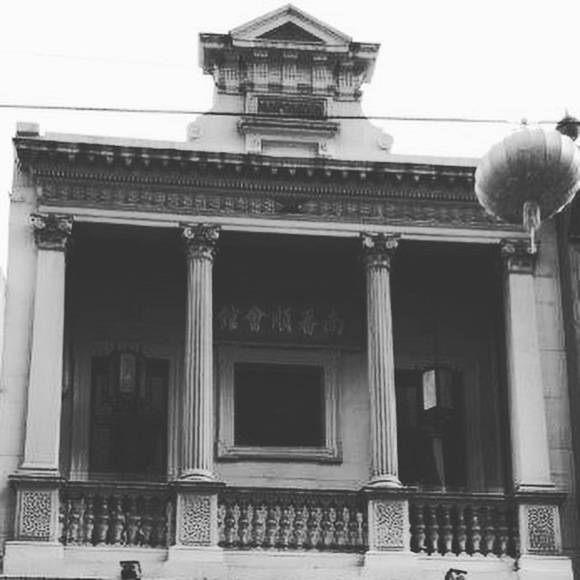
The upper storey balustraded loggia has fluted columns and pilasters
employing the Corinthian order. Chinese influences include a timber
and gild Num Pon Soon panel inscribed with Chinese characters above
the first floor central square window featuring a stained glass
stylised floral motif and timber framed etched glass "Palace
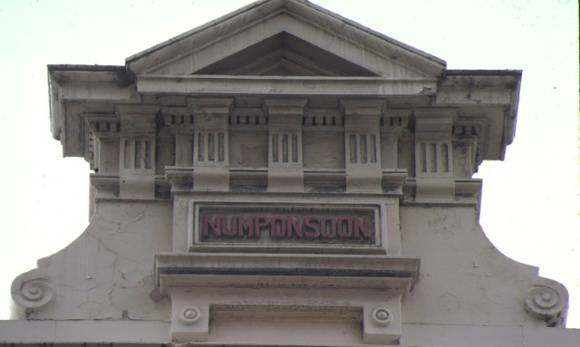
style" lanterns on the balcony. The parapet has a mannerist
pediment which includes the name Num Pon Soon. The ground floor of the building is leased for commercial purposes.
It retains its vaulted corrugated iron ceiling. A shrine room is
situated at the front of the first floor which includes an altar used
to honour ancestors, as well as other ritual objects and furniture.
The first floor also includes living, dining and accommodation space.
The attic rooms on the second floor of the building were also used for
accommodation.
How is it significant?
Num Pon Soon Society Building is of historical, social and
architectural significance to the State of Victoria.
Why is it significant?
Num Pon Soon Society Building is of historical significance for
housing the earliest known surviving Chinese shrine in Australia and
possibly the earliest outside of Asia. It also has significance as the
earliest surviving Chinese community building in Victoria. It has
strong associations with Chinese immigration to Victoria and is a
tangible link to the Chinese who came in large numbers to the
Victorian goldfields during the second half of the 19th century, and
is evidence of their strong presence in Little Bourke Street since
that time. The retention of the ancestors' shrine and other artefacts
and furniture adds considerably to an understanding of the function of
the building as a meeting place and a place of worship for the Num Pon
Soon Society. The building and its contents are a physical reminder of
the importance of district associations to expatriate Chinese in
western countries from the late 18th to the early 20th centuries. It
is additionally significant for its links to Lowe Kong Meng
(1831-1888), one of the most prosperous and successful early Chinese
settlers in Melbourne. Num Pon Soon Society Building is of historical and social
significance for its associations with the traditional practices and
customs of expatriate Chinese. Its highly intact shrine room provides
tangible evidence of the lives and religious and ceremonial practices
of the Chinese immigrants. The shrine room continues to play an
important cultural, religious and social role for many members of the
Chinese community, and Num Pon Soon Society members in particular have
a strong attachment to the place. Num Pon Soon Building is architecturally significant as a distinctive
example of a Classical style building with Chinese influences designed
by two of the most talented Public Works Department architects, J. G.
Knight and Peter Kerr. The smaller scale of the Num Pon Soon building
provides an interesting comparison with Knight and Kerr's major work
of the period, Parliament House, the first stages of which were
designed in 1856.
Group
Community Facilities
Category
Community Club/ Clubhouse