
| Back to search results » | Back to search page » |


|
Darbyshire Hill No. 3 Bridge
Other NameWaterfall Bridge LocationWodonga-Cudgewa Railway, between Bullioh & Darbyshire,, BULLIOH VIC 3700 - Property No B6950
File NumberB6950LevelState |
|




Statement of Significance
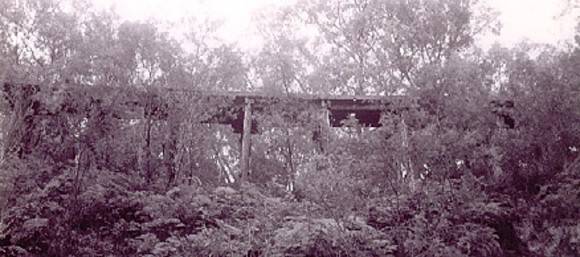
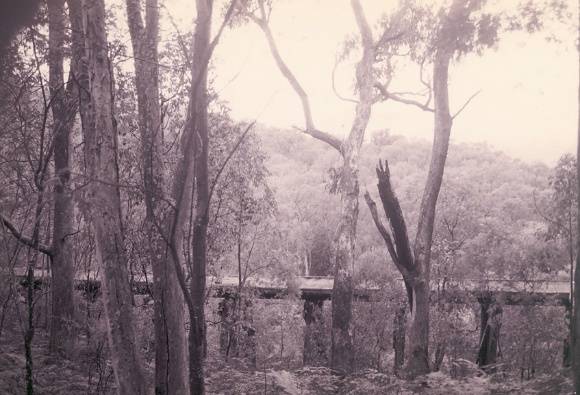
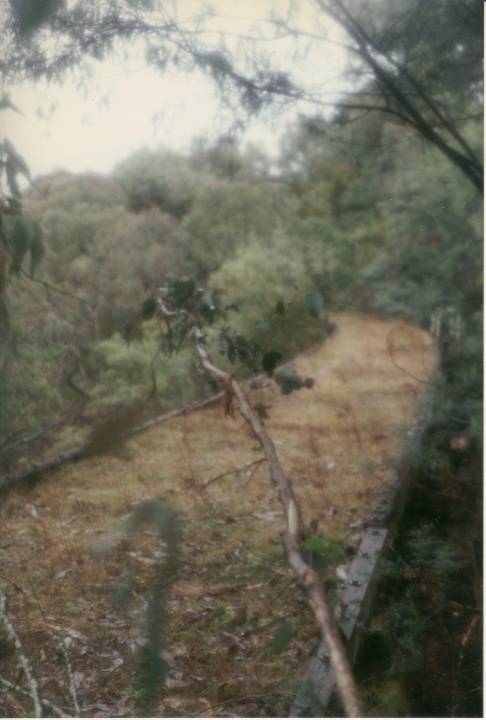
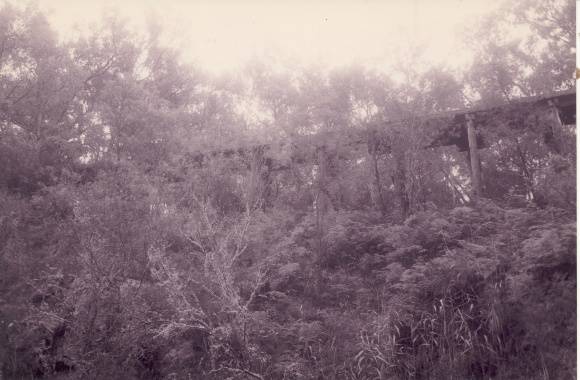
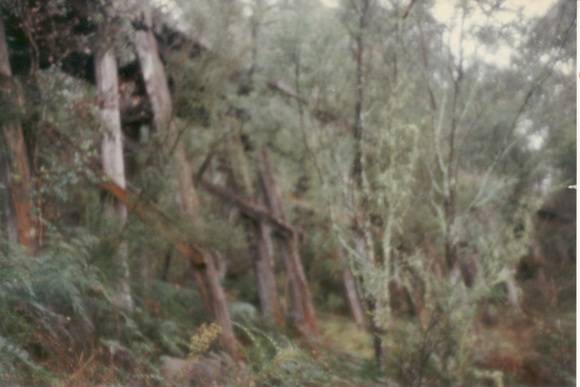
What is significant? Darbyshire Hill No. 3 Bridge was built in 1916 for the Wodonga-Cudgewa Railway. It is a single-track seventeen-span timber-beam bridge, with timber piers and a gently curving transverse-timber deck. Built along a steep slope, this bridge has unusual timber piers with raker piles on the low side being much longer than the others. All spans are of standard fifteen feet (4.6 metres) Victorian Railways design, giving a total deck length of 264 feet, or 80.5 metres. Maximum height is 25.6 feet (7.8 metres).
How is it significant? Darbyshire Hill No. 3 Bridge is significant for technical, historic and aesthetic reasons at State level.
Why is it significant? Darbyshire Hill No. 3 Bridge is of technical significance. It is unusual in having been built along the side of a steep slope, over a big depression rather than a significant waterway. This has led to an unusual pattern of timber piers, with great variation in pile length within each pier. These piers feature spectacular long raker piles on the low side of the bridge site.
Darbyshire Hill No. 3 Bridge is of historic significance as part of the Wodonga-Cudgewa line, constructed in 1916 to transport mountain cattle towards metropolitan markets. Post World War II the rail line became part of the main supply line for the Snowy Mountains Hydro-electric project.
Darbyshire Hill No. 3 Bridge is of aesthetic significance for its magnificent bush land setting overlooking a series of cascades or miniature waterfalls, and located around 100 metres from the Murray Valley Highway with very easy access through public land. The bridge is in close proximity to several other equally historic, but structurally very different, timber bridges. This series of important timber rail bridges is situated along the route of the High Country Rail Trail, currently being developed (2011).
The line closed in 1981.
Classified: 10/11/1998
Group
Transport - Rail
Category
Railway Bridge/ Viaduct