14 NICHOLSON STREET BAIRNSDALE, EAST GIPPSLAND SHIRE
File Number
602233
Level
Registered
[1/28]
BAIRNSDALE COURT HOUSE SOHE
[2/28]
extent diagram
[3/28]
bairnsdale courthouse
[4/28]
aerial extent
[5/28]
2023 View from judges Bench
[6/28]
bairnsdale courthouse
[7/28]
Interior 2023
[8/28]
H1462 Bairnsdale Court House
[9/28]
bairnsdale courthouse
[10/28]
bairnsdale courthouse
[11/28]
Bairnsdale courthouse
[12/28]
Bairnsdale Court House, 1991
[13/28]
Bairnsdale Court House
[14/28]
Bairnsdale Court House
[15/28]
Bairnsdale Court House
[16/28]
Bairnsdale Court House
[17/28]
Bairnsdale Court House
[18/28]
Bairnsdale Court House
[19/28]
Bairnsdale Court House
[20/28]
Air vent 2023
[21/28]
2023 view
[22/28]
Front 2023
[23/28]
Public Gallery 2023
[24/28]
2023 view from judge's bench
[25/28]
2023 Judge's associate bench
[26/28]
2023 desk in judge's chamber
[27/28]
2023 Table and chairs from
[28/28]
2023 Washbasin in courtroom
Statement of Significance
What is significant?
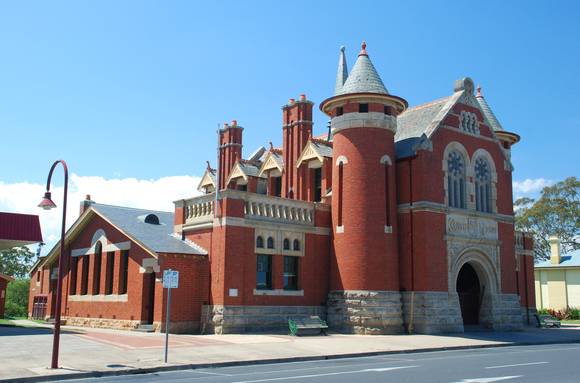
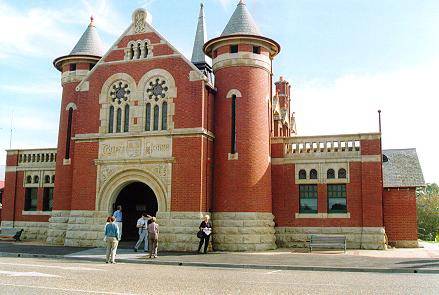
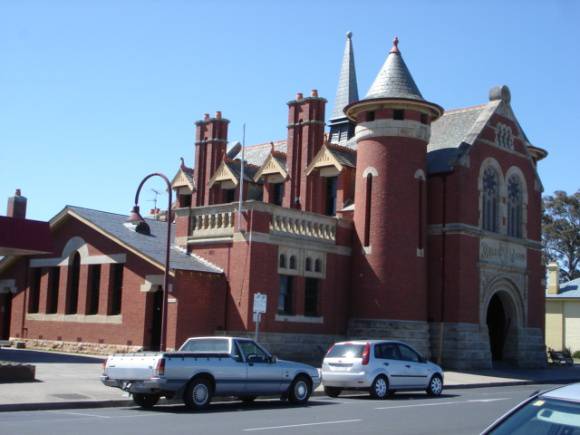
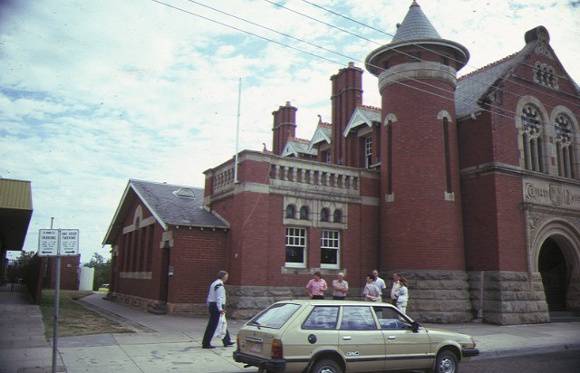
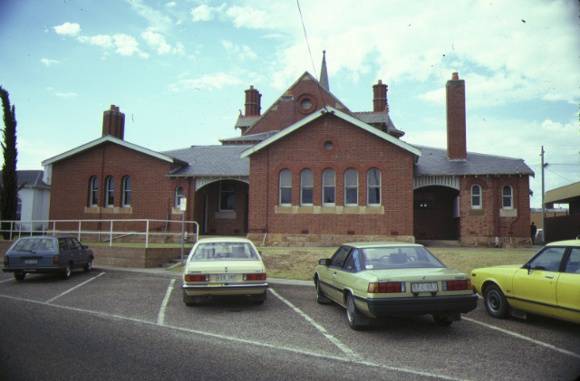
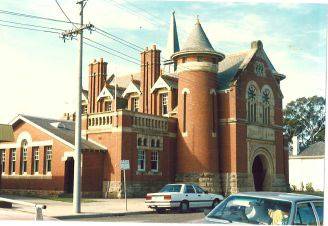
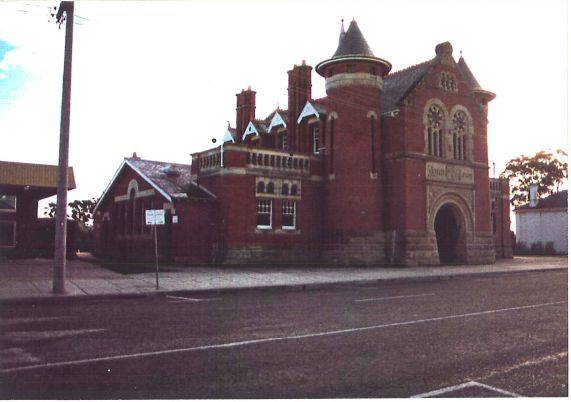
The Bairnsdale Court House is double-storey and of red brick construction (1893) designed by architect AJ Macdonald of the Victorian Public Works Department (PWD) in an eclectic blend of Art Nouveau, Romanesque, Queen Anne, and Scottish Baronial styles with Australian decorative elements, and objects integral being court room furniture.
How is it significant?
The Bairnsdale Court House is of historical, architectural, and technical significance to the State of Victoria. It satisfies the following criterion for inclusion in the VHR:
Criterion A Importance to the course, or pattern, of Victoria’s cultural history.
Criterion D Importance in demonstrating the principal characteristics of a class of cultural places and objects
Criterion F Importance in demonstrating a high degree of creative or technical achievement at a particular period.
Why is it significant?
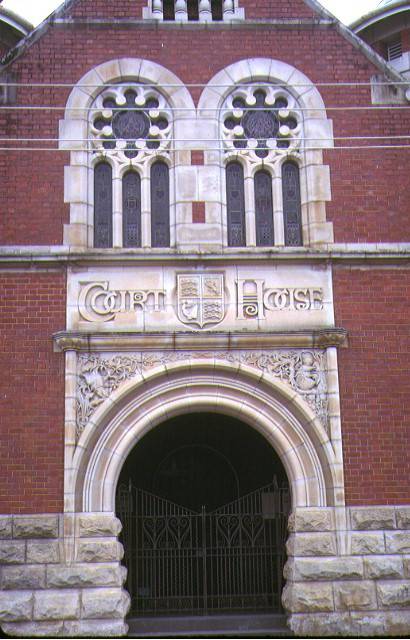
The Bairnsdale Court House is historically significant as an early Victorian example of the quest for an ‘Australian’ architectural style. Motifs on the front depict a koala, possum, snakes, and Eucalyptus leaves. These distinctly Australian details and motifs are combined with the inherited symbols of British justice in a highly picturesque building.
The Bairnsdale Court House is historically significant as a rare and highly intact example of court houses built in Victoria during the 1890s. It is notable for exhibiting a high degree of extravagance and optimism that was uncharacteristic of these economically depressed times. The building was also the first Victorian court house to introduce distinctively Australian decorative elements alongside traditional symbols of inherited British justice and is thus important for its potential to illustrate the acclimatisation of the justice system in Australia which gathered momentum in the lead-up to Federation. The original and altered internal spaces of the Bairnsdale Court House are historically significant for demonstrating aspects of the hierarchy and functions of law in Victoria since 1893. The original spaces of the court house, such as sex segregated witness rooms, also demonstrate attitudes to gender at the time of construction, in that women were provided for as witnesses and prisoners, but not in the official spaces in the court. The Koori Court also sits at the Bairnsdale Court House, an important initiative in Victoria from 2002.
(Criterion A)
The Bairnsdale Court House is architecturally significant as an outstanding example of a late nineteenth-century court house in Victoria. Its design is highly creative and exhibits an eclectic array of stylistic influences including Art Nouveau, Romanesque, Queen Anne and Scottish Baronial. It is historically significant as a building which anticipates many overseas styles and buildings of similar form, and which predates important buildings in the American Romanesque style in Melbourne and Sydney.
(Criterion D)
The Bairnsdale Court House is technically significant for the Tobin Tube ventilation system in the building which has survived with a high degree of integrity. It demonstrates an important technical innovation, adopted in many Victorian public buildings in the late nineteenth century. It was an important innovation for introducing fresh air into public buildings without creating draughts.