
| Back to search results » | Back to search page » |


|
CAPE BRIDGEWATER HOMESTEAD
Other NameORIGINAL KENNEDY RESIDENCE Location65 BLOWHOLES ROAD, CAPE BRIDGEWATER, GLENELG SHIRE LevelRecommended for Heritage Overlay |
|




Statement of Significance
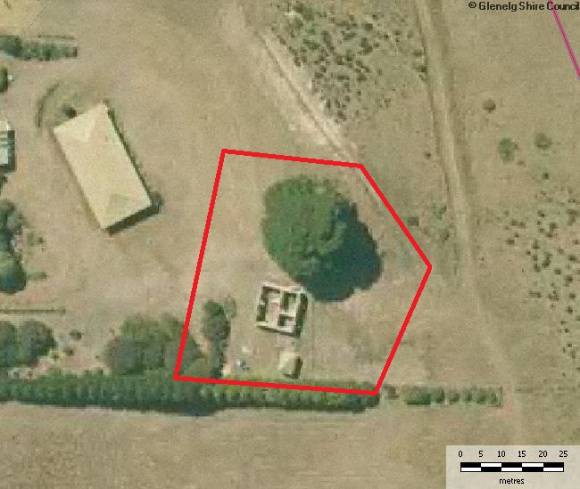
The Cape Bridgewater Homestead ruins are located on the Cape, overlooking Bridgewater Bay. Little remains of the stone house other than the main walls. It was single storey, symmetrical and faced north-east across Bridgewater Bay, enjoying what is still a spectacular view. It is clear from the embedded quoins that the house was built in two sections. Each had two rooms and from surviving footings there appears to have been a wing on the south side which may have been a semi-detached kitchen, possibly timber rather than stone. Close by there is a small stone outhouse which may have been an early dairy. No garden survives apart from one Cupressus macrocarpa (Monterey Cypress) nearby which definitely dates from before the twentieth century. The homestead was built by the Kennedy family, who took up the land with Hedditch in 1845, taking over one of the earliest pastoral leases in Victoria, taken up by the Henty Brothers in 1839. It is likely that the homestead was built between 1845-1850, by local stonemason Joshua Black. The homestead is in ruinous condition, but retains a high degree of integrity, having not been altered or 'improved'.
How is it significant?
The Cape Bridgewater Homestead ruins are of architectural and historical significance to the Shire of Glenelg.
Why is it significant?
Cape Bridgewater Homestead is of historical significance for its siting on one of the first pastoral runs, taken up by the Henty Brothers in 1839, although it is likely that they were using this area for pastoral activities prior to this date. It is of further historical significance as a surviving example of a very early homestead, built by the Kennedy family, who continue to be important members of the local community. The siting of the homestead is also of considerable interest. Of architectural significance is the vernacular building composition and fine stone masonry, which is unusual for so early and isolated a building. It is also an excellent example of the work of Joseph Black, an early stonemason and storekeeper in the Cape Bridgewater area.
Group
Residential buildings (private)
Category
Homestead building