
| Back to search results » | Back to search page » |


|
PIONEER AND UNION HYDRAULIC GOLD SLUICING SITE
LocationOMEO HIGHWAY MITTA MITTA, TOWONG SHIRE
File Number607529LevelRegistered |
|




Statement of Significance
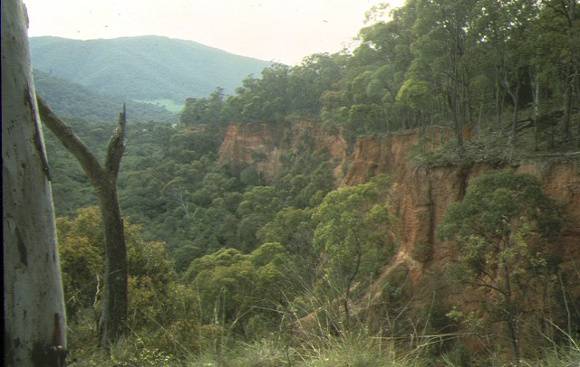
What is significant? The Pioneer and Union Hydraulic Gold Sluicing Site consists of a vast network of sluicing faces, pebble dumps, tail races and water races. Water for sluicing was brought to the site by a 20km long water race and then directed by high pressure pipelines and nozzles at the gold bearing deposits. The technology was introduced into Victoria in about 1855. The Pioneer Company, in 1884, were the first to use this type of mining on the Mitta Mitta goldfield. The Pioneer Claim is reputedly to have been the largest operation of its type in the State, with approximately 20 hectares of ground being mined between 1859 and 1913 leaving walls up to 75 metres in height. How is it significant? The Pioneer and Union Hydraulic Gold Sluicing Site is of historical, archaeological and scientific importance to the State of Victoria. Why is it significant? The Pioneer and Union Hydraulic Gold Sluicing Site is historically and scientifically important as a characteristic and well preserved example of an early form of gold mining. Gold mining sites are of crucial importance for the pivotal role they have played since 1851 in the development of Victoria. Hydraulic sluicing of alluvial gold deposits is an important key ingredient in an understanding of gold mining technology as it was employed in country where water was plentiful and perennial. The Pioneer and Union Hydraulic Gold Sluicing Site is archaeologically important for its potential to yield artefacts and evidence which will be able to provide significant information about the cultural history of gold mining and the gold seekers themselves.
Group
Mining and Mineral Processing
Category
Sluicing Hole/Area