
| Back to search results » | Back to search page » |


|
FORMER CUSTOMS HOUSE
Location3 GILLES STREET WARRNAMBOOL, WARRNAMBOOL CITY
File Number606093LevelRegistered |
|




Statement of Significance
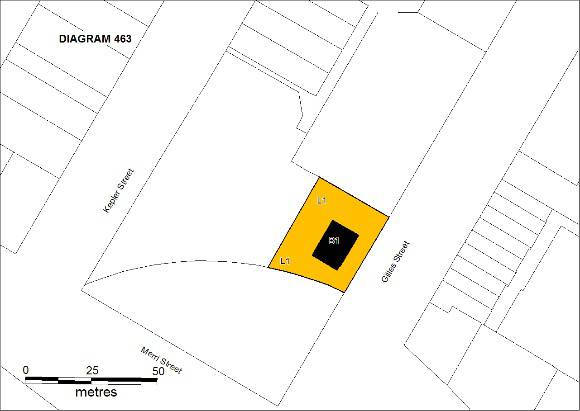
What is significant? The Warrnambool Customs House was built in 1860, and is an early colonial customs house. It was designed by the Public Works Department's Charles Maplestone in a simple, utilitarian style out of locally quarried bluestone. The Customs House was constructed at a time when the revenue obtained by Customs was particularly important for the Colony of Victoria. The Customs House is located on the block bounded by Kepler, Timor, Liebig and Merri Streets, which was reserved in the 1847 Pickering survey for Government purposes. Warrnambool benefited from its location in the growing Western District and from the increased trade due to the gold rush in Victoria in the early 1850s. The Customs presence at the town was formalised in 1854 with the creation of a Sub-Collectorate, and further reinforced by Warrnambool being officially given the status of a port of entry and clearance in 1855. The Warrnambool Customs House was the first permanent building for Customs in the town. By 1860, there was pressure from the community for a permanent building to replace the temporary customs accommodation at the Lake Collector's Residence. At this time, Victoria was in recession, and the design of the Warrnambool Customs House was simple and functional. It cost £907, one-tenth of the port's income, and not half the port's revenue as the Warrnambool Examiner would have preferred. As Customs was a colonial responsibility, construction of Customs Houses was the duty of the Public Works Department. The Warrnambool Customs House was designed by Charles Maplestone, draftsman and Clerk of Works at the Public Works Department from 1853. The Warrnambool Customs House was very similar to the Port Fairy Customs House, also designed by Maplestone, built in 1861. The bluestone Warrnambool Customs House had an entrance lobby, which opened into the Long Room, and two offices and a store which opened off the Long Room. Its location on the Government Reserve was important, as it was once planned that Gilles Street be extended across Lake Pertobe to create a formal entrance to the town, and the Customs House was on a highly visible position on this block. During the 1870s, Warrnambool became the dominant port in the Western District, as revenue in Portland and Port Fairy declined. However, the chronic problem of silting began to intensify after this time, and despite attempts to solve this through a breakwater, by the 1890s the port could only be navigated by small craft. Though Warrnambool remained officially a port until 1942, the Department of Trade and Customs removed the position of Sub-Collector at the town. Tenders were advertised in 1934 to convert the Customs House into a residence for army personnel and alterations include moving the main entrance to the Gilles Street frontage, removing the wall between the lobby and store to create a bedroom and converting a side verandah to a sleep out, kitchen and bathroom. In 1982 the Customs House building, which by then was being used as the residence by the Harbour master, was vacated. The Warrnambool Technical College purchased the Customs House in 1985, and in 1988 an extensive restoration process was undertaken, including the removal the weatherboard additions and the reinstatement of the slate roof. Though the Technical College, now the South-West TAFE, planned to use the building to showcase students' artwork, the building is now run as a private gallery, known as The Customs House Gallery. How is it significant? The Warrnambool Customs House is of historical and architectural significance to the state of Victoria. Why is it significant? The Warrnambool Customs House is of historical significance to the state of Victoria as a rare surviving example of a colonial Customs House, from a period when customs operations were an important source of income for the newly separated colony of Victoria. The importance of customs to the colonial Victoria is reflected in its location on the Warrnambool Government Reserve, and is significant as the earliest remaining civic building on this site. As Customs was a colonial responsibility, the Warrnambool Customs House is historically important as a building designed and constructed by the Public Works Department. The Warrnambool Customs House is of architectural significance for its plain and unadorned style, a result of Victoria's recession and the overworked Public Works Department. It is significant as being one of only nine masonry Customs Houses built in Victoria. It is notable for the demonstrating a change in customs house design to a more accessible style, a departure from the security conscious customs buildings which had previously been constructed.
Group
Government and Administration
Category
Customs House