
| Back to search results » | Back to search page » |


|
RESIDENCE
Location98-106 GIPPS STREET AND 104 GIPPS STREET EAST MELBOURNE, MELBOURNE CITY
File Number603533LevelRegistered |
|




Statement of Significance
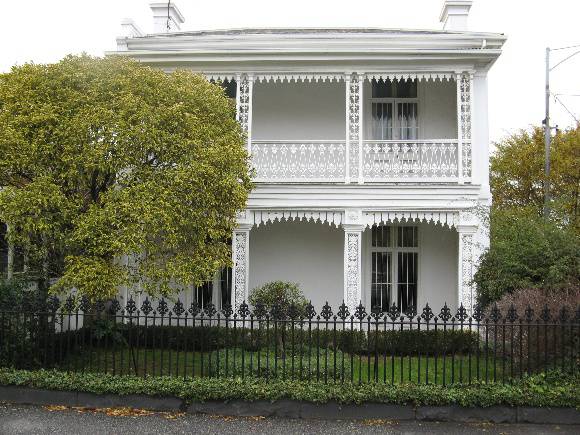
What is significant? The town house at 104 Gipps Street was designed by J J (John James) Clark (1838-1915) as his own home and was built in 1869 by George Dobbs. Clark was one of Australia's most important nineteenth century architects, who designed major public buildings throughout the country. He was employed by the Victorian Public Works Department from his arrival in Melbourne with his family in 1852 until the Black Wednesday retrenchments of Victorian public servants in 1878. Following this he went into private practice in Melbourne, and then practised in Sydney, Brisbane and Perth before returning to Melbourne in 1902. After Clark's marriage in 1865 and the birth of his only child, Edward, in 1868, he bought land in East Melbourne and designed the existing house. In 1870 the rate books described it as a brick house of six rooms with bathroom, a relatively unusual feature at this time. His wife died in 1871, and Clark moved with his son into an adjacent cottage. The main house was let to Peter McCracken, who with his brother Robert and James Robertson had started the brewing firm McCracken & Robertson, which came to control a large share of Melbourne's beer market. Following Clark's move to Sydney in 1881 he sold the house in East Melbourne in 1884. It had a series of owners, and was used as a boarding house for many years until being restored for use as a private home in 1975. The residence at 104 Gipps Street is a two storey rendered brick townhouse with a slate-clad hipped roof. The house is on a corner facing Powlett Street, with the entrance on the side of the house on Gipps Street. It is set back from the street behind a small garden with a circular flower bed, shown on the 1895 MMBW plan, set in the centre of the small lawn. There is an iron palisade fence with large fleur-de-lys picket heads. Across the front of the house is a verandah and balcony, each accessible from the front rooms by two pairs of French doors. The verandah is supported on open-work columns with cast iron panels between timber posts, with different patterns in the panels on the ground and first floors. At both levels there are fretted timber valances, arched in profile on the lower level. At the rear is a two-storey kitchen wing, now connected to the house by a glass conservatory, and another two storey section, originally a wash house. The front two rooms of the house are connected by a wide segmental arched opening with double doors. The interior of the house is largely intact, the only substantial changes being the modernising of the kitchen and bathroom. How is it significant? The house at 104 Gipps Street is of architectural and historical significance to the state of Victoria. Why is it significant? The residence at 104 Gipps Street is historically significant for its association with J J Clark, one of Australia's most important architects in the second half of the nineteenth century. Clark is best known for his designs for public buildings in Melbourne, Sydney, Brisbane and Perth, and this is an unusual example of a private residence designed by him. Its significance is increased by it being Clark's own house. It is also significant as a reflection of the way of life of the wealthy middle classes in nineteenth century Melbourne. The residence at 104 Gipps Street is architecturally significant as a fine and unusual example of a nineteenth century townhouse, and is unique for the open-work cast iron panels on the verandah columns, which although common in Sydney are otherwise unknown in Melbourne.
Group
Residential buildings (private)
Category
House