
| Back to search results » | Back to search page » |


|
DEGRAVES MILL
Other NamesDE GRAVE'S , DE GRAVE'S , DE GRAVES , OLD MILL Location688 COBB AND CO ROAD KYNETON, MACEDON RANGES SHIRE
File Number602630LevelRegistered |
|




Statement of Significance
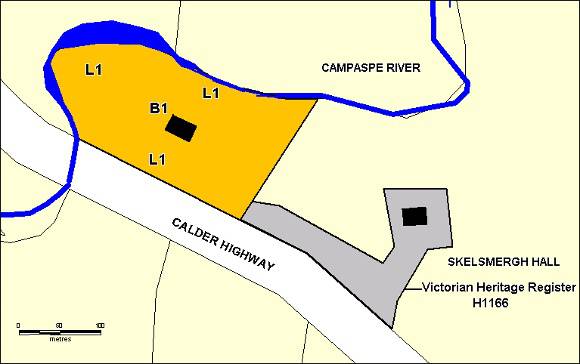
What is significant? Degraves Mill stands beside the Campaspe River on the site of the
head station of the Carlsruhe Run, established by Charles Ebden in May
1837. William Degraves acquired the run in the 1850s. Degraves was the
son of Peter Degraves, who had migrated to Van Diemens Land in 1824
and later established the Cascade Brewery. William crossed over Bass
Strait in 1849 and built his first steam flourmill in Flinders Lane in
the early 1850s. He expanded into importing and exporting and wool. Between 1840 and 1880 nearly three hundred flour mills were
established in Victoria, the greater proportion of them being steam
powered. Degraves had the mill built in 1857 to a design by FM White.
In October 1856 White let tenders in local and Melbourne newspapers
for the erection of a steam flourmill. Degraves also had a second mill
built in the Kyneton district, at Riverview in 1859. The details of
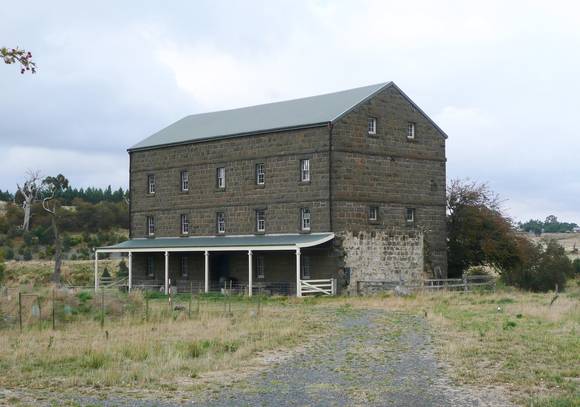
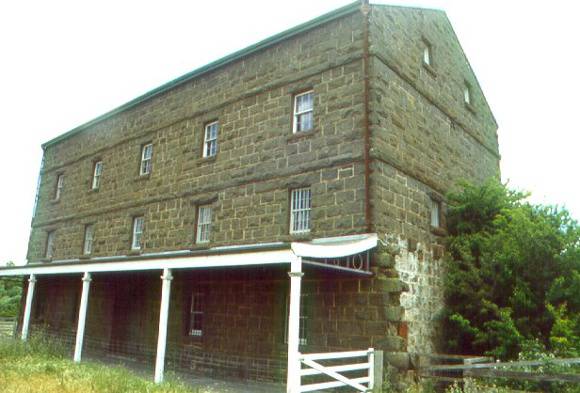
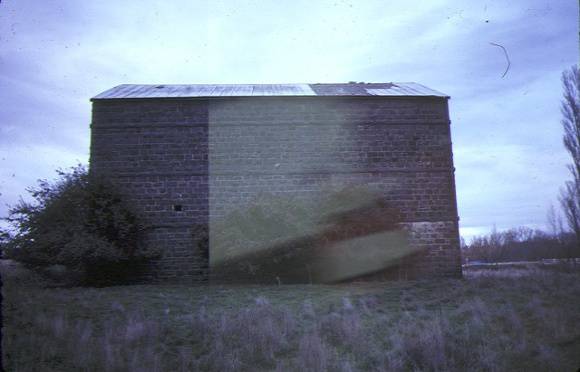
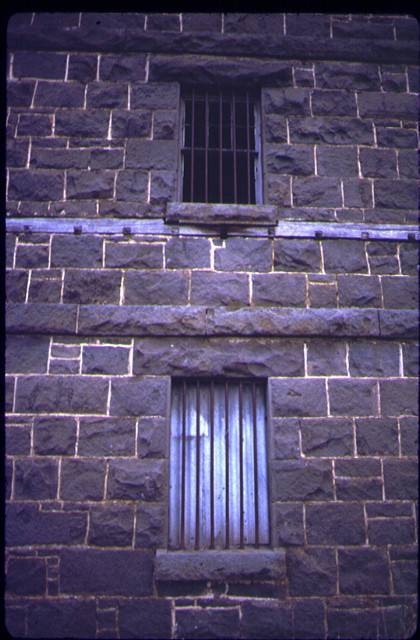
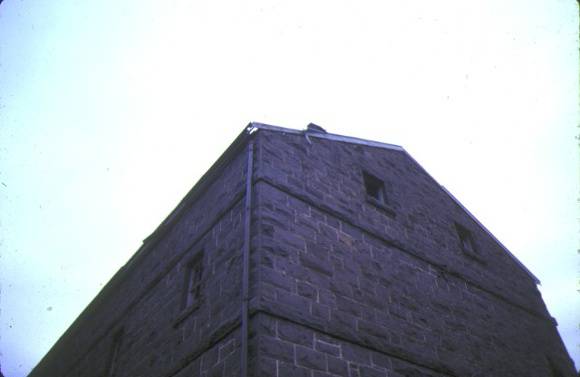
either mills machinery or capacity are not known. Degraves Mill is a large bluestone structure, rectangular in plan,
measuring about 20 metres by 10 metres. It has five main bays, defined
by small multi-paned windows, and has a hipped roof. The coursed
squared bluestone walls are relieved by only string courses, sills and
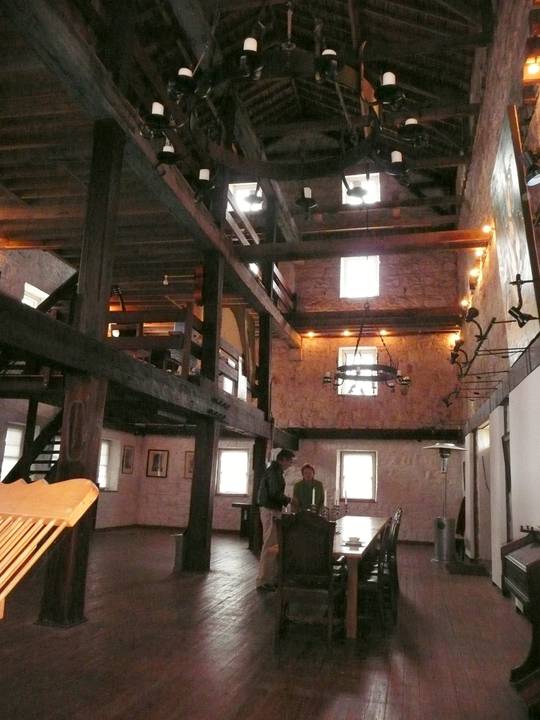
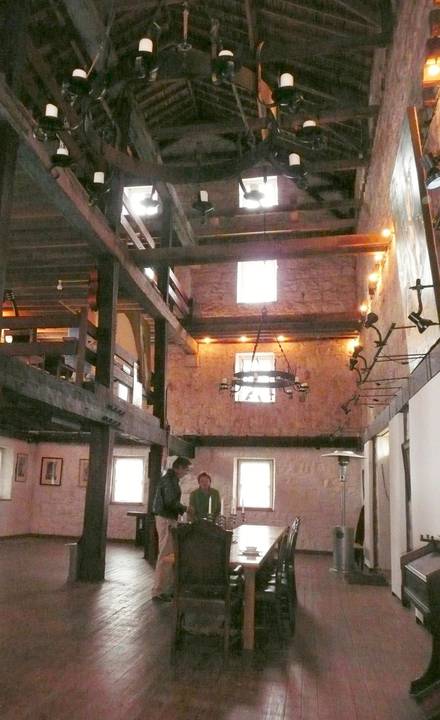
window heads. Internally the posts, beams and surviving joists are of Oregon. The
original shingle roof is preserved beneath corrugated iron. The
building is essentially a bluestone shell as all evidence of milling
activity, including machinery, has disappeared. The mill ceased
operating c1870. The adjoining engine room and chimneystack were
demolished c1890. The verandah is a recent conjectural reconstruction. Archaeological
remains of a boiling down factory survive in an area close to the mill. How is it significant? Degraves Mill is of historical, architectural, social and
archaeological significance to the State of Victoria. Why is it significant? Degraves Mill is historically significant as a representative example
of a large 1850s steam flour mill. Although the engine room and
chimneystack and most of the internal flooring have been removed,
Degraves Mill is a notable early industrial structure. The mill has a
simple Georgian character, embodying typical elements of flour mill
design, including solid bluestone construction with timber post and
beam internal framing. It is significant as evidence of a technology
and an important early local industry that is now lost. Degraves Mill is architecturally significant as a large, imposing
bluestone building in a rural setting. It stands alone and is in
dramatic contrast to the typically smaller scale of pastoral and rural
buildings of the region. Degraves Mill is socially significant as a landmark on the Calder
Highway, and is an important element contributing to the landscape of
this area of the Campaspe River valley. It signifies the beginning of
the township of Kyneton. Degraves Mill is archaeologically significant for its potential to
yield artefacts and other evidence relating to the location of boiling
down factory, sited near the mill.
Group
Manufacturing and Processing
Category
Boiling down works