
| Back to search results » | Back to search page » |


|
BENDIGO CHINESE TEMPLE
Other NameBENDIGO JOSS HOUSE Location3 FINN STREET NORTH BENDIGO , GREATER BENDIGO CITY
File Number601148LevelRegistered |
|




Statement of Significance
What is significant?
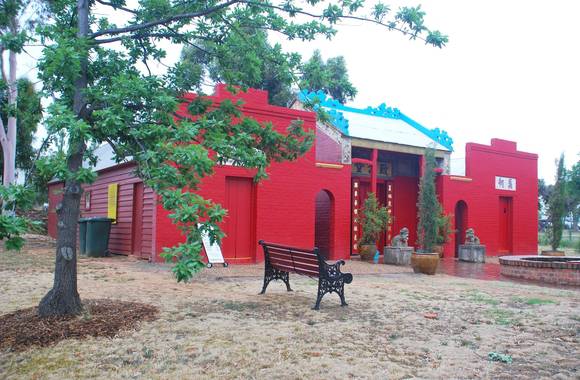
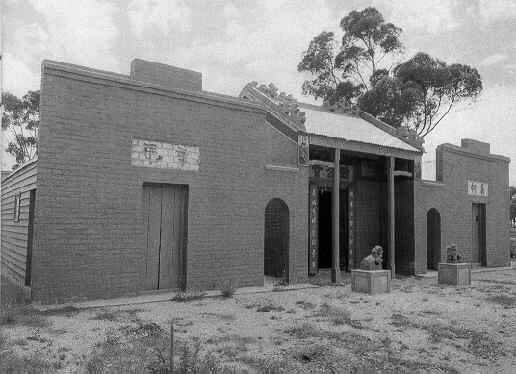
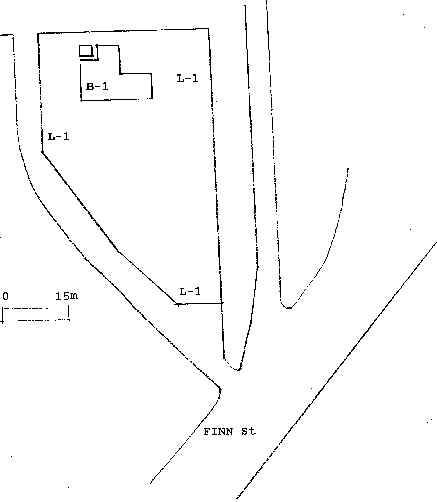
The Bendigo Chinese Masonic Temple is reputed to have been constructed in the 1860s by immigrant Chinese who had come to seek their fortunes as miners on the Victorian goldfields. The temple was one of a number whose construction was reported by contemporary newspapers but is the only temple surviving from the goldrush period in country Victoria. The temple was dedicated to the deity Chit Kung Tang but the inscription above the door reads 'Chinese Masonic Hall'. The temple fell into disrepair after being abandoned by the declining Chinese mining population. The site was subsequently incorporated into land held by the Commonwealth for defence production purposes during the Second World War. In the 1960s and 1970s the National Trust of Australia (Victoria) carried out a campaign to repair the building and to interpret its use and subsequently leased the site of the Temple from the Commonwealth Department of Defence. The complex is composed of an ancestral hall to the right and the temple in the centre. A caretaker's residence originally occupied the adjacent hall to the left and is now used as an interpretation centre. The temple and ancestral hall are brick while the residence is timber with a brick facade; floors are either brick or asphalt. The contents of the interior were imported from China in the early 1970s to display the traditional arrangement of a hall and temple. In 1999 the place was sold to the City of Greater Bendigo.
How it is significant?
The Bendigo Chinese Masonic Temple is of architectural and historical importance to the State of Victoria.
Why it is significant?
The Bendigo Chinese Masonic Temple is of architectural importance as an extremely rare form of religious building constructed in the Chinese tradition of temple building.
The Bendigo Chinese Masonic Temple is of historical importance to the state of Victoria in its ability to act as a tangible link to the lives and religious practices of the Chinese immigrants who came in large numbers to the Victorian goldfields during the second half of the 19th century. The temple is rare as a surviving structural artefact of that culture and period when so little else remains. The ephemeral nature of the way of life on the goldfields has meant an almost total loss of evidence of this cultural group and the survival of this building makes it unique in Victoria.
Group
Religion
Category
Temple