
| Back to search results » | Back to search page » |


|
ST VINCENT PLACE PRECINCT
Other NamesFERRARS PLACE , ALBERT PARK BOWLS CLUB , ST VINCENT'S PLACE PRECINCT , ST VINCENTS PLACE PRECINCT Location1-99 ST VINCENT PLACE SOUTH AND 2-94 ST VINCENT PLACE NORTH AND ST VINCENT GARDENS EAST AND ST VINCENT GARDENS WEST AND 10 MERTON STREET AND MONTAGUE STREET (PART) ALBERT PARK, PORT PHILLIP CITY
File NumberDLevelRegistered |
|




Statement of Significance
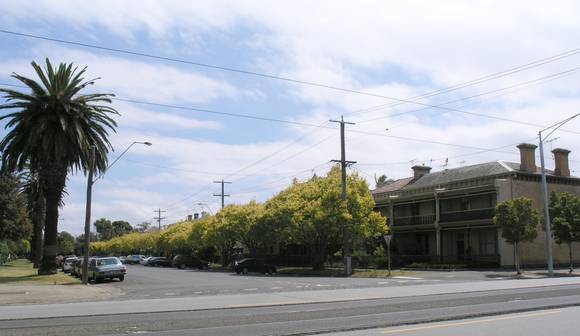
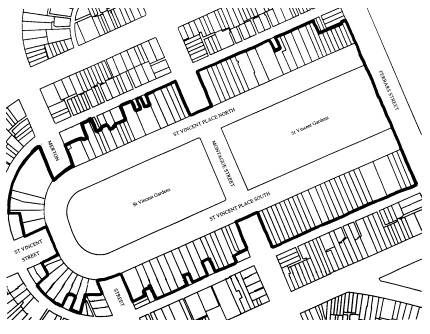
What is significant? The St Vincent Place precinct was first designed in 1854 or 1855,
probably by Andrew Clarke, the Surveyor-General of Victoria. The
current layout is the work of Clement Hodgkinson, the noted surveyor,
engineer and topographer, who adapted the design in 1857 to allow for
its intersection by the St Kilda railway. The precinct, which in its
original configuration extended from Park Street in the north to
Bridport Street in the south, and from Howe Crescent in the east to
Nelson Road and Cardigan Street in the west, was designed to emulate
similar 'square' developments in London, although on a grander scale.
The main streets were named after British naval heroes. The
development of the special character of St Vincent Place has been
characterised, since the first land sales in the 1860s, by a variety
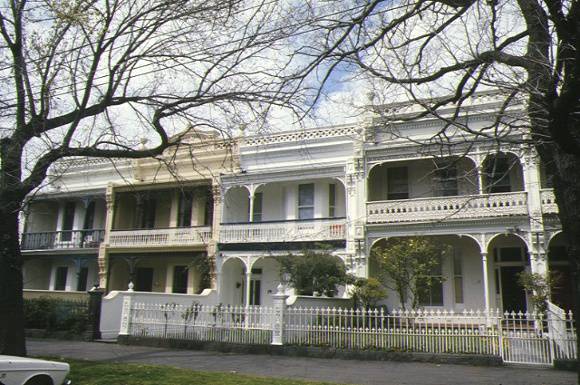
of housing stock which has included quality row and detached houses
dominated by Rochester Terrace (Heritage Register Number 813), and by
the gardens which, although they have been continuously developed,
remain faithful to the initial landscape concept. How is it significant? The St Vincent Place Precinct is of aesthetic, historical,
architectural and social significance to the State of Victoria. Why is it significant? The St Vincent Place Precinct is aesthetically important for the
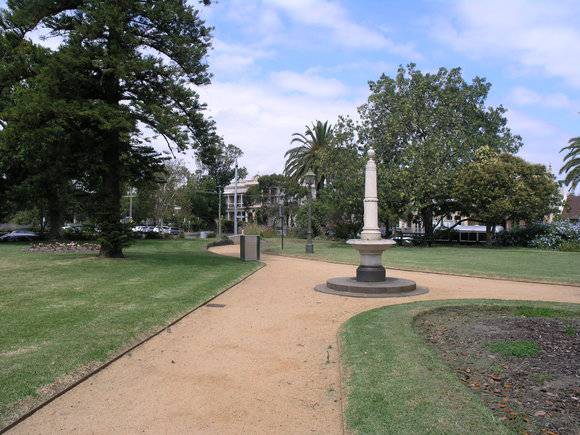
outstanding quality of its urban landscape. The major elements that
reflect this importance are the gardens with their gardenesque style
layout and fine collections of mature specimen trees, and the
harmonious relationship of the gardens with the residential buildings
facing them around St Vincent Place. The St Vincent Place Precinct is historically important as the
premier 'square' development in Victoria based on similar models in
London. It is significant as the largest development of its type in
Victoria and for its unusual development as gardens rather than the
more usual small park as at, for example Macarthur, Murchison, Lincoln
and Argyle Squares in Carlton. The precinct is also historically
significant for its associations with Surveyor General Andrew Clarke,
and more particularly with Clement Hodgkinson, a prolific and
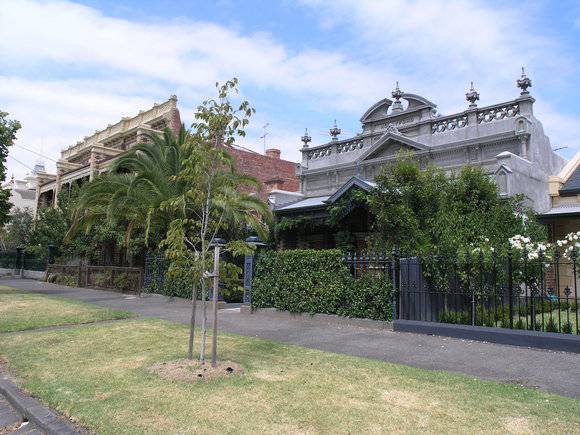
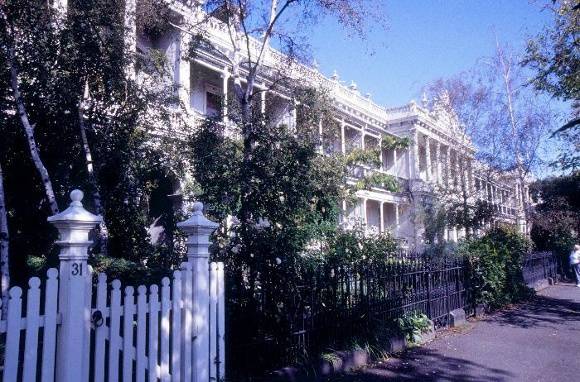
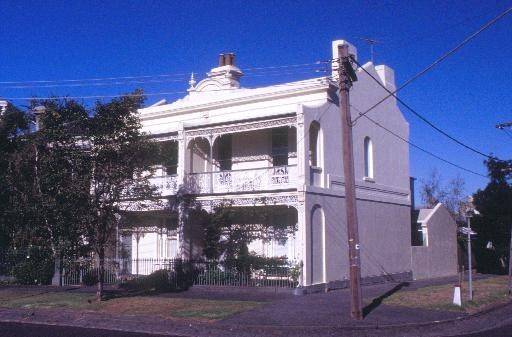
influential surveyor engineer in early Melbourne. The St Vincent Place Precinct is architecturally important for the
consistent quality of its built form and its high degree of intactness
from its earliest phase of development, characterised by a mixture of
one and two storey terraces and detached houses. The St Vincent Place Precinct is socially important as a reflection
of the aspirations of middle class residents in South Melbourne.
Because of the shared outlook on and use of the gardens, the precinct
has developed a sense of community cohesion unusual in the Melbourne
context. The gardens are also socially important as a focus of
community life for the surrounding district with the maintenance of
their amenity a priority of municipal government since their
inception. The existence of the tennis and bowls clubs in the gardens
for over a century is a further manifestation of this social importance.
Group
Urban Area
Category
Other - Urban Area