
| Back to search results » | Back to search page » |


|
EIGHT HOUR DAY TRADE UNION BANNERS
Other Name8 HOUR DAY BANNERS LocationMUSEUM OF VICTORIA, 11 NICHOLSON STREET CARLTON, MELBOURNE CITY
File NumberPL-HE/06/0007LevelRegistered |
|




Statement of Significance
What is significant? Museum Victoria holds the largest collection of Victorian trade union
banners used in Eight Hour Day processions from the late 19th century
to the First World War. The collection comprises the following eight
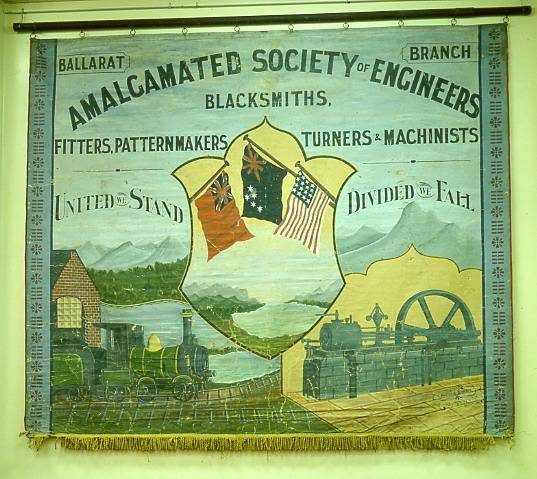
banners: Amalgamated Society of Engineers, Blacksmiths, Fitters,
Patternmakers, Turners & Machinists, Ballarat Branch (artists Kift
& Smith, 1890), now the Australian Manufacturing Workers Union;
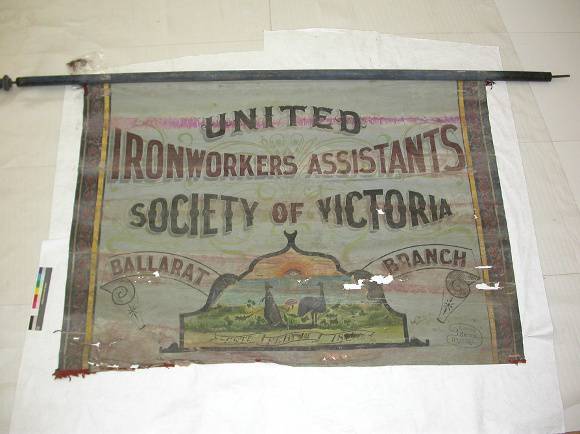
United Ironworkers Assistants Society of Australia, Ballarat Branch
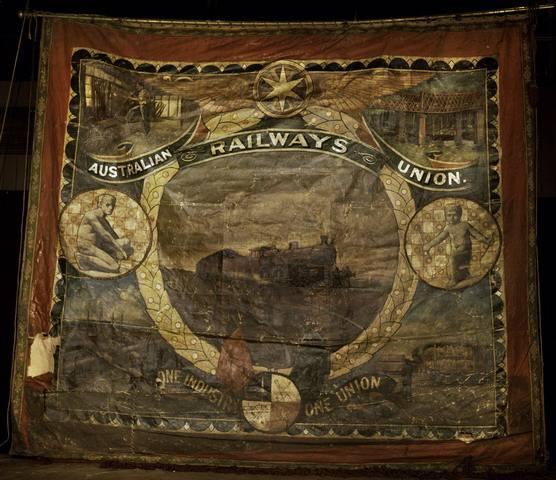
(Kift & Smith, 1890), now the AMWU; Australian Railways Union,
Victorian Branch (John Hennessy, c.1912), now the Rail, Tram & Bus
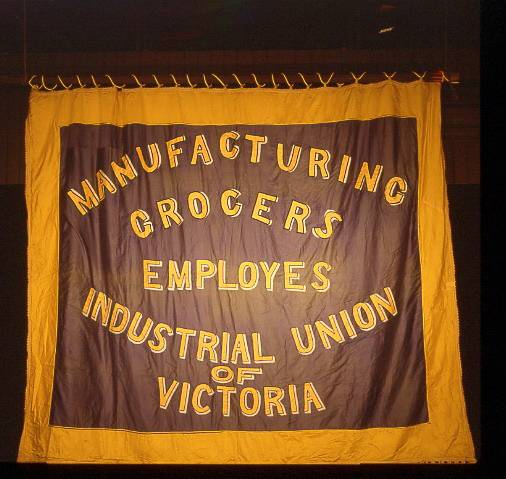
Union; Manufacturing Grocers Employees Industrial Union of Victoria
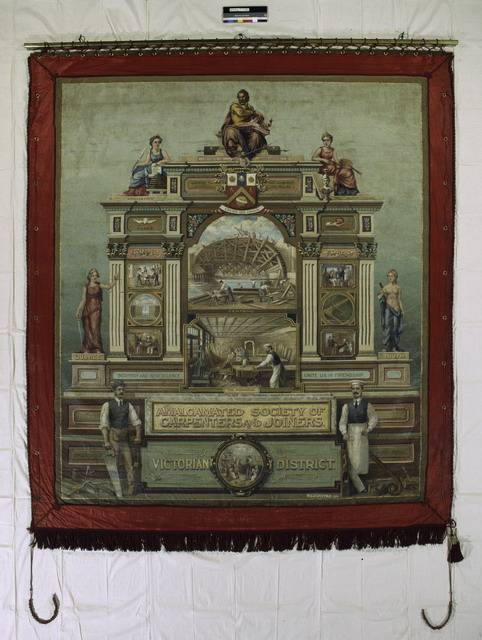
(c.1910-12), now National Union of Workers; Amalgamated Society of
Carpenters & Joiners, Victorian Branch (W. Dunstan, 1914), now the
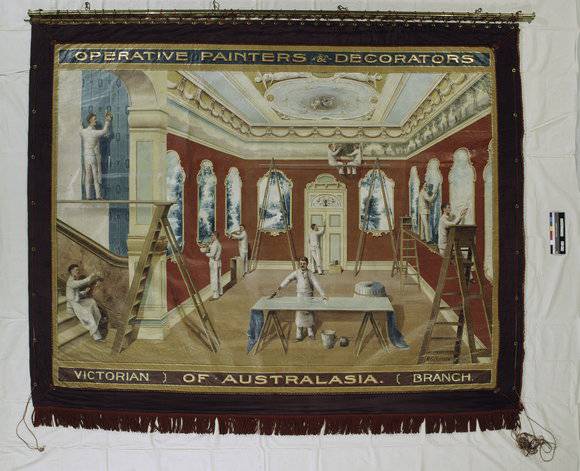
Construction, Forestry, Mining and Energy Union; Operative Painters
& Decorators of Australia, Victorian Branch (W. Dunstan, 1915),
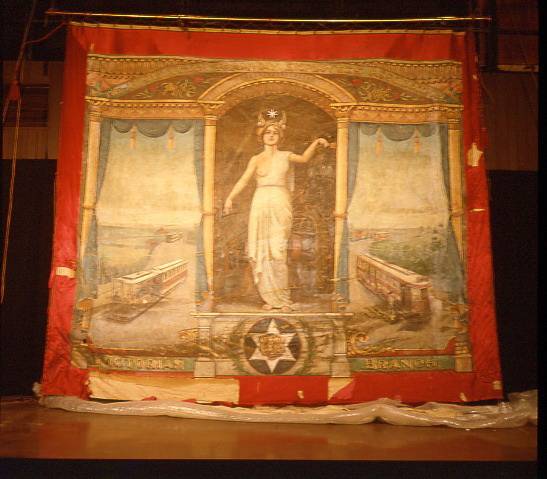
now the CFMEU; Australian Tramway Employees Association, Victorian
Branch (George Grant, 1916), now the Rail, Tram & Bus Union; and
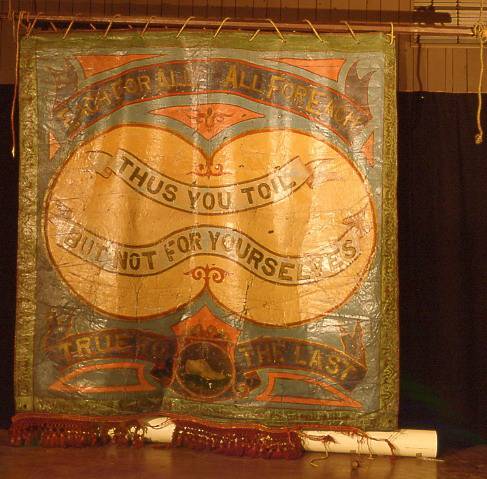
Australian Boot Trade Employees Federation, Ballarat Branch (nd), now
the Textile Clothing & Footwear Union of Australia. The first Eight Hour Day procession held in Melbourne in May 1856
celebrated the winning of the eight hour working day by building
workers, some of the first workers in the world to achieve these
conditions. They marched behind a banner declaring "Eight Hours
Labour, Eight Hours Rest, Eight Hours Recreation". Although the
right to an eight hour day did not immediately apply to all workers,
the movement provided the impetus for other trade unions to agitate
for similar conditions. Subsequently the march to celebrate the Eight
Hour Day became Melbourne's biggest annual procession and regional
towns also staged an annual procession. It grew in popularity after
the day was declared a public holiday in 1879, reaching its peak prior
to the First World War. In 1903 the Eight Hour Day monument (VHR
H2084) was erected in Spring Street and in 1923 was moved to its
current location at the corner of Victoria and Russell Streets. In
1934 the public holiday was re-named Labour Day. The procession
eventually declined in popularity and ceased in the early 1950s. After
1955 Labour Day became associated with the Moomba procession. The major features of the processions were the large trade union
banners, mounted and carried behind horse-drawn carriages or on
floats. Most banners were approximately three metres by four metres
and featured paintings on canvas and silk by skilled artists. Banners
were commissioned by particular unions to represent the collective
identity of a trade and they became important declarations of
legitimacy. One side of the banner was usually a realistic depiction
of the particular trade, including materials, tools and skills needed
to carry it out, while the other side used allegorical figures,
females in particular, and symbols brimming with classical allusions,
medieval guild references, and heraldic symbols to represent the
history and ideals of the trade. Australian references also appeared
including the Eight Hour Day symbol of the entwined figure of eight,
indigenous flora and fauna and the coats of arms of Australian
colonies. How is it significant? The Eight Hour Day Trade Union Banners are of historical, social and
aesthetic significance to the State of Victoria. Why is it significant? The Eight Hour Day Trade Union Banners are of historical and social
significance for their important associations with the history of
trade unionism in Victoria. The banners are important historical
documents visually depicting the concerns of workers, the nature of
their work, and the social and cultural aspirations and identity of
trade unions. Some of the banners demonstrate the evolving nature of
industry in their representation of trades that have disappeared and
craft unions that have been subsumed within bigger unions. For trade
unionists and many others in the community, the banners are powerful
symbols of the role played by unions in advancing conditions and wages
of working people. The banners have historical significance for their association with
the Eight Hour Day movement. The symbol of the Eight Hour Day
movement, the entwined figure of eight, appears on many of the
banners. The granting of the Eight Hour Day was one of the most
important industrial reforms won by unionists in the 19th century,
contributing towards the image of Australia as the "working man's
paradise" in the late 19th century and the development of
organised labour. The banners have historical significance as rare surviving examples
of 19th and early 20th century trade union banners. Although hundreds
of banners were produced for use in Eight Hour Day (later Labour Day)
processions, relatively few are known to survive and this collection
represents the only substantial collection in Victoria and one of only
two major Eight Hour Day banner collections in Australia. The banners have aesthetic significance as fine examples of 19th and
early 20th century banners demonstrating fine craftsmanship and
artistic skills. The highly decorated banners, with their complex mix
of symbolism and realistic depictions of contemporary industry, are
unique artistic records of the trades, skills and aspirations of
working people.
Group
Collections
Category
Community Objects