
| Back to search results » | Back to search page » |


|
East Collingwood Rifles Volunteer Orderly Room
Location444-446 VICTORIA PARADE and CNR POWLETT STREET EAST MELBOURNE, Melbourne City
File NumberOriginal Hermes No: 5194Level- |
|




Statement of Significance
What is significant?
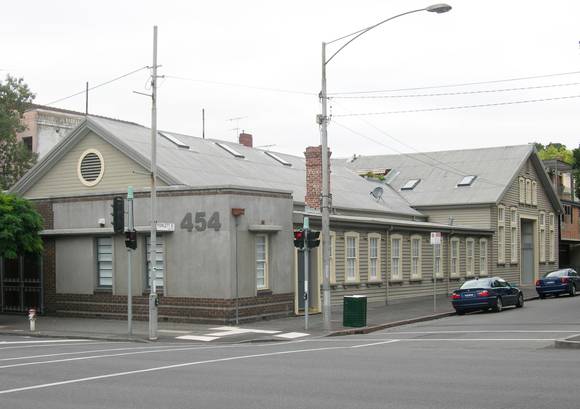
The timber East Collingwood Rifles Volunteer Orderly room was initially constructed in 1864 by builder William Radden with donations from members of the unit. The hall was at that time situated at the north west corner of a reserve which had been used as a cricket ground. Following the defence reforms of Sir Frederick Sargood in 1884 the East Collingwood orderly room was one of the few metropolitan halls taken over by the government for the newly formed paid militia. In 1885 additions were made in the form of attached offices, a new transverse hall and a sergeant-major?s quarters (since demolished). These additions were designed by Victorian Public Works Department architect Samuel Bindley and their detailing is typical of many other drill halls of the period. In 1937 a brick addition was made to the north end of the 1864 building in the moderne style and the 1864 hall was given a jarrah floor to replace the former asphalt. The drill hall has been used by a variety of army units including infantry, artillery, ordnance and survey. The 1864 hall still has an extensive shingle roof under its corrugated iron.
How is it significant?
The East Collingwood Rifles Volunteer Orderly Room is architecturally and historically important to the State of Victoria.
Why is it significant?
The East Collingwood Rifles Volunteer Orderly Room is historically important as one of only two surviving timber orderly rooms from the volunteer era of Victorian colonial defences, the other being the Richmond Rifles orderly room in Gipps Street Richmond. Its continual use for defence training purposes since 1864 adds to its significance. The place is also historically significant for its associations with the volunteer movement in Victoria, particularly the East Collingwood Rifles. The 1885 additions are an important manifestation of the defence reforms of the 1880s. The 1937 brick addition is of interest as a manifestation of the increased spending on defence after years of decline in the lead up to the Second World War.
The East Collingwood Rifles Volunteer Orderly Room is architecturally important for the survival, almost intact within the later additions, of the now rare timber early colonial volunteer orderly room of 1864. The survival of the timber shingle roof is a remarkable, rare and highly significant feature.
Group
Military
Category
Drill Hall