
| Back to search results » | Back to search page » |


|
CUMING GARDEN (WOODBINE)
Other NameWOODBINE Location161-163 KOOYONG ROAD TOORAK, STONNINGTON CITY
File NumberHER/2001/001428LevelRegistered |
|




Statement of Significance
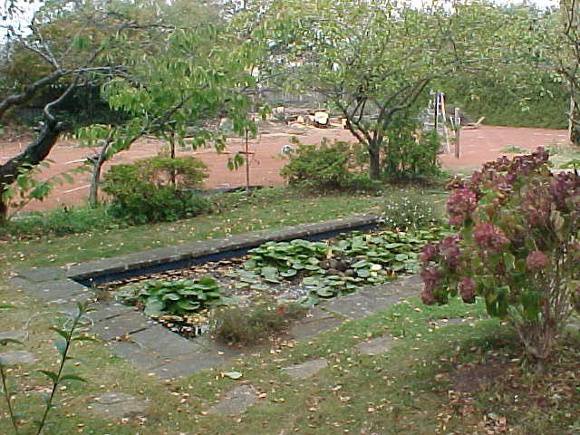
What is significant? How is it significant? Why is it significance? The Cuming Garden is of aesthetic significance as an exceptional design response to a long narrow suburban allotment. The garden design uses every corner of the garden, and the geometric layout and planting is dictated by a straight drive, tennis court, and rectangular lawns to the east and south of the house, while west of the house the lawn is a larger informal space and the planting is irregularly arranged. The dense perimeter planting and separation of spaces ('rooms') for functional and design purposes is subtly executed by the use of low walls, flagstones, steps, tea-tree and timber fences and gates, a large Lilly Pilly hedge and smaller hedges, and planting to define entrances to the next garden room, each with an individual character. The layered landscape of trees, shrubs andsmall plants of many species provide seasonal colour and contributes significantly to the garden's visual qualities and experience. This is especially a feature of the driveway planting, often a difficult area to landscape. The Lily pond is planted with a variety of colourful water lilies and Iris. The Cuming Garden is of scientific (horticultural) importance for the extensive use of a large number of taxa popularised by Edna Walling. The extensive palette of Walling plants used in this garden survives to an extent rarely seen in other gardens designed by Edna Walling as there havebeen only minor alterations and and a few later plantings. Many of the plants became Walling's signature plants, and include; Acer, Acmena, Betula, Baeckia, Camellia, Chaenomeles, Chimonanthus, Crataegus, Cotoneaster, Erigeron, Helleborus, Malus, Nandina, Pittosporum, Leptospermum, Philadelphus, Deutzia, Spiraea, Viburnum, bulbs and perennials. Also of horticultural interest are the rare Alectryon excelsus,Forsythia suspensa, Quercus phellos, Phillyrea latifolia, Rothmania globosa,Diospyros whyteana, Parrotia persica, and a fine Deutzia scabra 'Candidissima'.
In June1938 businessman Mariainnus (Matt) Cuming bought 'Woodbine', a brick Victorian villa built in 1897 for Thomas Lockwood and extended in 1907 for Dr Norman Macarthur to designs by Kligender and Alsop. Cuming engaged architect Marcus Martin to modernise the house, and garden designer Edna Walling to redesign the garden. Martin removed the verandahs, provided for a garage and relocated the main entrance to a side portico. Walling designed the garden around some existing trees and the requirement for a tennis court. The new design included such Walling trademarks as ponds, sun dial, flagstone paving, stone walls, drying area, Lilly Pilly hedge and ornamental trees and shrubs. The garden design is a typical example of her suburban formal design, where separate spaces, or 'rooms' are created through the use of mass planting, hedges, walls, steps and fences. In order to accommodate the tennis court and a larger garden, part of an undeveloped block to the south was incorporated into the design. In the front garden were two ponds (one since filled in and the bronze figure removed) and a sundial (missing). The back garden had a drying area. A feature of the garden is the dense perimeter planting, the use of a Lilly Pilly hedge on the south boundary, and the mixture of ground covers, bulbs, small and medium shrubs and trees to form a layered landscape. The western area, not covered by the Walling plan, is planted with fruit trees and roses and is now mostly dominated by a large English Oak. Remarkably, the two cube shaped cypress shown on the Walling plan still remain framing the entrance to the orchard and garden shed. In 1960 the property passed from Cuming ownership to the Guest family who maintained the garden and made few changes apart from filling in one of the ponds, removing the curved stone steps and sundial. In 2002 the property was sold in two lots and two significant trees were removed.
The Cuming Garden is of historical, aesthetic and scientific (horticultural) significance to the State of Victoria.
The Cuming Garden is historically significant as an important early example of Edna Walling's landscape style for suburban gardens, which she termed 'Picturesque', using both formal geometric and informal design features to create a series of well defined garden spaces. The garden is one of only a few that remains largely intact and respectful to its original (1938) plan and vision. Walling is considered to one of Australia's most important and influential landscape designers of the twentieth century. As well as being the most prolific designer in Victoria, she was also a popular writer, talented photographer and important landscape critic and conservationist. Walling used a few photographs of the Cuming garden in her books.
Group
Parks, Gardens and Trees
Category
Garden Residential