
| Back to search results » | Back to search page » |


|
BRAILLE LIBRARY AND HALL
Location31-51 COMMERCIAL ROAD SOUTH YARRA, STONNINGTON CITY
File NumberHER/2000/000276LevelRegistered |
|




Statement of Significance
What is significant?
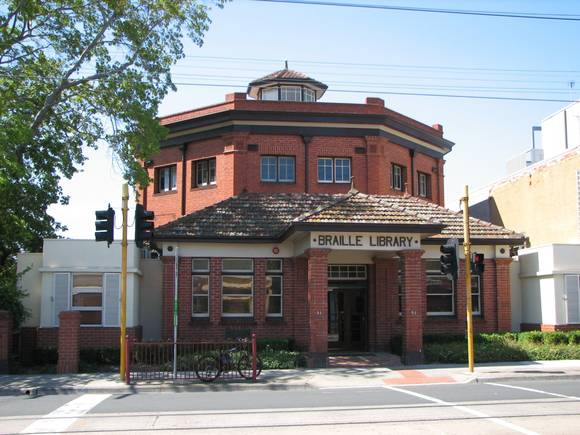
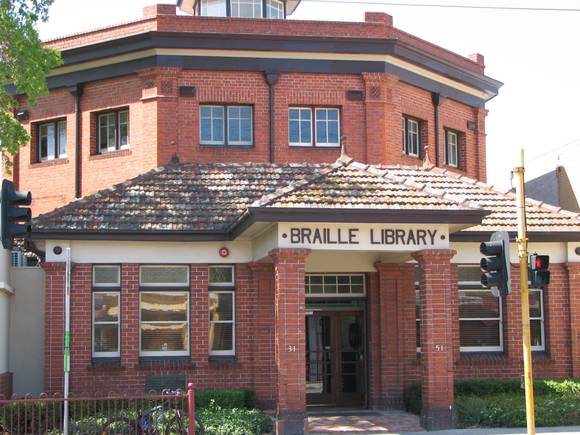
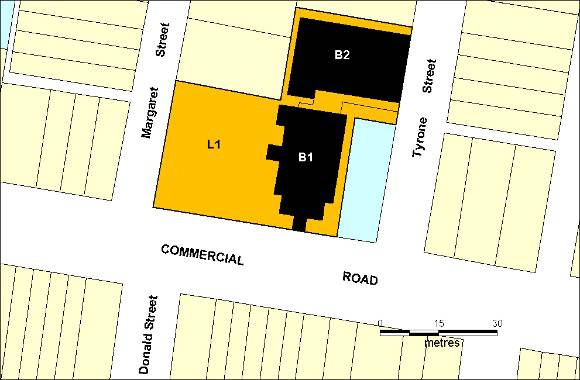
The Braille Library and the Braille Hall were designed by the Melbourne firm of commercial architects A & K Henderson. The library was constructed in 1918-19 and the hall in 1926-27. The library was designed with its special clientele in mind, having hand rails around the walls, few steps and rush matting on the floor to assist in navigation around the building. The building displays little embellishment or elaboration being constructed and finished in a relatively plain, free classical style in red brick. The building's main architectural feature is a dome-shaped octagonal space lit by inset windows and cupola roof lantern. There is office space at the front of the building and formerly a stage at the rear (since removed) framed by pilasters which are still in place. In 1927 the one storey Braille Hall was constructed in brick, in a manner sympathetic to the library. The hall was used for musical and theatrical performances with a stage, kitchen and dressing rooms at the western end. Full height folding doors allowed the hall to be divided into smaller spaces. Unusually, the stage boasts a central memorial fireplace flanked by stained glass windows (the stained glass has recently been removed). By 1939, further land had been purchased to the West of the site on which the Millicent Ritchie Memorial Garden was established. In the 1960s an infill connection was built between the library and hall. The place is remarkably intact and, apart from a collapsed cornice on the north exterior wall of the hall, in reasonably good condition.
The Braille Library was commissioned by the Victorian Association of Braille Writers which had been formed in 1894 principally by Tilly Aston, who had herself abandoned her tertiary studies due to the lack of Braille books, and by May Harrison the Association's honorary secretary for 18 years. In 1917 the Association purchased the land mainly with funds from the Edward Wilson Trust. The library was ready for use by April 1919 when the Argus reported its clientele consisted of the 1200 "blind citizens of the State as well as 20 returned soldiers who had lost their sight during the War". By 1972 the Association had extended its services to include talking books and changed its name to the Braille and Talking Book Library, adding recording studios to the site. In 1990 the library merged with the Association for the Blind and the site was acquired by the State Government. Vision Australia (the successor to the Blind Association) remained on the site to January 2001.
How is it significant?
The Braille Library and Hall is of historical and architectural significance to the State of Victoria.
Why is it significant?
The Braille Library and Hall is of historical significance for its long, 80 year, association with the provision of services to the blind and visually handicapped, and the production of Braille and later talking books on site. It is historically important for its associations with one of the largest collections of Braille books in the world. The place is also historically significant for its links to the Victorian Association of Braille Writers, an association of volunteers who transcribed books into Braille and made them available to the visually impaired free of charge.
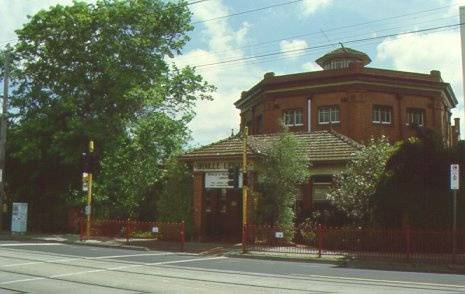
The Braille Library and Hall and its associated garden are of aesthetic and historical importance for their landscape and streetscape contribution to Commercial Road. The garden, with its unusual hedge of Duranta erecta (Pigeon Berry) and its mature exotic trees, is important as a memorial to Millicent Ritchie, honorary secretary of the Association for over 20 years, and for its long associations with the library.
The Braille Library and the Braille Hall are of architectural significance as designs of the noted architectural firm of A & K Henderson. The library building, with its domed interior space reminiscent of the much larger domed reading room of the Public Library, is an interesting, purpose designed building which is highly intact.
Group
Community Facilities
Category
Community Objects (movable)