
| Back to search results » | Back to search page » |


|
NATIVE POLICE BARRACKS (FORMER)
Other Name
LocationOFF OAKBANK LANE, LOT 7 PS437883, HEYWOOD, GLENELG SHIRE LevelRecommended for Heritage Overlay |
|




Statement of Significance
What is Significant?
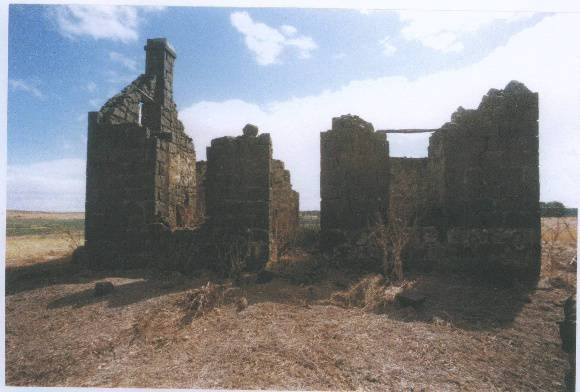
The stone ruin (on Allotment 2, Section 7, Parish of Drumborg) located 7.5km due north of Heywood between Drumborg and Mount Eckersley, is almost certainly the Native Police Barracks or, possibly, the Officer of Native Police Quarters built in 1843, one of four structures built for the police at the time. Lt. Governor La Trobe set up the Native Police Corps in 1842. James Blair, Police Magistrate at Portland reported the completion and fitting out of the buildings to La Trobe in 1843. This was the third such attempt to form such a corps in the Port Phillip District prior to separation from the mother colony of NSW. The corps was formed in response to the conflict between pastoralists and Aborigines in the first years of European settlement. The conflict was particularly violent in the Western District. The corps under the command of Captain H Pulteney Dana JP (1820-1852) operated in the Portland Bay district (which included Glenelg Shire) between 1842 and 1849 and was acknowledged for its professionalism. It appears that the members of the corps were employed more or less as equals to Europeans, such as the Mounted Police located in Barracks closer to Heywood on the north bank of the Fitzroy River. The Native Police Barracks was constructed in 1843 for Dana and his Aboriginal force and used by them at least until 1849. The corps was finally disbanded in 1853. The building's immediate fate, when the conflict had subsided, is not known in detail. It may have been taken over by Colin Hunter, a pioneer settler in the Mt Eckersley area. In 1842, a year prior to the construction of the Native Police Barracks, Captain Dana visited Hunter at Mt Eckersley. Hunter sold his station in 1850 to Donald Cameron (1810-1879). The building was eventually subsumed into the Oakbank pastoral property owned by Cameron from c1845 to 1879, then by the Quayle family until the end of the twentieth century. A plan of the Oakbank Estate dated 1885 describes the building as a house. A 1942 Army ordnance map describes the building as a hut. The building's form is traditional particularly to northern Britain and is similar to the earliest part of the Oakbank homestead and, although smaller and simpler, is also similar to the Customs House as Portland built in 1849. It was symmetrical and single storey with an attic under the gable roof. The ground floor had two rooms with a central door flanked by windows and a chimney in the side wall. All of the original joinery, flooring and roof structure have been lost. The coursed bluestone walls still stand to more or less their original height. There is no surviving garden or significant vegetation. The site has substantial archaeological potential.
How is it Significant?
The Native Police Barracks is of historical, social and architectural significance to the State of Victoria.
Why is it Significant?
The Native Police Barracks is of historical significance as a demonstration of the pre-Separation colonial government's response to the conflict between Aborigines and Squatters, the worst conflict being in the Portland Bay district. It has direct associations with Lt. Governor Charles Joseph La Trobe, Captain H Pulteney Dana, Commander of the Native Police and James Blair, Portland Police Magistrate. It has subsequent historical significance as part of the Oakbank squatting run occupied and later owned by Donald Cameron and subsequently the Quayle family. It is of social significance as the only surviving evidence in Victoria of the employment of Aborigines on more or less equal terms with Europeans in the public service. The building has architectural significance for its traditional form and for its parallels with buildings at Oakbank homestead and at Portland.
Group
Law Enforcement
Category
Staff Accommodation