
| Back to search results » | Back to search page » |


|
EAGLE HOUSE
Location473 BOURKE STREET MELBOURNE, MELBOURNE CITY
File Number605805LevelRegistered |
|




Statement of Significance
What is significant?
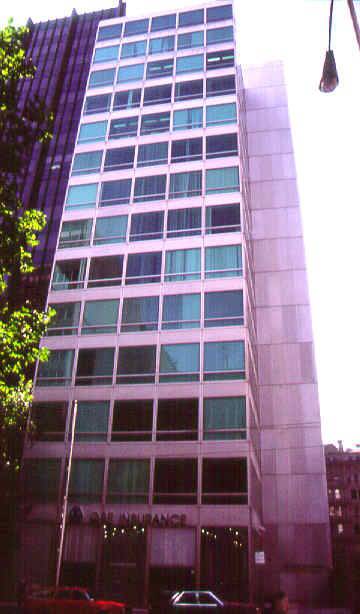
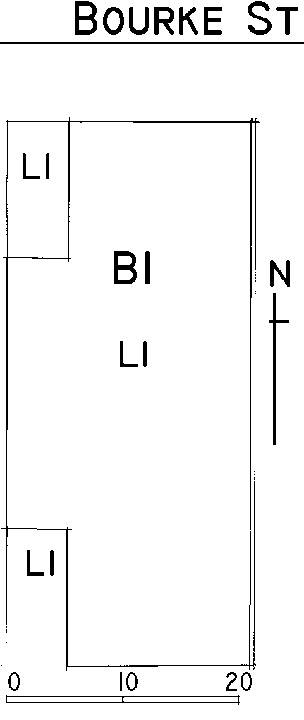
Eagle House was built in 1970-71, and was designed by the noted Melbourne firm of Yuncken Freeman Bros. Architects, as the headquarters for the local branch of the London based Eagle Star Insurance Co. The completed building was highly regarded by the architectural community, winning the RAIA Award of Merit in 1972 as 'one of the most elegant and attractive office buildings in Australia', as well as the inaugural Alcoa Australia Award for aluminium use in 1973. The green tinted glass and natural finished aluminium curtain wall is delicately detailed, and flush, forming a taut skin over the simple rectangular volume of the projecting front section of the 12 storey office tower. The service core, a simple aluminium clad volume, is located towards the rear of the site, allowing the curtain wall section to appear free-standing.
How is it significant?
Eagle House is of architectural significance to the State of Victoria.
Why is it significant?
Eagle House is of architectural significance as one of the finest examples of the curtain wall phase of Australian commercial architecture. The walling is particularly sophisticated, representing the ultimate refinement of the sheer skin-like qualities of earlier examples, such as Gilbert Court and ICI House. The green tinted glass and natural finished aluminium are detailed to be absolutely flush, and form a tight 'skin' wrapping around the front tower-like portion of the building. The curtain wall is finely resolved and detailed, incorporating one of the first examples of floor to ceiling glazing, with vertigo rail, and thick horizontal bands of the aluminium cladding, covering the ceiling space. The elegance of the design is enhanced by the slim vertical mullions, which create a fine grid, and by cantilevering the whole first bay of the building, minimising the visibility of the structural concrete columns within. Eagle House is notable for its use of colour and materials and slick modern presentation, while its modest scale and fine proportions allow the building to retain a human scale. Its qualities were recognised by the RAIA, which gave the building the Award of Merit in 1972.
Eagle House is also part of a nationally important precinct of post-war commercial office towers, including the highly significant (former) BHP building, the adjacent (former) Estates House, both by Yuncken Freeman, and the AMP tower and St. James building complex by Skidmore Owings and Merrill.
Group
Commercial
Category
Commercial Office/Building