
| Back to search results » | Back to search page » |


|
GRIMWADE HOUSE
Location28-54 DUNDAS STREET RYE, MORNINGTON PENINSULA SHIRE
File NumberPL-HE/03/1261LevelRegistered |
|




Statement of Significance
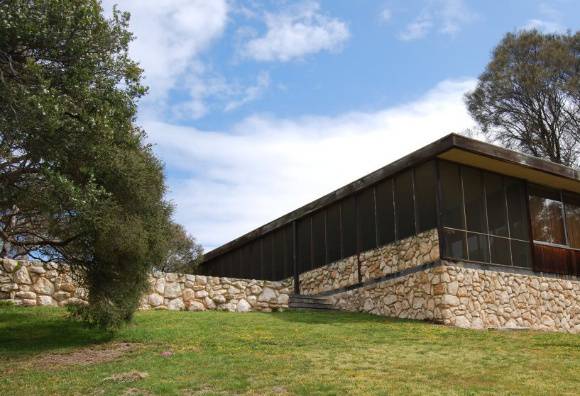
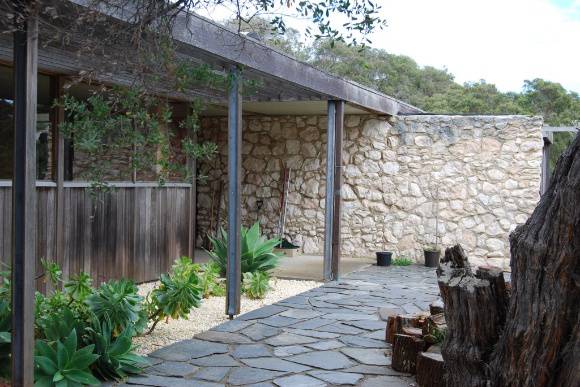
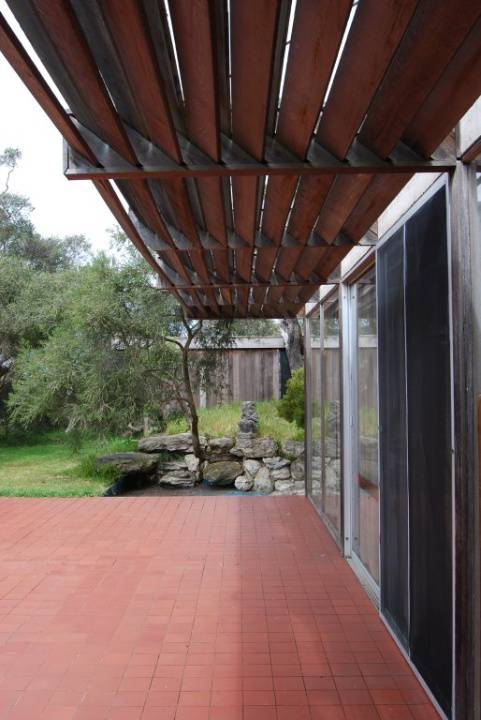
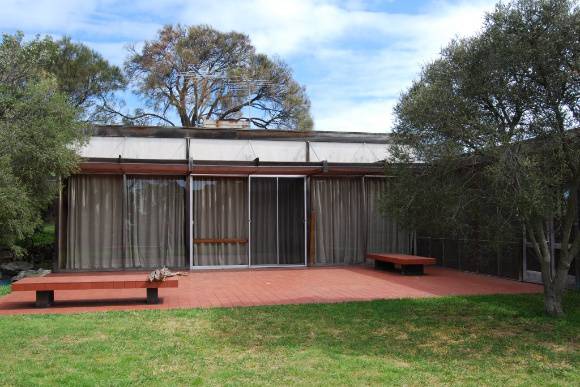
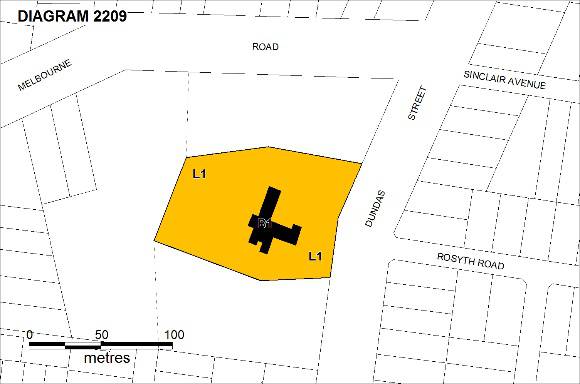
What is significant? The Grimwade House was designed by McGlashan and Everist and constructed in 1961-62 for Geoffrey Holt Grimwade (1902-1961), his wife and their four daughters. Geoffrey Grimwade was a highly influential Victorian business leader, who helped establish the Institute of Public Affairs, and who has been described as one of the ablest businessmen of his generation. It was built as a retirement home that could also serve as a holiday house, on a large block of land at Rye , hidden from view by the extensive natural bush of melaleucas and casurinas. It is located on a sandy ridge about half kilometre from Port Phillip Bay. The house, designed on a ten foot module, comprises five flat-roofed pavilions, linked by covered ways, which create a variety of sheltered outdoor courtyards between the wings. The walls are constructed of vertical western red cedar boards weathered to natural grey, rubble limestone quarried on the site, extensive floor to ceiling glass and sliding panels, with the main bedroom wing having a generous breezeway with flywire panels on one side. The main wing has vermiculite ceilings and clay tile floors, while the other wings have Stramit (a wheat straw board) ceilings and vinyl floor coverings. Rattan blinds are used throughout the house. Apart from lawn and areas paved with stone and clay tiles immediately around the house, the site has retained its natural bushland. The house, which shows the influence of Japanese architecture, is designed to sit comfortably within the natural bush landscape. It shows a creative and radical approach to siting, form, planning, and use of materials - limestone quarried on site, the clay tiles linking indoor and outdoor areas, use of western red cedar externally and internally, allowed to weather to a natural grey. Its separate pavilions are sited to create different sheltered courtyards or outdoor rooms, and to provide for maximium flexibility and privacy. The paved area extending in clay tiles from the main living area into the garden helps to blurr the distinction between inside and out. The sunshading allows winter sun to penetrate but excludes summer sun, and natural ventilation is abundant, with a large flyscreened breezeway linking the living and main bedroom wing. The Grimwade House was published in Architecture in Australia in 1964, following the awarding of the Victorian Architecture Medal for 1963 in the same year. It led directly to other commissions, including John and Sunday Reed's house at Aspendale, and then Heide II, and established McGlashan and Everists' reputations as designers of beautifully sited, elegantly minimal houses with a distinctly Australian character and setting. Geoffrey Grimwade's untimely death in 1961 prevented the house becoming his retirement home, but it continues to be owned and used by the Grimwade family. How is it significant? The Grimwade House is of architectural and aesthetic significance to the state of Victoria. Why is it significant? The Grimwade House is of architectural and aesthetic significance as a particularly outstanding and largely intact example of a house by accomplished Victorian architects McGlashan and Everist, illustrating key directions in domestic architecture in the 1960s. The Grimwade House at Rye is of architectural significance as an influential work of McGlashan and Everist, emerging young architects at the time.
Group
Residential buildings (private)
Category
House