
| Back to search results » | Back to search page » |


|
MELBOURNE GENERAL CEMETERY
LocationCOLLEGE CRESCENT CARLTON NORTH, MELBOURNE CITY
File Number606121LevelRegistered |
|





Statement of Significance
What is significant?
"http://www.w3.org/TR/html4/strict.dtd">
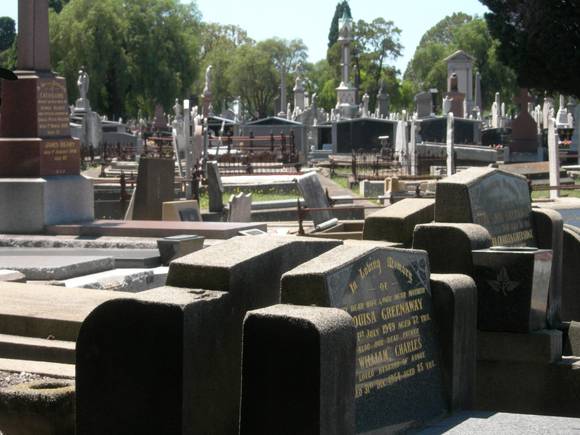
The Melbourne General Cemetery was established in 1850 pursuant to
an act of the New South Wales parliament. Designed by Albert
Purchas, surveyor and architect, it was opened in 1853 and is one of
Melbourne's most visited and loved sites. The cemetery expanded in 1859,
closed in 1903 and reopened in 1927. The cemetery is centrally located,
one kilometre north of Melbourne's central business district and
contains unique evidence of Victoria's colonisation. Its features
include various chapels, a recent mausoleum, funerary ovens,
rotundas,significant trees and shrubs, gatehouses and a myriad of
pathways laid out in a serpentine formation. Throughout the twentieth
century the cemetery experienced a severe lack of maintenance through
various periods of decline, its lowest being the 1950s. The cemetery
trustees resigned en masse in 1978 and were replaced by a temporary trust
consisting of three Health Commission officers. In 1980 The Necropolis,
Springvale was appointed the trustee of the Melbourne General Cemetery
to oversee its management and maintenance.
How is it significant?
The Melbourne General Cemetery is of historical,
social, aesthetic, scientific and architectural significance to the State
of Victoria.
Why is it significant?
The Melbourne General Cemetery is of historical importance due to its
significant contribution to the city as both its oldest existing cemetery
and its first modern cemetery. Much of Victoria's colonial history can be
traced through the headstones, memorials and monuments commemorating the
lives both of prominent citizens and the everyday men and women who
contributed to life in the early days of Victoria.
The Melbourne General Cemetery is of social importance due
to its representation of early burial practices, reflecting both
the hardships faced by those seeking their fortunes in the goldfields
of Victoria and also the opulence of the more affluent members of
society such as wealthy landowners and members of parliament. Its
social significance is also genealogical, as cemetery records as well
as inscriptions on the gravestones themselves can assist greatly when
searching for a unique insight into the history of past Victorians. It
is also a clear representation of cultural attitudes, technology, skills
of craftsmen,use of materials and also the high mortality rate
experienced particularly through the 1850s.
The Melbourne General Cemetery is of aesthetic importance due to the
meticulous planning of architect Albert Purchas (1825-1909), and botanist
Baron Ferdinand von Mueller (1825-1896) who were responsible for the
formal and romantic layout of the cemetery and also the plantings of
exotic and indigenous species of flora. The headstones ,rotundas,
memorials, chapels and other examples of funerary art collectively form
a major visual element. Distant views from the elevated site as well as
views into and within the cemetery contribute to its significance.
The Melbourne General Cemetery is of architectural importance due
to the presence of many typical cemetery buildings and structures
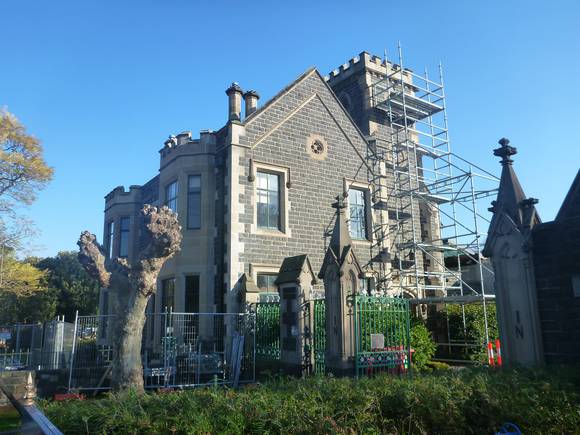
of high architectural quality such as the gatehouse, two chapels, a
funerary oven and eight rotundas. The headstones and memorials are also
important architectural features for their unique design characteristics
and craftsmanship.
The Melbourne General Cemetery is of scientific(horticultural)
importance for the presence of traditional cemetery plantings such the
Italian cypress (Cupressus sempervirens) and the pepper tree (Schinus
molle) and for the presence of a rare long leafed Indian pine (Pinus roxburghii).
Group
Cemeteries and Burial Sites
Category
Cemetery/Graveyard/Burial Ground