
| Back to search results » | Back to search page » |


|
FORMER MARKET HALL AND ROYAL OAKS
Other NamesSHIRE OFFICES , SHIRE HALL , MALDON MUSEUM Location93 HIGH STREET MALDON, MOUNT ALEXANDER SHIRE
File Number604857LevelRegistered |
|



Statement of Significance
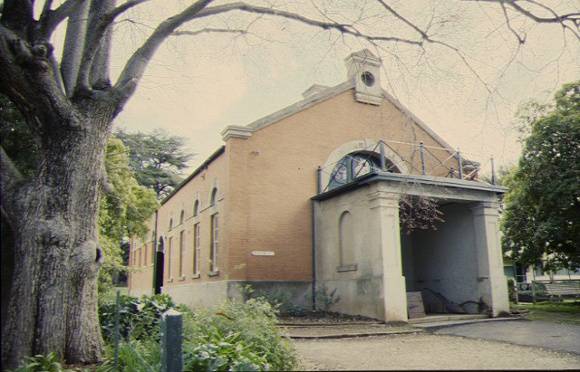
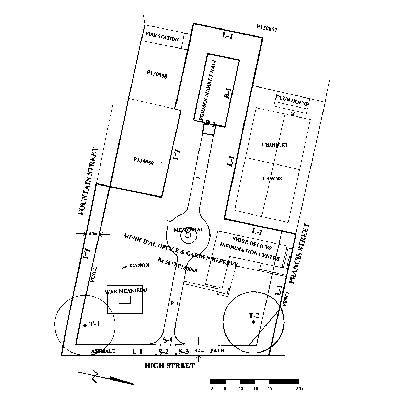
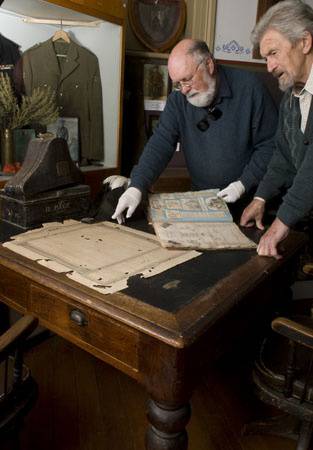
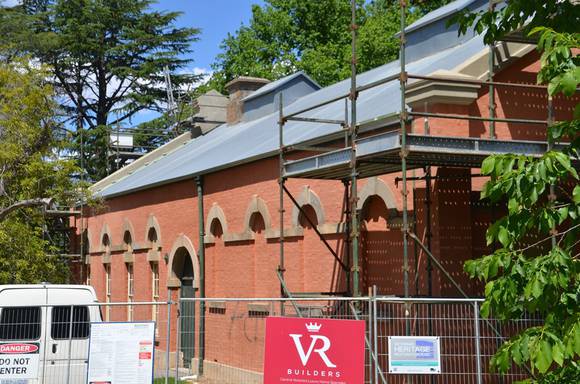
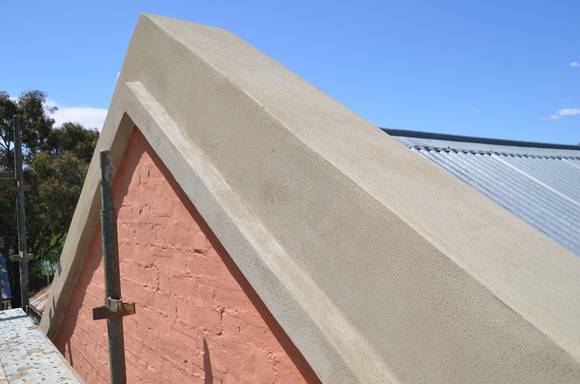
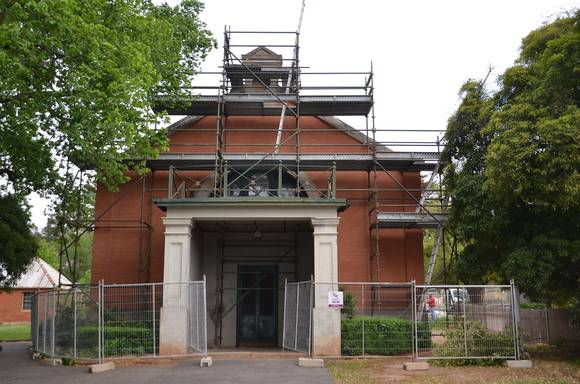
What is significant? Maldon was proclaimed a municipality in August 1858 and one of its earliest projects was to commission the architect Arthur Hartley to design a market hall. The foundation stone was laid by Mr Wright, first chairman of the municipality on 25 April 1859. The gable roofed brick hall was constructed by Jameson, Aitken and Marshall. Originally it had a large arched entry at either end with flanking arched windows. An underground water tank was also built. The market proved to be a failure and closed in the early 1860s. On the 19th May 1863 two English Oaks (Quercus robur) were planted to commemorate the marriage of Prince Albert Edward (later King Edward VII) to Alexandra, Princess of Denmark on 10 March 1863. The oak at the corner of High and Fountain Streets was planted by Mrs J Warnock and the oak at the corner of High and Francis Streets by Mrs S Mackenzie. In 1865 it was proposed that the building be converted into a shire hall and offices. Alterations were carried out by Jameson, Aitken and Marshall including the addition of a classical style portico and a mezzanine floor. The hammer beam trusses were added to the ceiling in 1871 to tie the walls together. The council remained in the building until new shire offices were built in 1964. The building now houses the Maldon Museum. How is it significant? The former Market Hall and Royal Oaks are of historic, aesthetic and architectural significance to the state of Victoria. Why is it significant? The Hall is historically significant as a rare example of an early surviving market hall. It is the earliest extant market hall in Victoria and demonstrates a direct link with the English tradition of markets and the great market building program in England during the early and mid nineteenth century The Hall has significant historical associations with the early development of local government and with the gold rush in Victoria. Built by the newly formed council of Maldon to compete with the original Castlemaine market, the market hall was intended to enhance the commercial and civic importance of the town. The history of the Maldon market hall demonstrates the development of early goldfields towns into agricultural and commercial centres and the increasing emphasis on civic pride. The Hall is architecturally significant as an example of an early market hall representing a link with the design traditions of English market houses. It is also notable as an example of an early shire hall and offices retaining a high degree of integrity. The shire hall markers and gateway in High Street are integral elements and, together with the axial pathway leading to the hall, form an important vista. The interior of the hall includes notable features such as a timber ceiling, hammer beam trusses, skylights, pressed metal ceilings in the former offices and a highly distinctive arch in the gallery, formed by the rising chimney flues. Notable original council furniture includes the meeting table and two map rolls. The two Royal Oaks on the public garden reserve, planted on the 19th of May 1863 to honour the marriage of the Prince and Princess of Wales, are of historical significance as among the first plantings in Victoria to commemorate British royalty and, as part of a small group of similar plantings including those in Taradale, Castlemaine and Daylesford, are the oldest surviving commemorative plantings in Victoria. The Royal Oaks are of aesthetic significance due to their large spreading crowns and prominent position at the corners of the public gardens reserve.
Group
Community Facilities
Category
Hall Public