
| Back to search results » | Back to search page » |


|
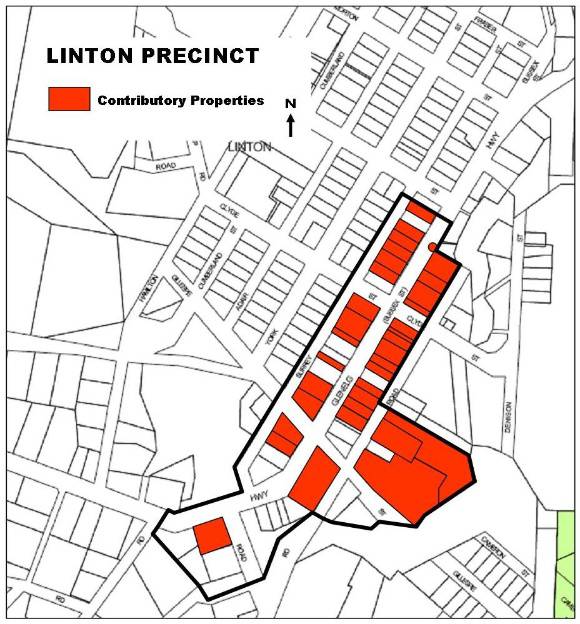
Linton Precinct
LocationGlenelg Highway LINTON, GOLDEN PLAINS SHIRE LevelIncluded in Heritage Overlay |
|




Statement of Significance
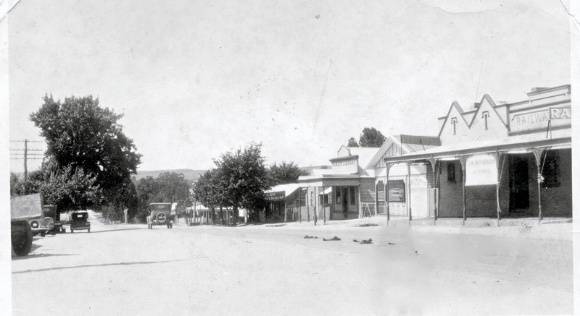
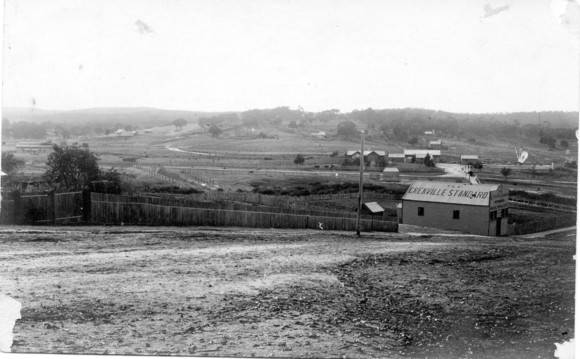
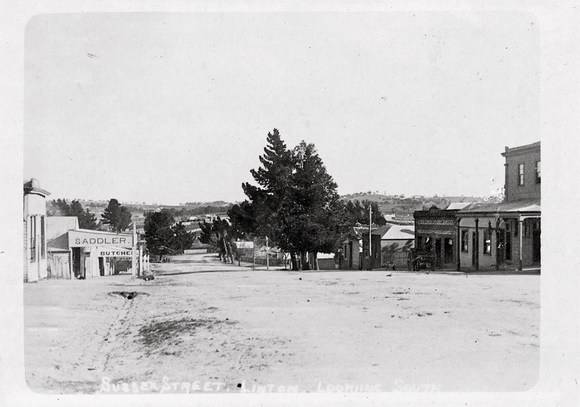
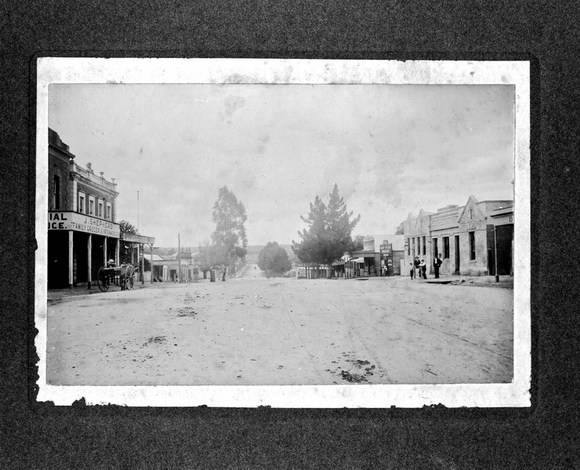
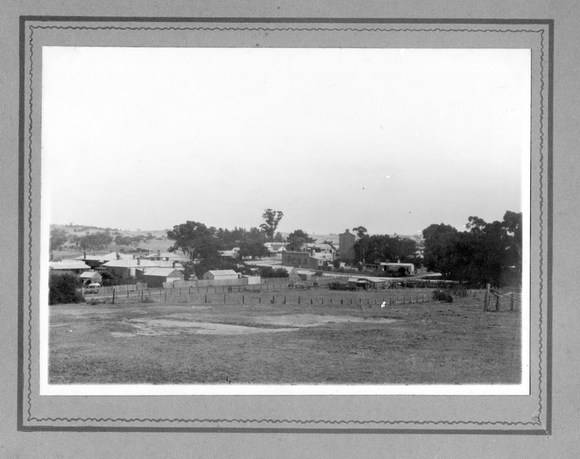
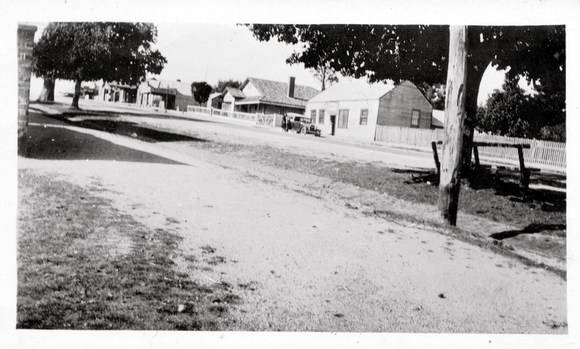
What is Significant? The township of Linton is located on the Glenelg Highway, about 35 kms south-west of Ballarat in rolling hills on the Springdallah Creek. The township is generally a grid aligned on the diagonal. It was named after Joseph and Mary Linton, pastoralist pioneers from Scotland who settled first in the Woady Yaloak area and from about 1840 on what became Linton Park. Joseph died in 1853 but his widow continued at Linton Park for many years. Gold was discovered on Fiery Creek, in the vicinity of today's Linton Cemetery in 1856 and a small settlement of diggers was soon established there. This shifted to Surface Hill, the present site of the township which was surveyed for the Crown by 1861. The district's many gold fields thrived during the late 1850s and early 1860s. Linton developed with the usual mix of public, commercial and private buildings and has many layers of development along its main street. Wishart's blacksmith's forge, 95 Sussex Street at the south-western end of the town, is a rare survivor. A temporary branch of the Bank of New South Wales opened on 12 June 1860, in a tent located at the first diggings. The branch then moved to temporary premises in the new township and the Bank purchased land there in 1861. The first permanent building was soon extended and the attached residence was erected in 1872. The Bank moved again when it relocated to new premises at 57 Sussex Street in 1907. The first manager was Samuel Lewers who continued to be an important citizen of the town and the Shire. Murrell's Victoria Hotel, across the Creek from the Edinburgh Mine, was demolished for the post World War 2 bungalow, The Gables, at 3017 Glenelg Highway. Only the later Railway Hotel survives at 71-73 Sussex Street, a rare example of a hotel in the Gothic Revival style and unusual for not being situated on a corner, both explained by its origin as Luth's store. The railway service opened in 1890 and was extended to Skipton in 1916 but none of the infrastructure survives. Many shop buildings survive especially from the later nineteenth century, such as the handsome, former Verdoorn's butcher's shop, originally Shepherd's grocery and hardware store, at 76 Sussex Street. The shop and dwelling at 64 Sussex Street was a glove-maker's, as well as a general haberdashery shop. Nelson's Undertakers occupied the early twentieth century residence at 69 Sussex Street. Newer buildings represent later phases in the development of Linton such as former service stations and the County Fire Authority building at 77 Sussex Street. Other important buildings were located away from the main street, especially on the more prestigious higher ground. The first school opened in 1856 in a Church of England building with others to follow elsewhere but closed when the present Linton State School No. 880 opened in 1867. St Paul's Anglican Church, in the simple Early English Gothic Revival style, is the oldest surviving church. It was surrounded by a pinetum. The Methodist Church is located near the Anglican Church and dates from 1913. It was designed by the young Melbourne architect, A. S. Eggleston who went on to design many important Methodist churches. Linton has been a centre for local government since 1864. The Shire of Grenville Offices opened in 1865. These were replaced in the 1939 by the present building designed by L. H. Vernon, Shire Engineer. Other than the Post Office at 59 Sussex Street, little remains of the colonial government's administrative infrastructure following the demolition of the original courthouse and the police station complex. Many residential buildings, none of any great pretension but some with substantial period gardens, are located along Sussex Street and in the surrounding streets. Perhaps the most important survivor in Linton is the Public Library at 67 Sussex Street, which retains its rare collection of books, archives and memorabilia. The township of Linton remains substantially intact and the surviving buildings and infrastructure from a range of periods retain a high degree of integrity. Most buildings are in good condition and important urban elements survive such as the standpipe and stone and brick gutters at the southern end of the town. A simple granite memorial to the pioneers of the district, recognising their intangible heritage, was erected on the north-east side of the main street in 1939. How is it Significant? The township of Linton is of historical, architectural and social significance to the Golden Plains Shire. Why is it Significant? The township of Linton is of historical significance as one of the many small settlements in the Shire established on the site of gold rushes in the 1850s and 1860s, several of which have survived into the twenty-first century. The former Wishart's blacksmith's shop is a rare survivor and represents a past way of life. Similarly the two surviving former Bank of NSW buildings demonstrate the changing tertiary industry of the town. Linton is of architectural significance for its range of modest building types dating from the nineteenth century, the most important of which are the Anglican, Catholic and Methodist Churches with their associated residences, many shops and their residences, the Railway Hotel (a rare example of a store converted into a hotel), the former Shire of Grenville Offices and part of the State School. Several buildings are associated with significant architects and engineers. The Linton Public Library is of particular social significance as a very rare surviving public library and collection. The township is of general social significance for its survival from a peak of several thousand, reflected in some surviving public buildings, to its modern population of several hundred. The township reflects the inter-relationship between pastoral, mining and agricultural pursuits.
Group
Residential buildings (private)
Category
House