
| Back to search results » | Back to search page » |


|
PRIMARY SCHOOL NO. 1924
Location153-161 PRINCES WAY DROUIN, BAW BAW SHIRE
File Number606765LevelRegistered |
|




Statement of Significance
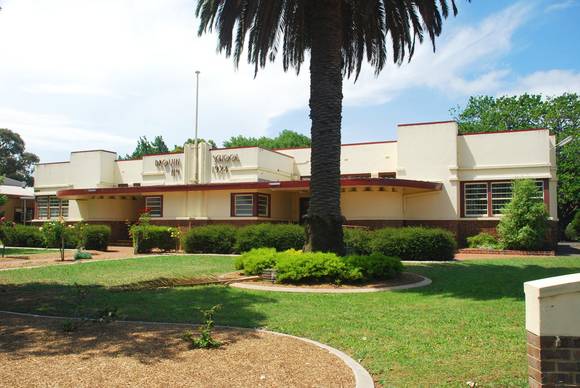
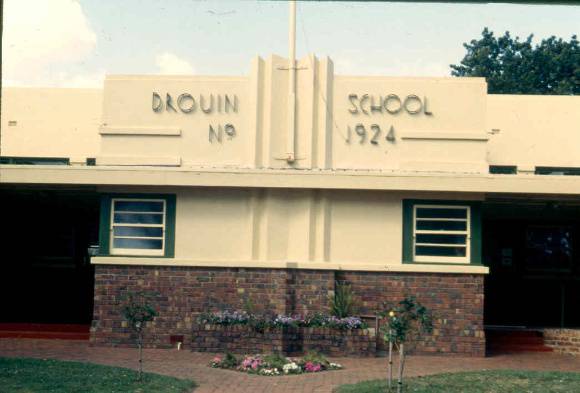
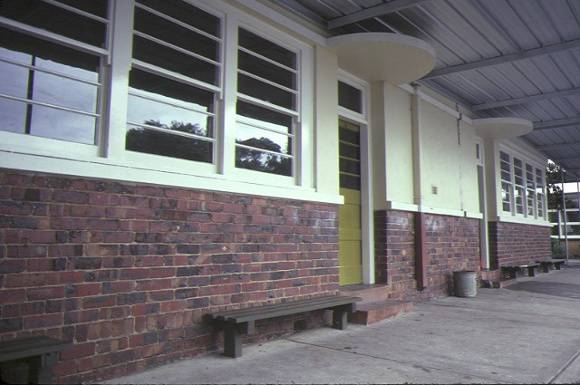
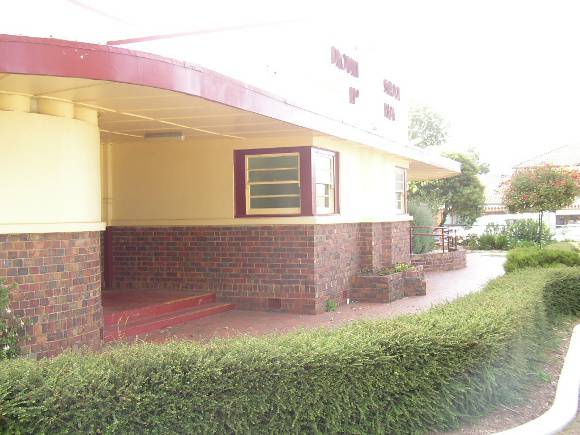
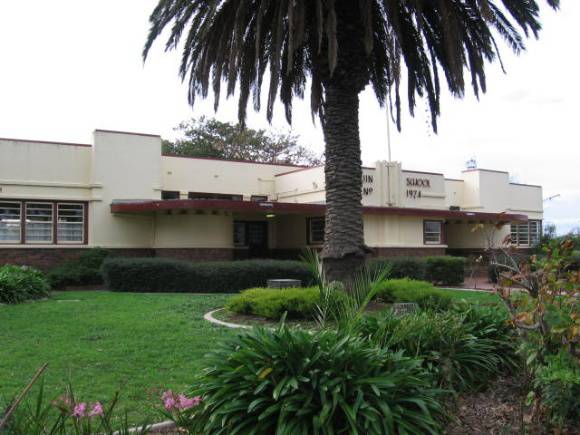
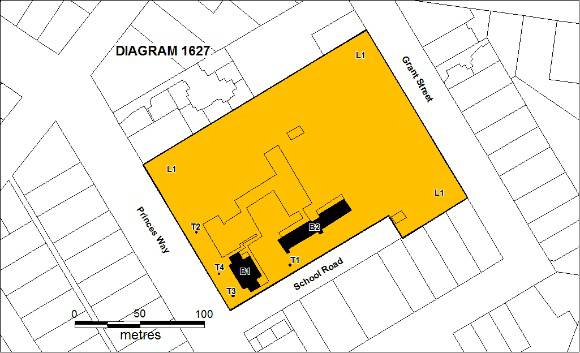
What is significant? The first school was opened on this site in Drouin in 1877. In 1936 a small four classroom school building was constructed to replace buildings destroyed by fire that year, and since that date numerous buildings have been constructed on the school site. Towns such as Drouin were established as a result of the building of the Gippsland railway from Melbourne to Sale in 1877-9. The Drouin school opened in 1877 with an enrolment of eighty students. New school buildings were constructed on the site in 1885 and 1890 and in 1918 four blocks of land at the rear of the school were bought from J. J. Winters. In February 1936 the school was destroyed by fire, and by 20 November of that year this had been replaced by a brick building at the front of the site, with a capacity for 248 students. At the time of construction it was described in the Argus, 4 July 1936, as a model plan for a school building. The new building in 1936 was designed by the Public Works Department, under the direction of the chief architect, Percy Everett, who held this position from 1934 to 1953. Everett was instrumental in transforming the department's output by promoting a distinctive style of modern architecture in a range of public buildings. Known as Moderne, the style featured austere horizontal lines, minimal ornamentation, curved corners which gave a streamlined effect, cement render or light coloured brickwork, and a contrasting vertical element. The building at Drouin Primary School epitomises this style. It is symmetrically planned and originally contained four classrooms opening off a central assembly area, which contained a raised platform for supervision of all classrooms with the opening of folding windows and sliding blackboards. The carefully considered front facade features a central rectangular mass, flanked by porches and curved wings, and a curved, cantilevered porch roof. Flat roofs, cantilevered concrete sections, horizontal glazing bars in strips of windows and doors, and the distinct use of dark clinker brickwork for the lower facade, all help to emphasise the horizontal character of the building. Contrasting verticality is provided by a central motif, with flagpole. Internally the walls are of face brick to at least window head height. It would appear that these were originally varnished, however they have now been painted. In 1995 this building was converted to the administration centre for the school and alterations made to the interior. Internal detailing, including platform, cupboards, blackboards and fireplace, has been retained in the north west room and the folding windows and fireplace in the adjoining room. Original doors and windows have generally been retained, including sliding doors at the rear with cantilevered semicircular horizontal hoods. Drouin, and its rural suburbs, almost doubled in population in the seven years after the Second World War. In response to this, and the shortage of building materials, a prefabricated Bristol building was added behind the 1936 building in 1952-53, originally to provide temporary accommodation for the Higher Elementary School. Manufactured by the Bristol Aeroplane Company in England and transported to Australia, these prefabricated aluminium buildings were erected across Victoria after the war. At Drouin, the Bristol building contains six classrooms and a central administration area, all accessed off a corridor which runs the length of the building. [NOTE: The Bristol Building (B2) was demolished with a permit in 2007] Drouin Primary School is of architectural, historical and scientific (horticultural) significance to the State of Victoria. Why is it significant? Drouin Primary School is of architectural significance as an example of the innovative work produced by the Public Works Department, under the direction of Percy Everett, and in particular as a model plan for a school building. It is an early example of the department's work in a distinctive modern style, unusual in the design of a small primary school building. Other examples were the six classroom Infants' School at Caulfield North Primary School, 1937-8, and the three classroom building at Frankston Primary School, 1937-8. Drouin Primary School is of architectural significance for its prefabricated Bristol Aeroplane Company building which is a representative example of this type of construction, once common in the State. It reflects both the shortage of building materials after the Second World War and the need to cater for a growing population. Drouin Primary School is of historical significance for its associations with the development of Gippsland in eastern Victoria, initially as a result of the construction of the Melbourne to Sale railway line in 1877-9, and then its later development after the Second World War. Drouin Primary School planting is of scientific (horticultural) significance for the two rare White Oaks (Quercus alba (Hybrid)), a species rarely grown in Victoria. Complementing the symmetry of the building is a pair of Canary Island Date Palms (Phoenix canariensis), planted on axis with the main entrance.
A number of trees are located on the school site, including two Canary Island Date Palms (Phoenix canariensis) planted either side of the entrance to the 1936 building, presumably dating from the late 1930s, and a number of oak trees. Two of these are rare White Oaks (Quercus alba (Hybrid)), one located to the north west at the front of the 1936 building, and the other, a particularly large specimen, located near the south east boundary behind the 1936 building. Its size would indicate an age of over 100 years, possibly indicating planting soon after the opening of the school in 1877.
How is it significant?
Group
Education
Category
School - State (public)