
| Back to search results » | Back to search page » |


|
AUBURN UNITING CHURCH COMPLEX
Other NameWESLEYAN METHODIST CHURCH MANSE Location81 OXLEY ROAD AND 3 HEPBURN STREET HAWTHORN, BOROONDARA CITY
File Number604388 (1)LevelRegistered |
|




Statement of Significance
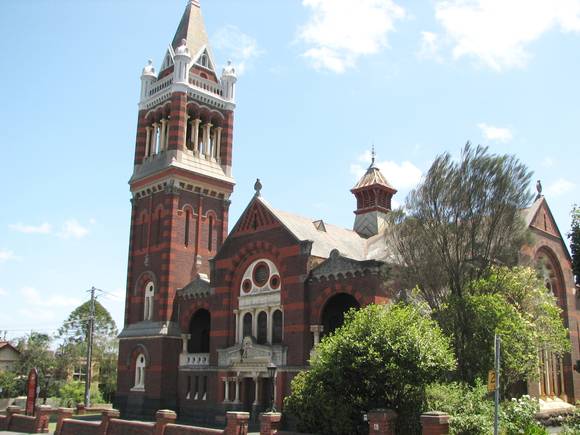
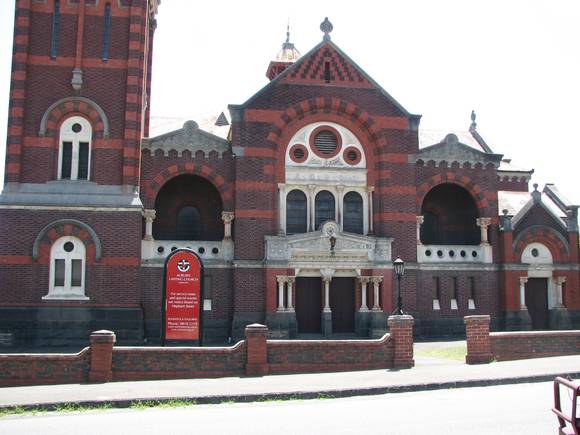
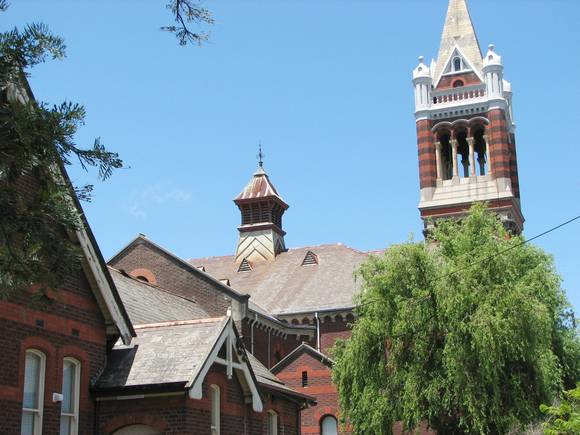
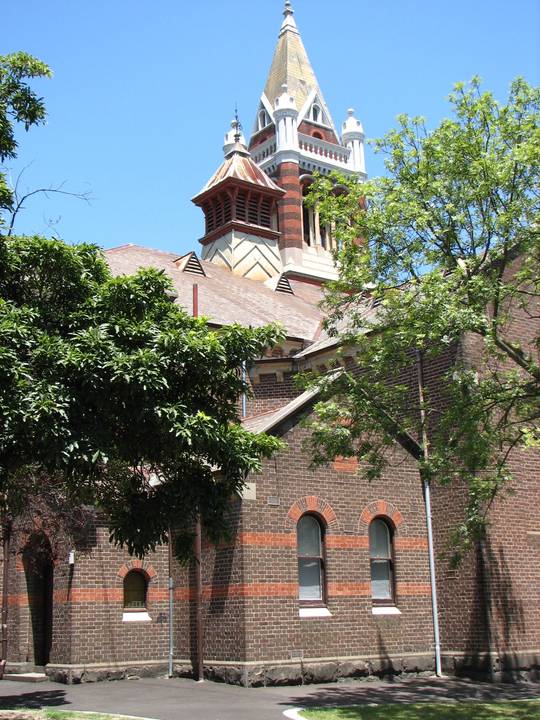
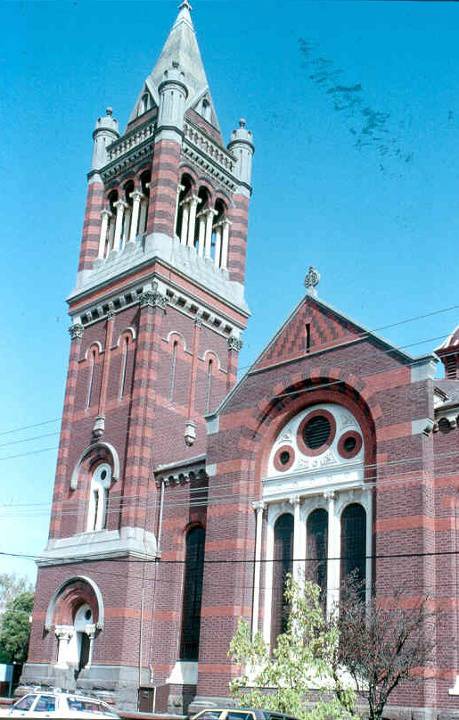
What is significant? The main church building is constructed in the Lombardic Romanesque
style. The predominant theme is the use of banded, dichromatic
brickwork of Hawthorn browns contrasted with deep reds. The dominant
element of the church is its multi-levelled tower, which addresses the
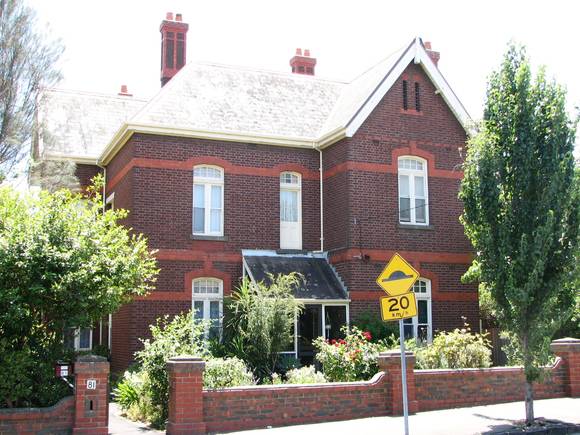
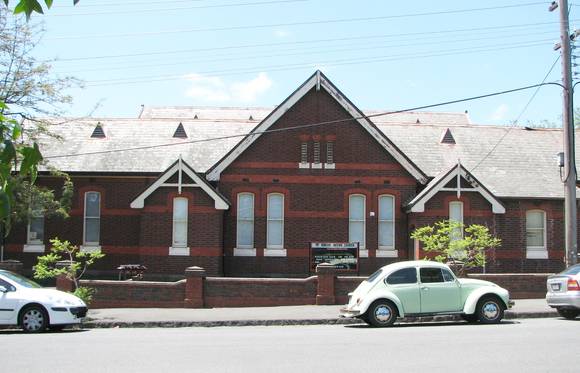
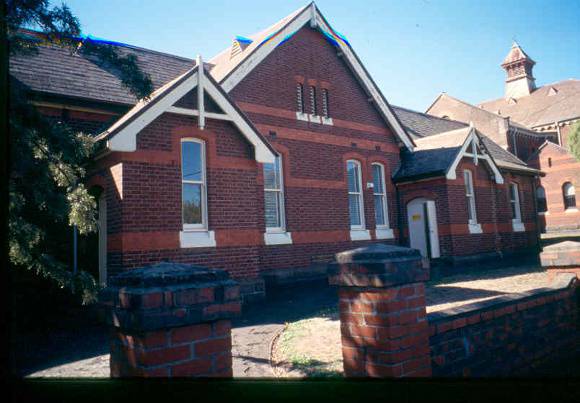
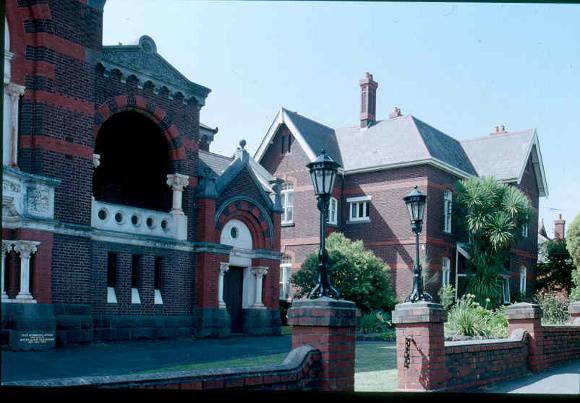
corner of Oxley Road and Hepburn Street. The parsonage, hall and cottage are architecturally complementary to
the church building, similarly employing banded dichromatic brickwork
on basalt plinths with slate roofs. The hall is a substantial building
with separate entrances for boys and girls, a central stage with
radiating classrooms and sliding dividing doors. In 1902 the Wesleyan Methodists became part of the Methodist Church
in Australia, which in turn combined with the Congregationalists and
Presbyterians in 1977 to become the Uniting Church in Australia. Since
that date the church has been known as the Auburn Uniting Church. How is it significant? Why is it significant?
Wesleyan Methodism was one of the
flourishing denominations of the Hawthorn municipality in the second
half of the nineteenth century. The local Methodist community was
known as the "Hawthorn Circuit" and such was its influence
that it was responsible for the establishment in 1881 of the Methodist
Ladies' College (MLC), one of Melbourne's leading secondary schools
for girls.
Between the 1840s and 1880s the Hawthorn Circuit occupied and
subsequently outgrew a number of buildings until in 1886 a new,
considerably larger, site was selected on the corner of Oxley Road and
Hepburn Street.
The Trustees advertised in the Argus, inviting 'competitive
designs for church, school and parsonage' on the new site. The
successful design was submitted by talented young Melbourne architect
Alfred Dunn, who designed a number of churches for the Wesleyans. Once
begun, the entire complex took less than two years to construct and
was completed in 1890. Dunn died at the age of 29, only a few years
after the Auburn complex was finished.
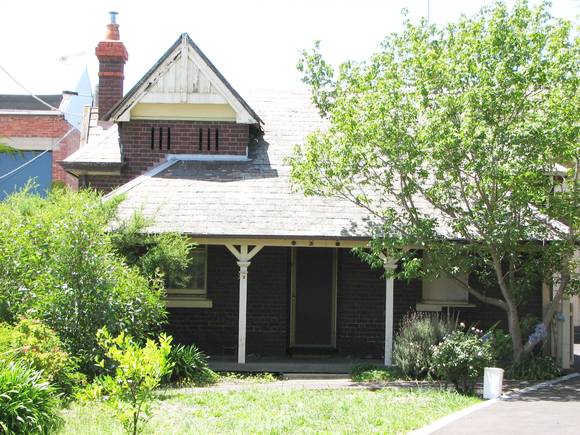
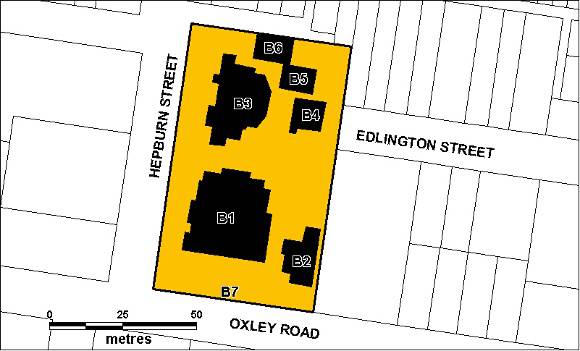
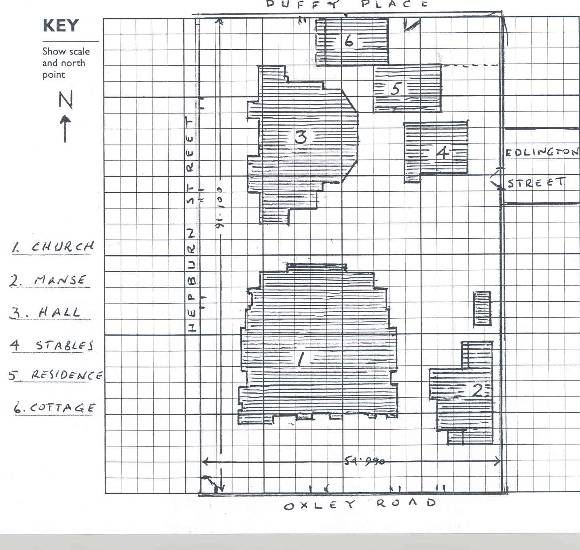
The complex consists of a main church building, a church hall,
parsonage, caretaker's cottage, former stables, and a former infants
school. The perimeter brick wall may have replaced an earlier timber
picket fence. However, it is the church itself which provided the
symbol of the Hawthorn's Circuit's affluence, hailed as one of the
finest Wesleyan Methodist churches in Victoria. Constructed on a hill,
it became a prominent local landmark.
The main body of the church is two storeys high with a slate roof
and has prominent balconies and gables addressing the streets. The
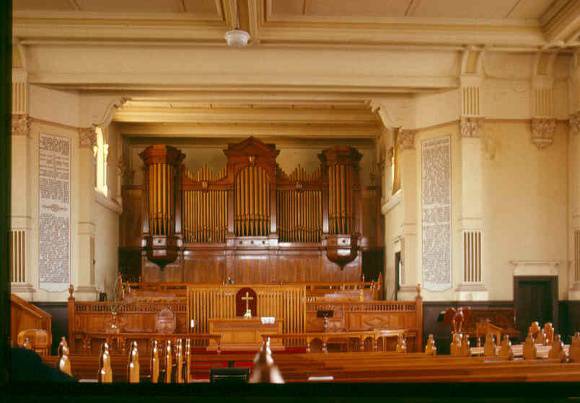
relatively plain interior, with some classical detailing of pilasters
with Corinthian capitals, is largely intact. It is arranged as a
rectangular auditorium with original pews on a raked floor overlooking
the chancel and the visual centrepiece of the church, the 1889 organ
designed by Fincham and Hobday.
The Auburn Uniting Church Complex is
historically and architecturally significant to the State of Victoria.
The Auburn Uniting Church Complex is
historically significant as the major nineteenth century Wesleyan
complex in Victoria. It is unusual as an example of a complete, intact
and little altered set of church buildings built simultaneously to one
design. It is in contrast to other historical ecclesiastical complexes
that have evolved over a longer period of time. The complex is
historically significant for its early associations with Wesleyan
Methodism, an important religious congregation in colonial Victoria,
and with the influential Hawthorn Methodist circuit. With one of the
largest church memberships, this circuit had the finest set of
properties in Victoria and was responsible for the foundation of
Methodist Ladies' College, a leading educational establishment for
girls.
The Auburn Uniting Church Complex is architecturally significant
as the finest example of Lombardic Romanesque church design in
Australia. The church was hailed contemporarily as one of the finest
Wesleyan churches in Victoria, and has subsequently been described as
a cathedral of Victorian Wesleyanism. The church building is
architecturally significant as the major work by the young and
brilliant architect Alfred Dunn.
Group
Religion
Category
Church