
| Back to search results » | Back to search page » |


|
War Service Homes Estate
Location17-25 and 18-28 ARTHUR STREET, 27-37 BRUCE STREET, 1-9 and 8-16 HERBERT STREET, and 76-84A ST GEORGE'S ROAD, PRESTON, DAREBIN CITY LevelIncluded in Heritage Overlay |
|



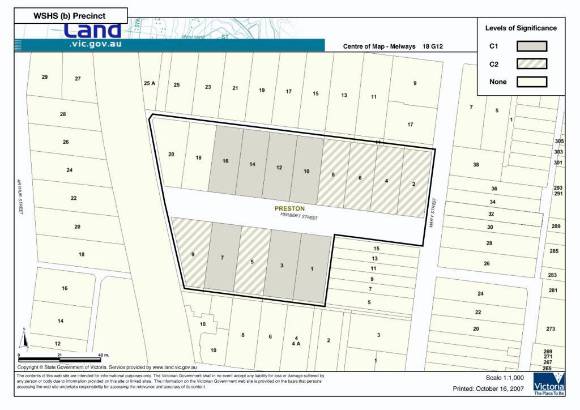
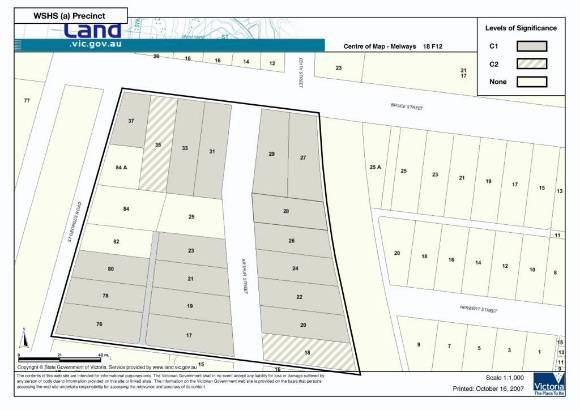

Statement of Significance
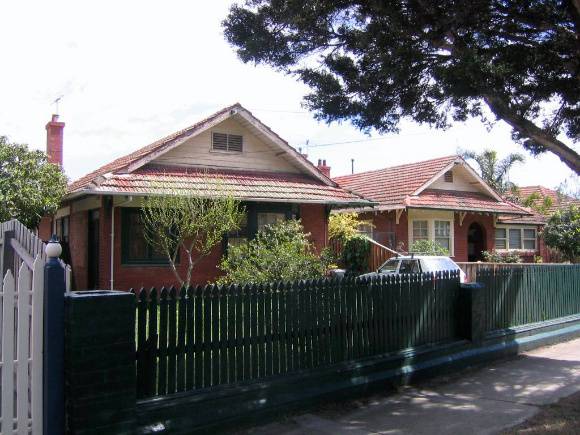
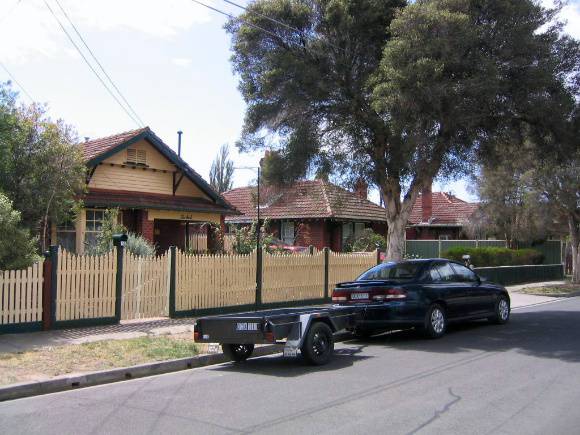
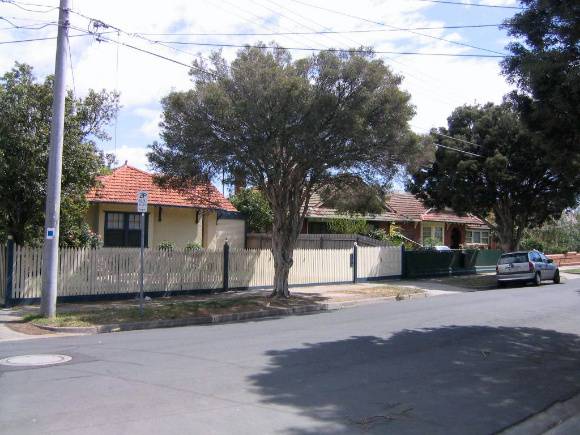
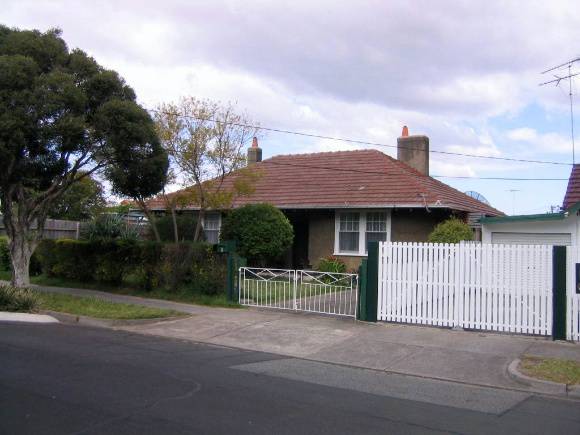
What is significant? The houses constructed by the War Service Homes Commission from c.1919-c.1924, and any associated early (pre-WWII) outbuildings or garages and garden elements contribute to the significance of the precinct. Non-original alterations or additions are not significant. How is it significant? Aesthetically, the War Service Homes Commission precinct is significant for the distinctive architectural character created by the consistency of the Arts & Crafts influenced bungalows constructed by the Commission. The high level of integrity of most of the houses and the limited number of intrusions enhances the aesthetic values of the precinct and make it an exemplar of the Commission's estate planning practices at the time. (AHC criterion F.1)
The War Service Homes Commission precinct comprises houses in Arthur, Bruce, and Herbert streets and St Georges Road, Preston that were constructed from 1920-24 by the War Service Homes Commission for returned servicemen in accordance with the War Service Homes Act 1918. The houses are modest detached brick or brick and render bungalows with Arts & Crafts influences in garden settings. Apparently designed by the Commission, they are of distinctive and consistent design and the precinct has a high degree of integrity with most of the original houses still extant and many that remain externally intact.
The War Service Homes Commission precinct is of local historic and aesthetic significance to Darebin City.
Historically, the War Service Homes Commission precinct is significant as one of the first estates in Darebin City to be developed by the War Service Homes Commission and is among the earliest in Australia. It provides evidence of the important role that the Commission played in meeting the demand for housing in the post First World War period and is notable as one of the largest estates to be designed and constructed by the Commission. It also provides evidence of the residential development associated with the post First World War boom when the population of Preston trebled within a decade. It illustrates the significant development that led to Preston being proclaimed a city by 1927. (AHC criteria A.4, D.2, H.1)
Group
Residential buildings (private)
Category
Residential Precinct