
| Back to search results » | Back to search page » |


|
Baptist Church & Bevington Organ
LocationCollins St and cnr Stephen St HAMILTON, Southern Grampians Shire
File NumberHAMDS #119LevelStage 2 study complete |
|




Statement of Significance
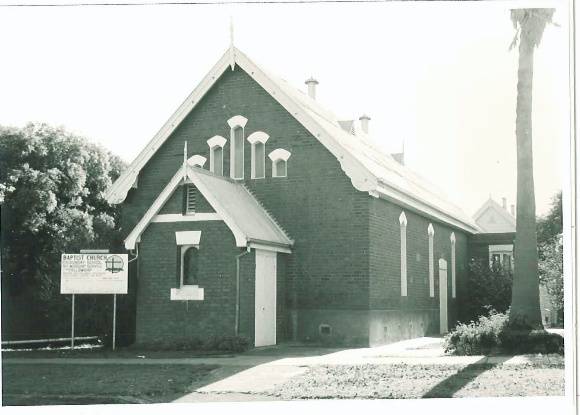
SIGNIFICANCE: »Representing one of the smaller denominations, this early church is significantly intact and houses the highly significant Bevington organ. The Washingtonia robusta palm relates to others nearby. The Hamilton Baptist Church is of local significance for its historical associations and its architecture. The land on which the church is built was sold by the Crown to Charles Rogers, the Post Master and an active Wesleyan, on 28 January 1863. ([i]) The Baptist Congregation was formed in 1867 and the church was opened in May 1868. ([ii]) The site was purchased not granted. Their strict religious principles prevented the Baptists from accepting state aid in the form of a grant of land. The architectural style used is also interesting. The Baptists eschewed anything Gothic because of its associations with Rome and Popery but the rigour of this tenet was just starting to weaken in Melbourne. ([iii]) This church is important as a very early example of the use of remotely Gothic details by the Baptists and can be compared with the churches of the other minor denominations. There is early photographic evidence that the side walls were decorated with large diaper patterns of darker bricks which, if they dated from 1868, would be contemporary with the first fashionable use of polychrome brick in Melbourne. ([iv]) The matching hall was added in 1911. ([v]) The church and hall are significantly intact and are in excellent condition. Because of their location on the top of the St Ronan's hill they are a dominant element in the streetscape. This is enhanced by the Washingtonia robusta palm in the garden which relates to those at 6 Dryden Street, around the Melville Oval and beside the former Wesley Church in Alexandra Parade. The church houses the highly significant Bevington organ, the only surviving example of the work of Bevington and Sons in Victoria. It represents a rare example of the work of a prominent 19th century organ builder. Its age and high degree of integrity enhance its value. ([vi]) Dating from as early as 1820, the organ was installed in 1908 having been used in other Hamilton churches. [i] Township of Hamilton Parish Plan and Garden, D, Hamilton, p 83. [ii] Ibid. [iii] The Baptists, depending on which sect, were amongst the most rigourous of the Non-conformists. [iv] Although a traditional practice in brickwork, the architect Joseph Reed set the fashion for polychromy with St Jude's, Carlton (1866-7), the Independent Church (1866-7), Collins Street, Melbourne and various houses. [v] Ibid. p 170. [vi] National Trust of Australia (Vic) File No 4826 (possibly 4836)
STATEMENT OF SIGNIFICANCE
Baptist Church and Bevington Organ
Collins Street (corner of Stephen Street)
Group
Religion
Category
Church