
| Back to search results » | Back to search page » |


|
Majella
Location20 Ascot Vale Road FLEMINGTON, MOONEE VALLEY CITY LevelIncluded in Heritage Overlay |
|




Statement of Significance
What is Significant?
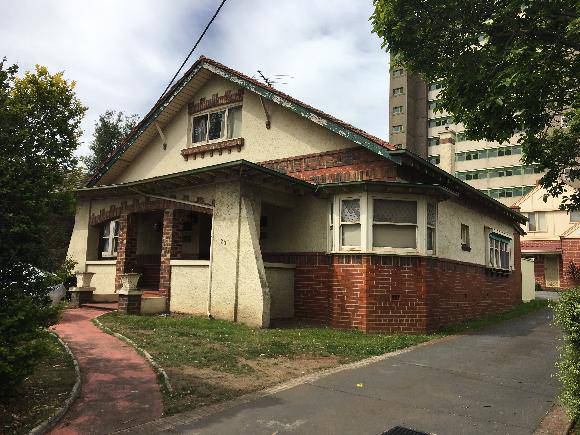
'Majella' at 20 Ascot Vale Road, Flemington, is significant. It was constructed in 1927 by builder George Karlberg for owner William Burke.
Significant fabric includes the;
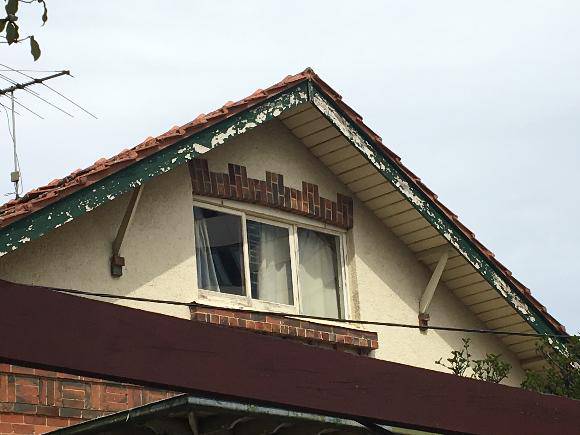
original building form and roof forms and fenestrations including the dominant front gable with attic window and flat roofed porch;
terracotta roof tiles and chimneys;
eaves details including exposed rafter ends and the unusual lambs tongue profile to the purlins of the porch;
unpainted face brick walls with a variety of colours;
semi-octagonal bay window;
porch details including brick piers, balustrade, arch and buttresses; and
door and window joinery including leaded panes to upper sashes.
How is it significant?
20 Ascot Vale Road, Flemington, is of local historical and architectural (representative) significance to the City of Moonee Valley.
Why is it significant?
'Majella' at 20 Ascot Vale Road, Flemington, is of local historical significance for its association with horse-racing, which has played a critical role in the social and economic development of the City of Moonee Valley. The house stands just east of the Flemington Racetrack, in an area once densely populated by those associated with racing, particularly trainers with stables at the rear. 'Majella' was built for important horse trainer William Burke, who resided in the Victorian house at No 24. Shortly after, it was owned by jockey Raymond Wilson, later horse trainer Stephen Murphy and wife Mabel Murphy, and then it was returned to William Burke in 1940 and has been owned by members of the Burke family ever since. (Criterion A)
'Majella' is an intact representative example of an Attic Californian Bungalow, which is substantial for the densely developed residential streets of Flemington. It displays characteristic features of the style including the dominant front gable with attic window, a flat-roofed projecting front porch, simple leadlight windows, and a variety of colours and textures created by face brick and roughcast render. The house is distinguished both by its size and its high-quality detail, including fine brickwork with orange-red rubbers creating a quoining effect to the bay window and a basket weave pattern below the gable, a semi-octagonal corner bay window, buttresses and delicately scrolled rafter ends to the front porch. (Criterion D)
Group
Residential buildings (private)
Category
House