
| Back to search results » | Back to search page » |


|
Margaret Street Precinct
Location35-81 & 40-84 Margaret Street and 48-54 Taylor Street and 2-18 & 7-17 Park Street MOONEE PONDS, MOONEE VALLEY CITY LevelIncluded in Heritage Overlay |
|




Statement of Significance
What is significant? - the houses at 35-45, 51-59, 65-81 & 40-68 & 72 Margaret
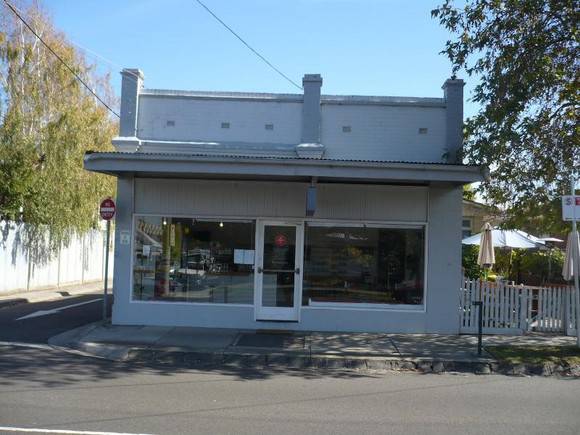
Street, the interwar shop at 63 Margaret Street, 2-18 & 7-17 Park
Street and 48-54 Taylor Street, and the front fences at 51 Margaret
Street and 8 Park Street. Non-original alterations and additions to the Contributory houses and
the houses at 49, 70, 74 & 80-84 Margaret Street are Non-contributory. *In Margaret Street the terrace row at nos. 42-64 has a separate
citation and statement of significance.
How is it significant?
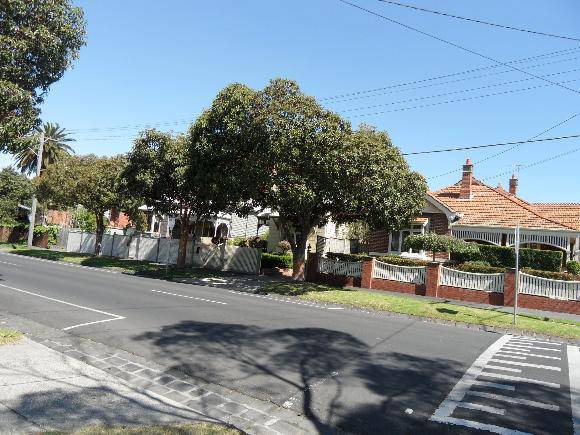
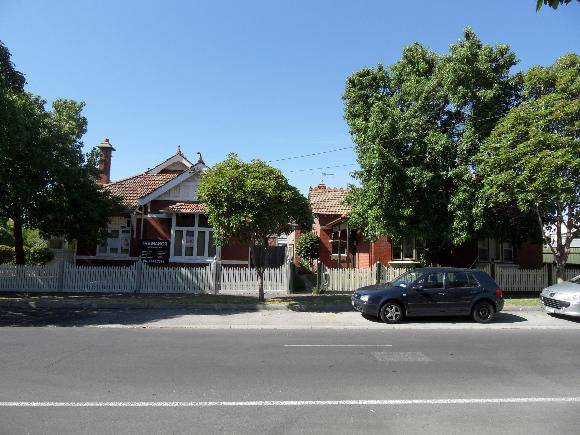
Why is it significant? Aesthetically, it is an enclave of predominantly Federation/Edwardian
housing with characteristic, form, materials and detailing and good
visual cohesion due to the consistency of built form. The setting of
the houses is complemented by traditional public realm materials such
as bluestone kerb and channel and bluestone laneways. (Criterion E) Of note within the precinct are the following houses: - 35 Margaret Street, which has the symmetrical, twin-bay form of 9
Park Street (further emphasized by the two brick and render chimneys)
but coupled with a pyramidal hipped slate roof that extends to form a
timber verandah with a projecting gable portico set between the bays,
and a simple rendered frieze under the eaves that have visible
rafters. (Criterion D) - 40 Margaret Street, a double-fronted Victorian Italianate dwelling,
is historically significant as a house constructed during the land
boom in Moonee Ponds as the residence of an owner/developer who also
built a speculative terrace row on the adjacent property. While many
of these houses were constructed in the area surrounding Moonee Ponds
station in the late 1880s, many have now been demolished and the
significance of this place is enhanced by the historic and visual
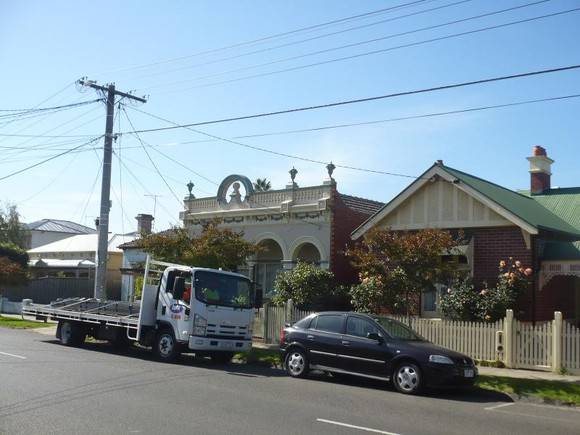
connection with the adjoining terrace row. (Criterion A & D) - 68 Margaret Street, a Victorian Italianate terrace house which is
notable for the highly unusual and finely detailed arcaded loggia with
a balustraded parapet. The loggia is comprised of four arched openings
(three of the same size and one smaller) supported by fluted Classical
style columns and brick columns with chamfered corners. There are
impost moulds decorated with Acanthus leaves to the columns and the
facade behind. The parapet has a frieze decorated with swags, rosettes
and two types of eaves brackets, while the balustrade features urns
decorated with balls and an unusual pediment, placed off centre, that
comprises an arched opening containing a ball finial. The entry door
to the left is recessed and there is an opening at the opposite end
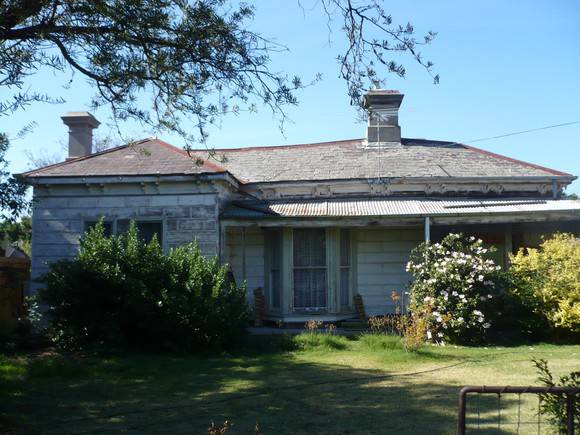
leading to the side yard. (Criteria D & E) - 'Beckenham', at 76 Margaret Street, a single-storey Victorian era
timber Italianate villa built in 1884, is of historical significance
as an example of residential development in the Essendon before the
large-scale subdivisions of the later 1880s. It is also significant as
a substantially intact Victorian-era villa and an example of the
Italianate style, within its original allotment. The house retains
original or early building materials of slate roofing and ashlar
block-fronted weatherboard. Viewed from Margaret Street, the main
change to the house is a sympathetically designed one-room front
extension constructed sometime after 1905 and incorporating the side
verandah. It has a generous setting and the corner allotment allows views of
two principal elevations. In this respect it compares well to 55
Holmes Road, Moonee Ponds (HO322). It also demonstrates the Italianate
style through its form, materials and detail including the retention
of two sides of the original three-sided return verandah which is
embellished with a cast iron frieze. 76 Margaret Street also
demonstrates the Italianate style through its slate hipped roof
enhanced by unpainted cement render chimneys, corbelled brackets to
the eaves, cast iron verandah frieze, timber block front and
weatherboard wall cladding, and a pair of canted bay windows. 76
Margaret Street is a more sophisticated example than 42 Myross Avenue,
Ascot Vale (HO225), which has also undergone alterations to the side
verandah. The sympathetic form, detail and materials employed to the
extension at 76 Margaret Street are considered to not substantially
diminish the ability of the house to demonstrate the Italianate style.
(Criteria A & D) - 78 Margaret Street, a Victorian house altered during the
Federation/Edwardian period which is of note for the fine detailing,
which includes is the 'sunray' pattern detailing to the verandah
brackets that is also repeated in the bargeboards and at the side of
the window hood (which also features scalloped infill boards), the
arched windows that feature a 'bullseye' pattern to the upper sash and
leadlight glass, and the original tessellated tile garden path, which
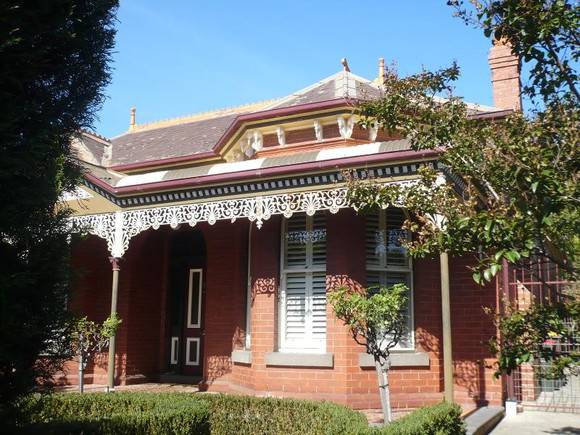
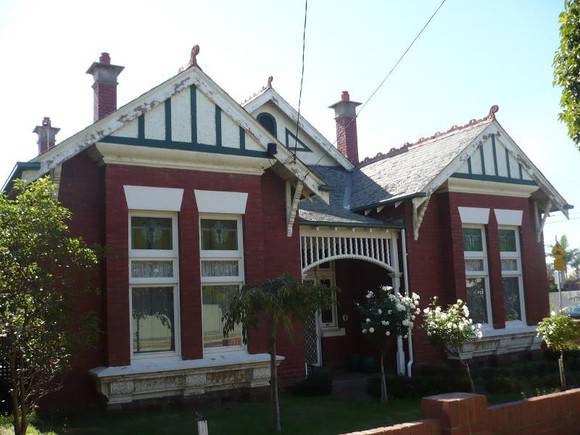
matches that to the verandah. (Criterion E) - 9 Park Street, which is an intact example of a transitional
Italianate symmetrical villa constructed of red brick with projecting
bays containing arched windows. The bullnose verandah has an ornate
frieze, dentilled fascia, fluted columns with Corinthian capitals a
gabled front over the entry and a tiled floor, and what appears to be
the original tiled path with bluestone steps. The slate roof has
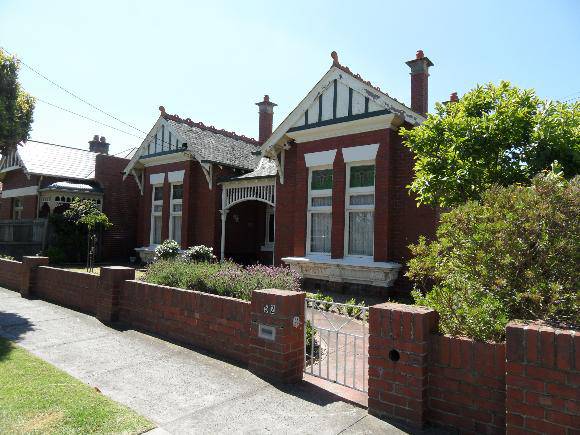
terracotta ridge cresting with tall, ball finials. (Criterion D) - 52 Taylor Street, which is a less common Federation/Edwardian Queen
Anne villa with twin projecting gables on either side of a porch with
an arched valance with wavy sticks and a tiled floor. The gables are
bracketed and feature tall windows in a projecting bay with half
timbering above and ornate rendered sills. The main roof has a street
facing gable, placed off-centre, which has an arched vent flanked by
triangles. Other details include the entry door with sidelights and
highlights, an arched leadlight window with a label mould and bay
window with rendered top in the side elevation, the tall brick
chimneys with a flat bracketed cornice. (Criteria D & E)
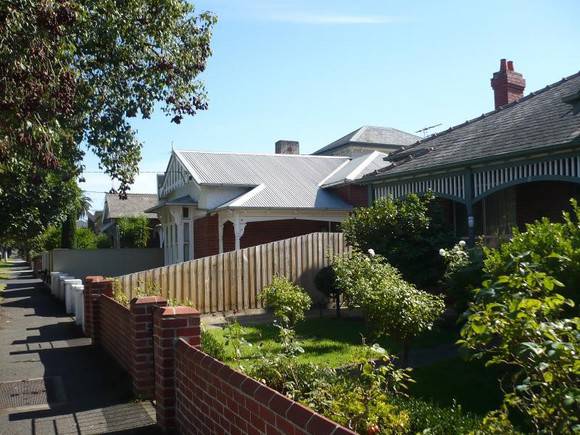
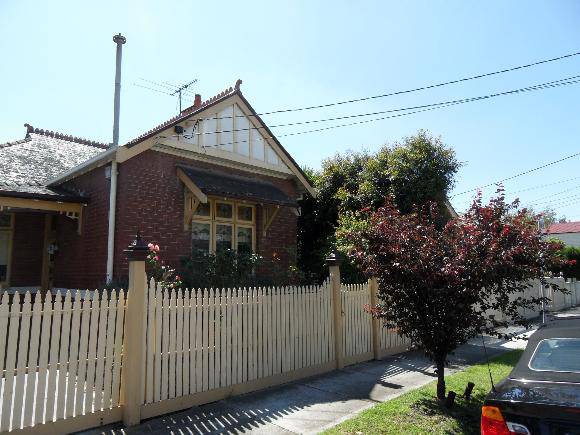
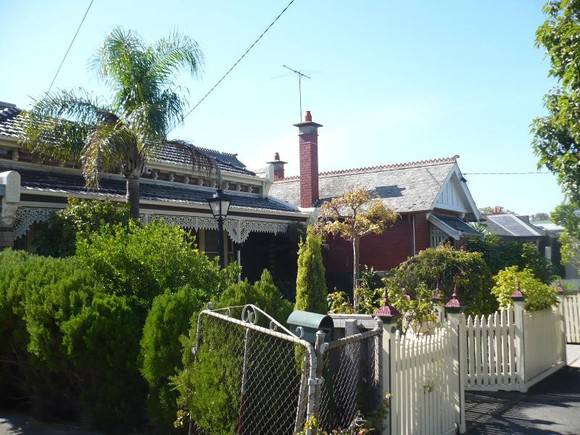
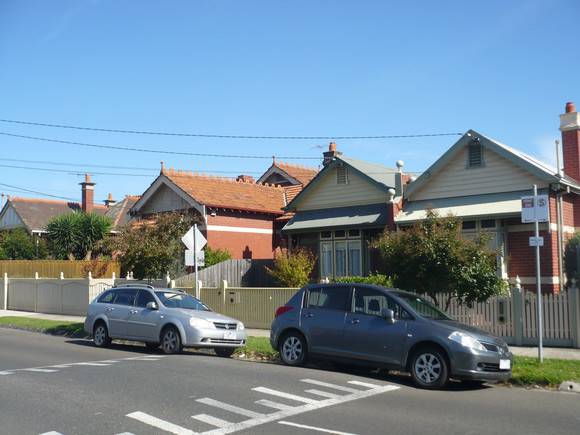
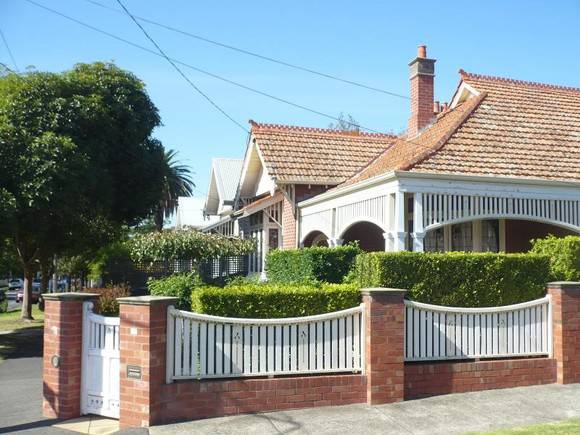
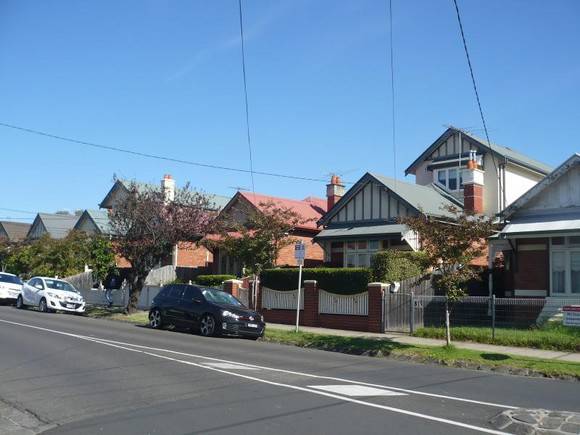
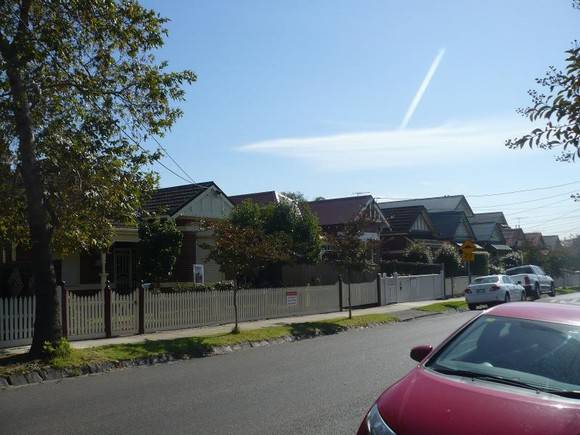
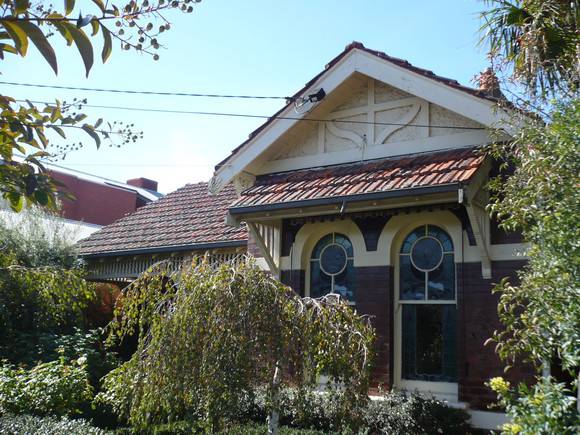
The Margaret Street and Park Street precinct is a residential area
that predominantly comprises houses built from c.1875 to c.1920.The
following features contribute to the significance of the precinct:
- The houses at nos. 35, 40, 68, 76
& 78 Margaret Street, 9 Park Street and 52 Taylor Street and the
terrace at 42-64 Margaret Street are Significant*.
- the overall
consistency of housing form (hipped or hip and gable roofs, single
storey), materials and detailing (weatherboard, imitation Ashlar or
face brick, corrugated metal slate or tile roofs, verandahs with cast
iron or timber frieze decoration, render or brick chimneys), detached
siting (small front setbacks and narrow side setbacks) and low front
fences.
- streetscape materials such as bluestone kerb and channel
and bluestone laneways.
The Margaret Street and Park Street precinct is of local historic
and aesthetic significance to the City of Moonee Valley
Historically, it demonstrates the housing boom in Moonee Ponds
during the late Federation/Edwardian and early interwar period, while
the remnant Victorian houses are associated with the first phase of
suburban development in the late nineteenth century. Although altered,
51 Margaret Street is of note as one of the earliest houses in the
area, dating from 1874. The predominant Federation/Edwardian housing
stock interspersed with Victorian era dwellings and a single corner
shop is representative of the residential areas that developed during
that period. (Criteria A & D)
Group
Residential buildings (private)
Category
Residential Precinct