
| Back to search results » | Back to search page » |


|
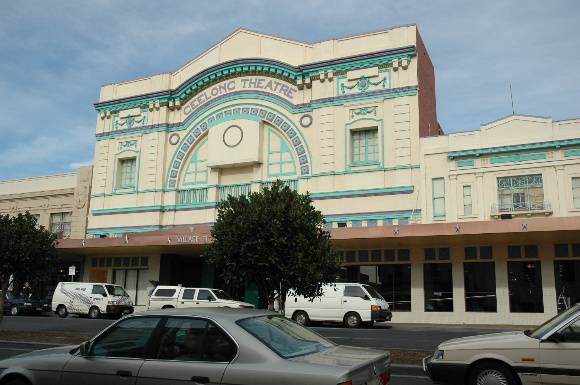
Geelong Picture Theatre
Location194-204 Ryrie Street, GEELONG VIC 3220 - Property No 302858 LevelIncl in HO area indiv sig |
|




Statement of Significance
C Listing - Local Significance STATEMENT OF SIGNIFICANCE The Geelong Picture Theatre building, 198-204 Ryrie Street, Geelong, has significance as a reasonably externally intact example of the Federation Free style and arcuated picture palace composition popular in the U.S.A. and Australia in the first decades of the 20th century. An unusual style for a building in Geelong although not unique, the Geelong Theatre was completed in 1913 to a design by the Geelong architects, Tombs and Durran, in association with the Melbourne architect, Frank. G. Richardson. Although there have been changes to the original facade, the general form, composition and detailing is extant and in good condition. The Geelong Picture Theatre building, 198-204 Ryrie Street, is architecturally significant at a LOCAL level. Although altered, it demonstrates original design qualities of a Federation Free style. These qualities include the symmetrical composition of three bays, emphasised by the large, central blind arch and flanking pavilions. Other intact or appropriate qualities include the gabled parapet with incised rectangular panels, moulded, dentillated and corbelled cornice, arcuated title panel that reads "Geelong Theatre", rendered piers and cast iron balustrading to the central blind arch, roundel motifs flanking the arch, rendered voussoirs, smoothly rusticated pilasters of the flanking pavilions, moulded cornice below the parapet corbels, decorative rectangular panels adorned with cartouches and festoons, smaller festoons above the first floor windows, simple window pilasters and drip moulds, 8 paned steel framed casement windows and projecting stylised segmentally arched frames, projecting moulded cornices between a plain wide band delineating the ground and first floors, highlight windows above the verandah, ground floor composition but not finish or detailing, and the exposed red brick walls at the sides. The Theatre is representative of a number of similarly designed and composed moving picture palaces constructed in Australia in the early 20th century. The neighbouring building to the west also contributes to the architectural significance of the place. It demonstrates original design qualities of an interwar modern Renaissance style. These qualities include the three-bayed composition, accentuated by a central steel framed window and balconette. Other intact or appropriate qualities include the two pavilions with stylised Doric pilasters flanking narrow steel framed windows, panelled entablature below a bracketed projecting cornice, and the shallowed gabled parapet with incised rectangular panels. The Geelong Picture Theatre building, 198-204 Ryrie Street, is historically significant at a LOCAL level. It is associated with the development of moving pictures in Geelong from 1913, with the establishment of the Geelong Theatre Company Pty Ltd, who had commissioned the construction of the building in 1911. The Theatre has further associations with the Geelong architects, Tombs and Durran, and Melbourne based architect, Frank G. Richardson. The Geelong Picture Theatre building, 198-204 Ryrie Street, is socially significant at a LOCAL level. It is recognised and valued by the Geelong community has an important place for recreation and entertainment. Overall, the Geelong Picture Theatre building, 198-204 Ryrie Street, is of LOCAL significance. References F. Bambino, Geelong Theatre Conservation Analysis Report, School of Architecture and Building, Deakin University, 1989. F, Bambino cited the following Geelong Advertiser, 9 August 1911, 3 May 1913, and 27 May 1913. News of the Week, May 1913, 5 June 1913 and 4 December 1913. Oral evidence of Ron Monsborough.
Group
Recreation and Entertainment
Category
Theatre