
| Back to search results » | Back to search page » |


|
GLENARD ESTATE
Other NamesMOUNT EAGLE AND GLENARD ESTATES , WALTER BURLEY GRIFFIN ESTATE LocationLOWER HEIDELBERG ROAD AND GLENARD DRIVE AND MOSSMAN DRIVE AND THE BOULEVARD EAGLEMONT, BANYULE CITY
File NumberHER/2000/000206LevelRegistered |
|




Statement of Significance
What is significant?
The Glenard Estate, Eaglemont, is a residential estate designed by
Walter Burley Griffin (1876-1937) and Marion Mahony Griffin
(1871-1961) in 1915. It was developed on land owned by Peter Keam,
grazier and a founding member of the Town Planning Association of
Victoria (established 1914) who had commissioned the Griffins in
1914to lay out the Mount Eagle Estate. The Glenard Estate is the
second earliest example of the Griffins' suburban designs and shares
many attributes with the nearby Mount Eagle Estate. Walter Burley Griffin and Marion Mahony Griffin advocated garden city
planning and the idea of a neighbourhood as a physical and social
planning unit. The Griffins took account of the topography of the site
and its native vegetation, as well as existing exotic plantings dating
from the 1860s. They provided safe internal public spaces within the
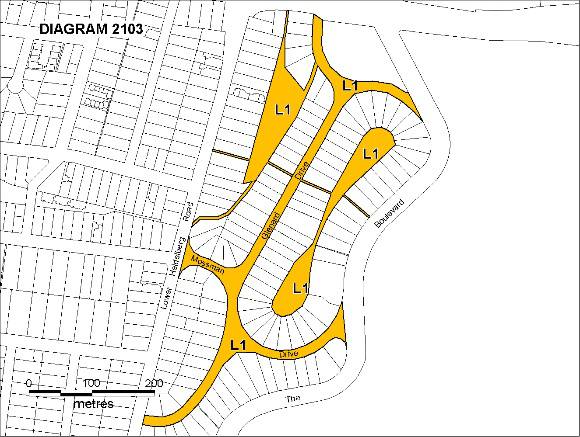
estate to cater for community needs. The Glenard Estate consisted of 120 lots in 1915. The curvilinear
streets followed the contours of the site, so that views were obtained
from each allotment, and internal reserves for safe community use
reflected the Griffins' principles. The public reserves did not take
up valuable street frontages but instead used land made spare by the
irregular plan. The reserves, together with the unfenced back gardens
recommended by the Griffins, were intended to provide common playing
space for children, safe from motor traffic and easily supervised. The
Griffins argued that suburbia should provide 'playing grounds for the
children so they can grow up healthy and vigorous under as nearly as
possible open country natural conditions'. The subdivision layouts and internal reserves of Glenard are early
examples of the Griffins' suburban design approach in Victoria. The Glenard Estate is the second earliest garden suburban subdivision
designed by the Griffins in Australia, predating the nationally
significant Castlecrag in Sydney (1924) by many years. The covenants
initiated by Keam ensured the survival of the original street lay out
and internal reserves as designed by the Griffins.
How is it significant?
Glenard Estate, Eaglemont, is of historical and aesthetic
significance to the State of Victoria.
Why is it significant?
Glenard Estate is of historical significance for its associations
with Chicago-born architects Walter Burley Griffin (1876-1937) and
Marion Mahony Griffin (1871-1961), leading figures in twentieth
century architectural history. Their works were infused with
progressive environmental and philosophical ideals, evident in such
town planning projects as Canberra, A.C.T., Leeton, NSW (1914) and
Griffith, NSW (1914) South Wales, Castlecrag, in Sydney (1924) and the
Ranelagh Estate, Mount Eliza (1926). Glenard Estate, Eaglemont is of historical significance for its role
in the history of town planning and the garden suburb movement in
Victoria. The use of innovative covenants on the titles, created by
Peter Keam, have been instrumental in ensuring that the street lay out
and internal reserves have been kept largely intact. Glenard Estate is
the second earliest example of a Griffin-designed residential estate
in Victoria and an intact example, retaining surviving community
parklands. Other examples in Victoria of the Griffins' garden suburb
design include the other Eaglemont subdivision, Mount Eagle (1914),
Croydon Hills (1921), the Ranelagh estate (1926) and City View and
Milleara estates, Avondale Heights (1927-28). Of these, the Croydon
and the Avondale Heights examples have been only partially realised.
The later Ranelagh Estate (H1605) represents a more developed example
of the Griffins' garden suburb ideals incorporating communal facilities. Glenard Estate, Eaglemont is of aesthetic and historical significance
as an essentially intact example of garden suburb planning by the
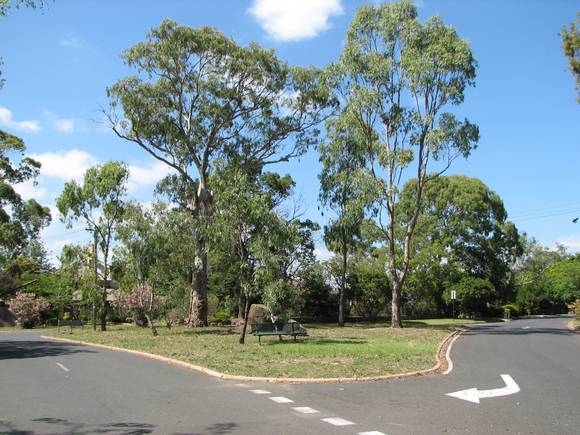
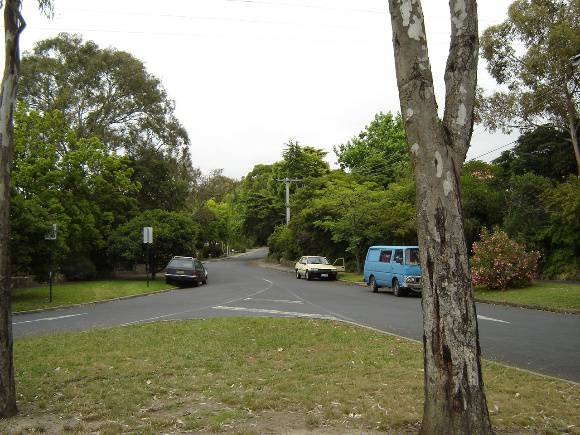
Griffins. The estate with its distinctive long curved roads, internal
reserves, and spacious triangular traffic islands, is a fine example
of a residential subdivision designed to harmonise with the topography
and indigenous vegetation of the area. The environmental concerns and
principles evident in the design were ahead of their time. The design
of the estate, through its layout, vistas, and planting, responds to
the natural beauty of the area. The internal reserves, providing both
a haven for indigenous vegetation and wildlife as well as safe and
natural playgrounds for children, embody the principles espoused by
Walter Burley Griffin and Marion Mahony Griffin.
Group
Parks, Gardens and Trees
Category
Reserve