
| Back to search results » | Back to search page » |


|
LEDCOURT HOMESTEAD
Location125 LEDCOURT ROAD LEDCOURT, NORTHERN GRAMPIANS SHIRE
File Number604179LevelRegistered |
|




Statement of Significance
What is significant? Captain Robert Briggs took up the Ledcourt run in 1840 and it was
bought by an absentee owner Benjamin Boyd in 1842. Thomas Young, a
solicitor from Hobart, purchased Ledcourt from Boyd in 1848. John
Carfrae, who married Young's daughter in 1848, settled on the run and
it was divided into three holdings; Ledcourt of 74,500 acres which
includes the present homestead site, and Newington and Swinton. The
original homestead was probably built at some time between 1846 and
1850 - it was the subject of a sketch by Lt. Governor Charles La Trobe
during his visit in March 1850. Carfrae sold the Ledcourt license in
1858 to the de Little brothers, Henry and Joseph and their brother in
law, Alfred Douglass. John Holt, a noted pastoralist, took over the
license in 1868 after arriving in 1863, and was responsible for the
1875 additions to the homestead. Marcus Clarke was employed on the property for a short period and
lived in a two-roomed cottage near the homestead (no longer evident).
In June 1866 he described the property; "a most fearfully rocky
mountainous spot surrounded by magnificent scenery.'. It is almost
worthwhile to come to Australia to see the sun rise and set over these
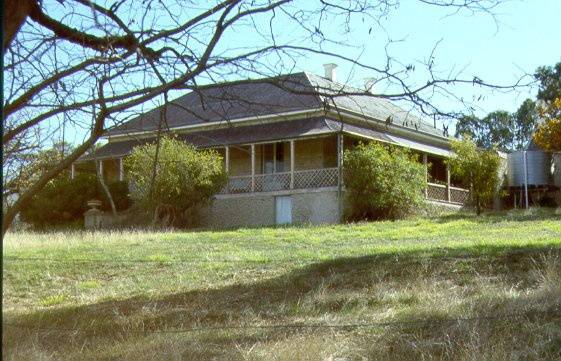
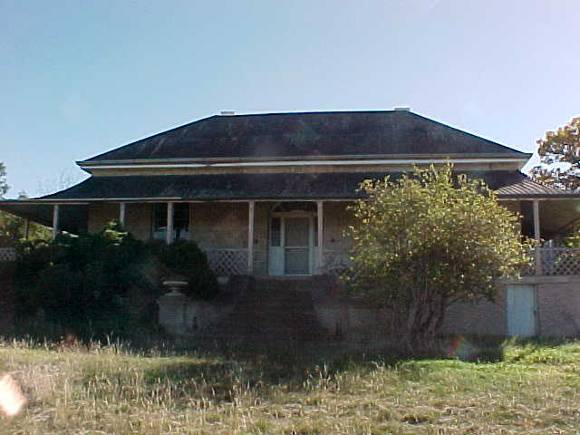
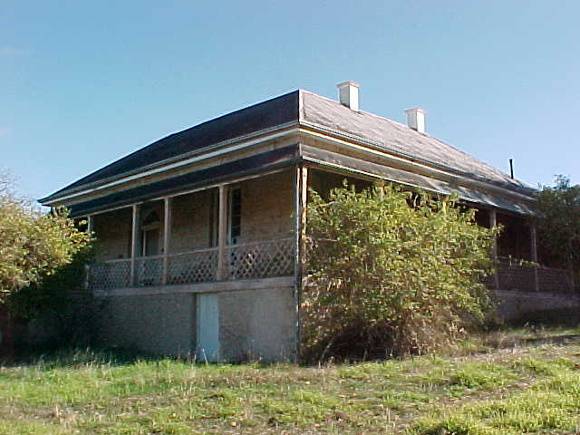
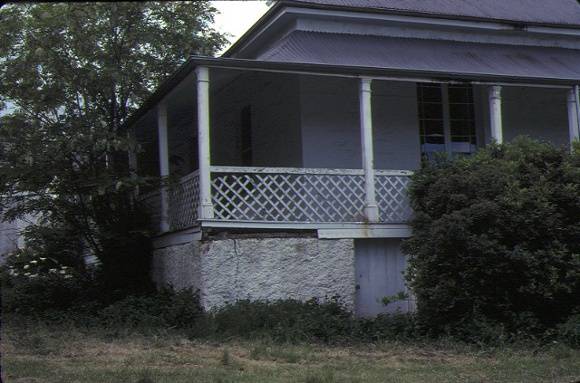
mountains". The original Colonial Georgian style homestead is constructed in
Grampians sandstone and consists of a single storey, eight-roomed
cottage with an axial plan and broken hipped roof. The building is
oriented to the south on a sloping site with commanding views of the
Grampians range. The front and side verandahs are roofed with concave
rolled corrugated iron supported on simple timber posts. The rear
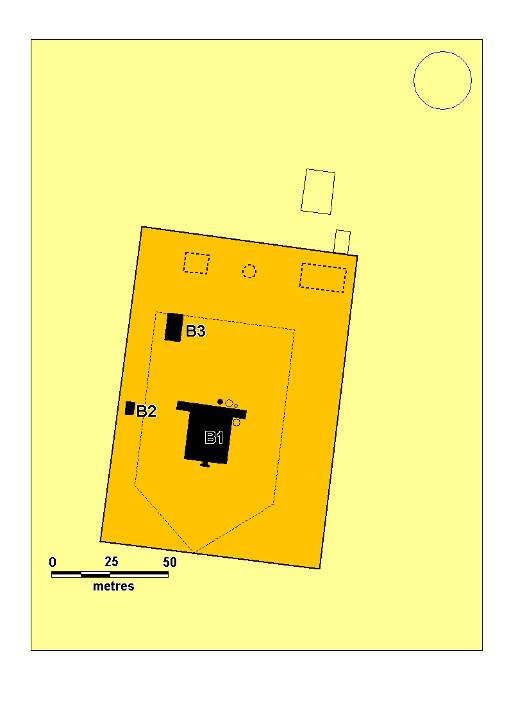
(north) awning is a skillion with shingles now covered in iron. Additions to the homestead occurred in August 1875 to the design of
the architect, GC Inskip. These include two single room gabled
pavilions in bluestone, one an office and the other a bathroom, to
either side of a rear courtyard. The courtyard is paved with large
slate flags and enclosed by a low iron palisade fence. Another
pavilion to the west of similar scale to the other pavilions but in a
Picturesque Gothic style contains surprisingly elaborate toilet
facilities. The approach to the front verandah of the homestead was
graced with a new formal staircase of Stawell stone with stucco
balustrades. The interior of the cottage was refurbished in a more
elaborate and up to date style. These additions may relate to the
visit of the Governor, Sir George Bowen in May 1876. How is it significant? Why is it significant? Ledcourt Homestead is historically significant as the oldest
established pastoral residence in the Stawell region. Ledcourt
Homestead remains largely unaltered in a near original context in a
pastoral landscape at the foothills of the dramatic Grampians range.
Nearby archaeological evidence of the early phase of the homestead
occupation includes remnants of the stables, blacksmith shop,
quarrying and a dam. Ledcourt Homestead is historically significant as a place associated
with significant people in the history of Victoria. Those who visited
or stayed on the property included Lt. Governor Charles Latrobe,
Marcus Clarke, and Governor Sir George Bowen. Eugene Von Guerard
painted Mt William from a vantage point in the near vicinity of the homestead. Ledcourt Homestead is architecturally significant as a rare
pre-separation Colonial Georgian style homestead. The Homestead
retains characteristic features of the style such as symmetrical plan
and front facade, encircling verandah, broken roof pitch, wide front
door with simple radiating fanlight, and french doors to the front
rooms. The 1870s alterations by Inskip did little to obscure the
original design and added some distinction of their own. Ledcourt Homestead is architecturally significant for the unusual
elaborately appointed toilet pavilion. The substantial freestanding
stone building in picturesque Gothic style features separate male and
female facilities with timber adult and children's closets on either side.
Ledcourt Homestead is historically and
architecturally significant to the State of Victoria.
Group
Residential buildings (private)
Category
Homestead building