
| Back to search results » | Back to search page » |


|
ST GEORGES UNITING CHURCH
Location4 CHAPEL STREET ST KILDA, PORT PHILLIP CITY
File Number605005LevelRegistered |
|




Statement of Significance
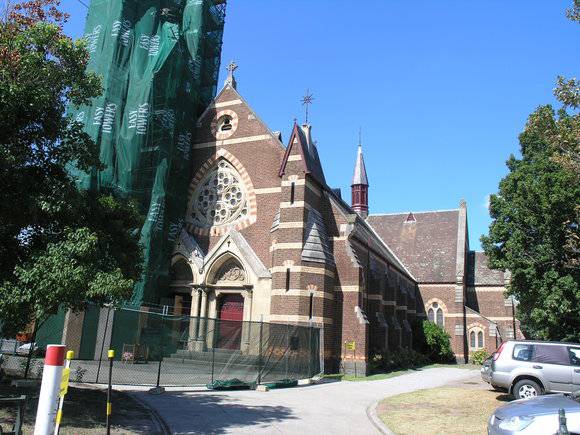
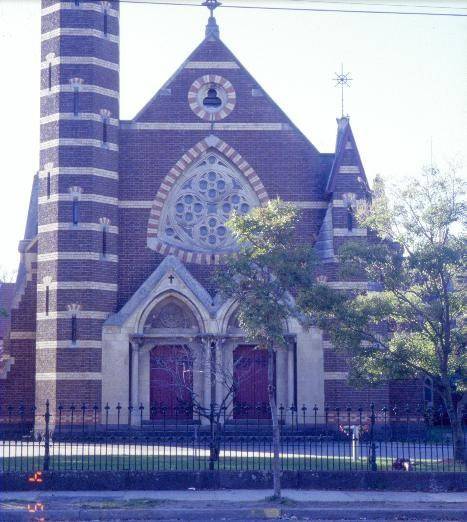
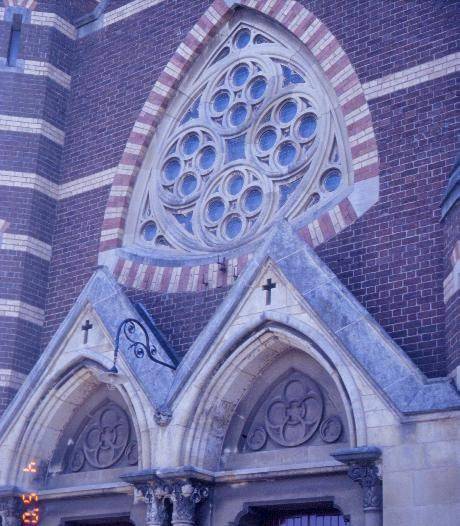
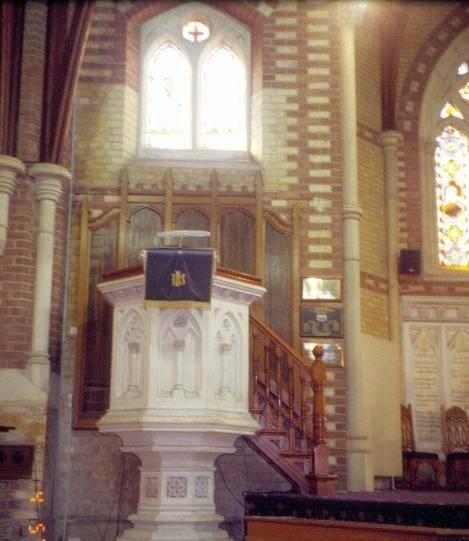
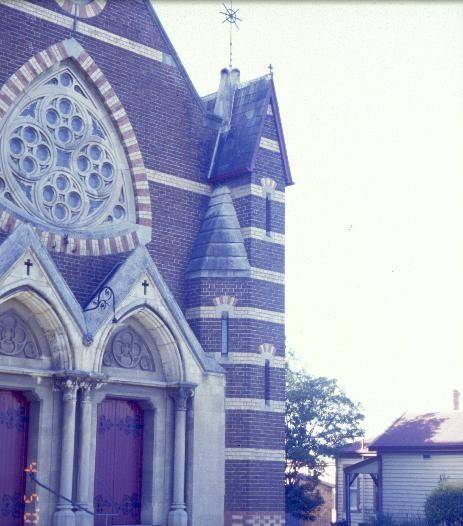
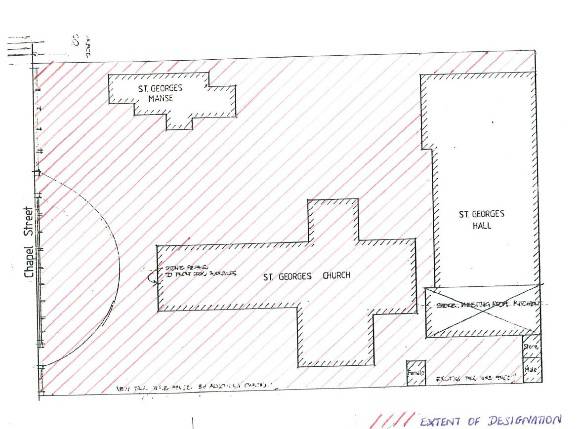
What is significant? The former Presbyterian Church is constructed in a polychromatic Gothic Revival style, in the tradition of such English specialists as William Butterfield and John L. Pearson. It is a red brick building, relieved by cream brick contrasts and freestone dressings, with slate roof, prominent roof vents, iron ridge cresting and fleche at the intersection of the nave and transepts. The front facade of the church incorporates a slender, banded octagonal tower which terminates in a spire, a double arched portal and a dominant rose window which is contained within a curved triangular form. The church is of T-shaped plan, with aisleless nave, broad transepts, and internal walls of cream brick, relieved with coloured brickwork. The building contains stained glass by Ferguson and Urie, deal and kauri pine joinery and pulpit and reredos of Keene's cement. An organ by Thomas C. Lewis of London, one of the leading 19th century English organbuilders, was installed in the south transept in 1882. It was designed to blend with its architectural setting, with pipework styled to avoid the obstruction of windows. The action of this organ was altered in 1935, but the pipework, and the original sound, have been retained. The original Sunday School hall, constructed to the rear of the property in 1886, was destroyed by fire in 1927 and subsequently replaced. How is it significant? Why is it significant? St George's Uniting Church, St Kilda is of historical significance for its association with the Presbyterian Church for whom it was first built. It demonstrates both the increasing wealth among Presbyterians and the competition with other Protestant denominations, particularly during the 1870s and 1880s. The organ is of scientific (technical) and historical significance as an important and rare surviving work of T. C. Lewis. Despite alterations, the organ appears not to have been revoiced and therefore retains its original sound. The only other Lewis organ in Victoria is at St Paul's Cathedral, Melbourne (VHR H0018). [Online Data Upgrade Project 2007]
St George's Uniting Church, St Kilda was built on land reserved in Chapel Street for the Presbyterian Church of Victoria in 1866. Ten years later the first services were held in the orderly room and advances were made towards the erection of a church. The architect Albert Purchas was commissioned to design the building and the foundation stone for the western portion of the nave was laid in April 1877 by Sir James McCulloch. The congregation quickly outgrew this church and the building was enlarged and reopened in 1880.
St George's Uniting Church, Chapel Street, St Kilda is of architectural, historical and scientific (technical) significance to the State of Victoria.
St George's Uniting Church, St Kilda is of architectural significance as a fine example of the polychromatic Gothic Revival style and is important for its early use of polychromy both internally and externally. The bold features of the front facade, particularly the tall, banded tower, are striking and unusual. The retention of original joinery, fixtures and stained glass is important.
Group
Religion
Category
Church