
| Back to search results » | Back to search page » |


|
271-273 Burnley Street
Location271-273 BURNLEY STREET LevelIncl in HO area indiv sig |
|




Statement of Significance
What is significant?
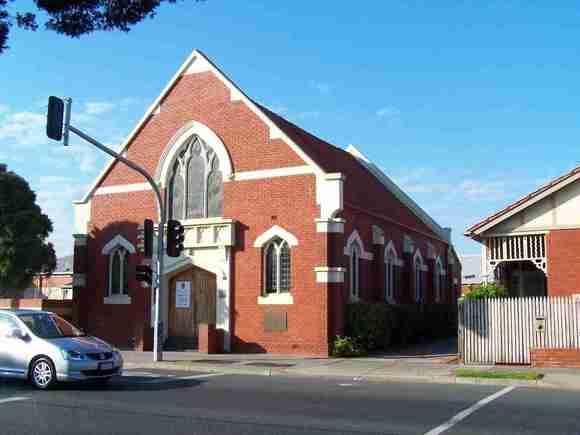
The Burnley Uniting (former Presbyterian) Church, designed by Harry Norris and erected in 1924-25, at 271-273 Burnley Street is significant. It is a simple Gothic Revival style building. It has red face brick walls with rendered dressings, string courses and parapet copings, and a gabled terracotta tiled roof. Windows have simple cusped tracery. The west elevation has a large arched window with a decorative hood mould; beneath which is an arched entrance opening and a heavy corbelled frieze with five quatrefoil-patterned panels. The doorway is flanked by two dwarf brick walls, and reached by two bluestone steps. The entrance is flanked by arched traceried windows with rendered dressings and sills. The side walls have plain red brick buttresses with rendered tops; the front corners have unusual square buttresses, also with rendered decoration. The side walls have traceried arched windows with rendered dressings and a string course at impost level, and rendered sills. There is a skillion-roofed section to the rear of the building, also of red brick.
The Manse and other buildings on the site are not significant.
How is it significant?
Burnley Uniting (former Presbyterian) Church, at 271-273 Burnley Street, Richmond, is of local architectural significance to the City of Yarra.
Why is it significant?
Designed by well-known Melbourne architect Harry Norris, it is a typical example of a small, early 20th century Gothic Revival church. It exhibits an imaginative use of bold rendered elements, including the front entrance, and has particularly notable traceried, leadlight windows. The building is atypical of the Moderne style work for which Norris is best known. (Criteria D & E)
Group
Religion
Category
Church